New evidence suggests corals may have genes involved in receiving or emitting sound
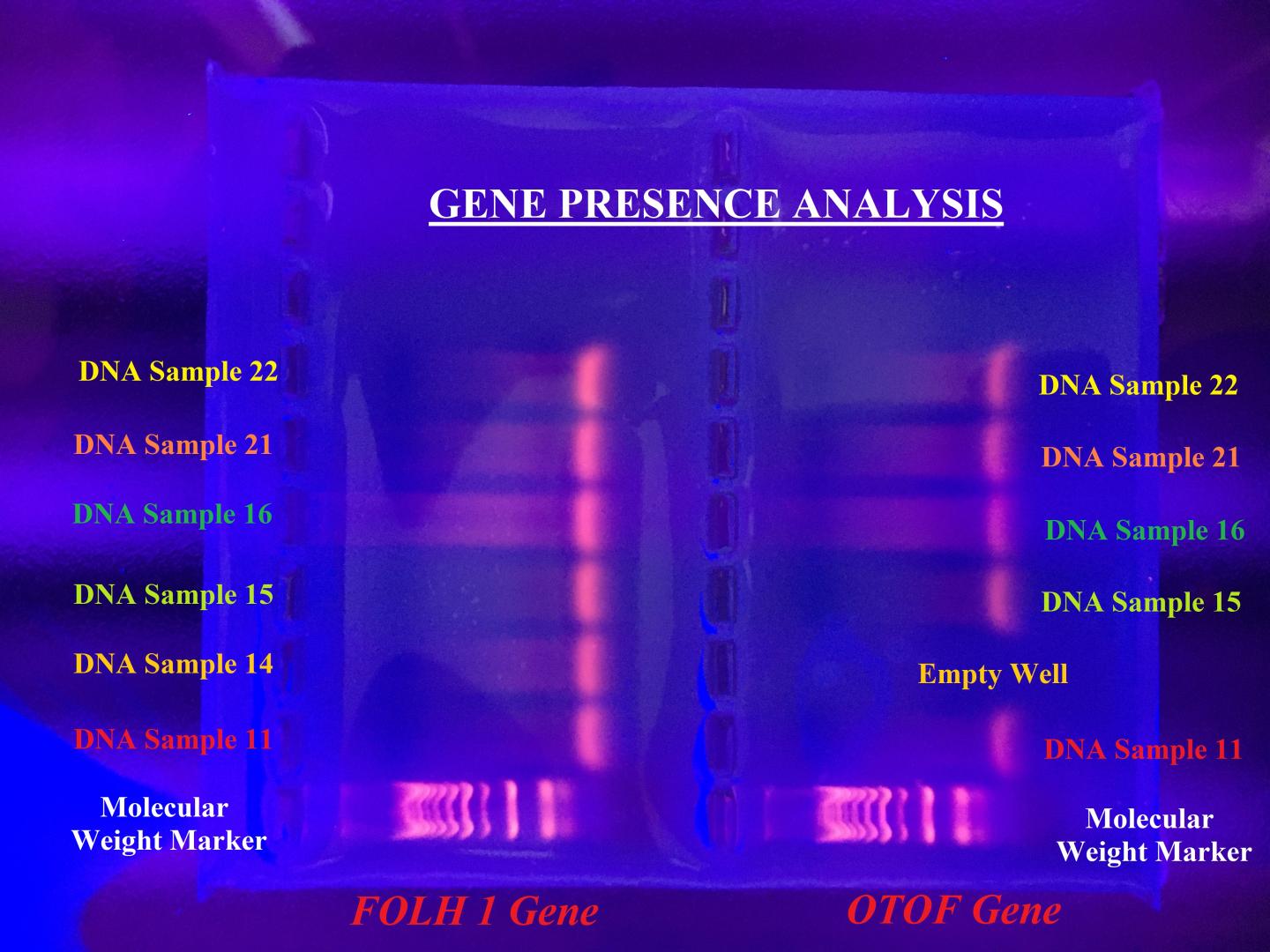
Credit: Camila Rimoldi Ibanez and James Hawker, South Florida State College
Corals are part of a highly complex ecosystem, but it remains a mystery if and how they might communicate within their biological community. In a new study, researchers found evidence of sound-related genes in corals, suggesting that the marine invertebrates could use sound to interact with their surroundings.
Coral reefs make up less than 1% of the ocean floor yet support more than 25% of all marine life. Around the world, coral reefs are being threatened by climate change, ocean acidification, diseases, overfishing and pollution. A better understanding of coral communication could help inform policies that aim to protect this critical ecosystem.
“A growing number of studies have shown that trees can communicate, and that this communication is important for ecosystems such as rain forests,” said Camila Rimoldi Ibanez, a high school student in the dual enrollment program at South Florida State College. “Coral reefs are often referred to as the rainforests of the sea because of the habitat they provide for a wide variety of plants and animals. Thus, we wanted to find out how coral communicates.”
Ibanez will present the new findings at the American Society for Biochemistry and Molecular Biology annual meeting during the virtual Experimental Biology (EB) 2021 meeting, to be held April 27-30. Her mentor is James Hawker, PhD, dean of arts and sciences at South Florida State College.
Many organisms that live in coral reefs perceive sound and use it to find their way to the reefs. Based on this information, the researchers decided to look for the presence of genes related to the reception and/or emission of sound in the coral Cyphastrea. Using PCR amplification, the researchers found probable evidence that two of the four genes they examined may be present in coral DNA. The genes they found — TRPV and FOLH-1 — are used for sound emission or reception in sea anemones and freshwater polyps, respectively.
In addition to performing more testing, the researchers want to sequence the TRPV and FOLH-1 genes they found to add additional evidence that these genes, or genes related to them, are present in coral.
“As we learn more about the negative impacts of sound in different kinds of ecosystems, it is vital that we set policies to protect and manage human noises in natural environments,” said Ibanez. “The more we know about how corals communicate, the better we can develop restoration and conservation projects to help corals as they face bleaching epidemics and other threats.”
Camila Rimoldi Ibanez will present the findings in poster R4543 (abstract). Contact the media team for more information or to obtain a free press pass to access the meeting.
Images available.
###
About Experimental Biology 2021
Experimental Biology is an annual meeting comprised of thousands of scientists from five host societies and multiple guest societies. With a mission to share the newest scientific concepts and research findings shaping clinical advances, the meeting offers an unparalleled opportunity for exchange among scientists from across the United States and the world who represent dozens of scientific areas, from laboratory to translational to clinical research.
http://www.
About the American Society for Biochemistry and Molecular Biology (ASBMB)
ASBMB is a nonprofit scientific and educational organization with more than 12,000 members worldwide. Founded in 1906 to advance the science of biochemistry and molecular biology, the society publishes three peer-reviewed journals, advocates for funding of basic research and education, supports science education at all levels, and promotes the diversity of individuals entering the scientific workforce. http://www.
Find more news briefs and tipsheets at: https:/
Media Contact
Nancy Lamontagne
[email protected]