In a groundbreaking advance that sheds new light on the neural underpinnings of motor deficits in Parkinson’s disease, researchers have uncovered the pivotal role of cortico-pallidal beta oscillations in the impairment of turning movements. This study, recently published in npj Parkinson’s Disease by Shukla, Bath, Louie, and colleagues, offers a comprehensive exploration of how aberrant beta rhythms connecting the cortex and the globus pallidus disrupt the fluidity and coordination necessary for one of the most complex voluntary motor tasks: turning. This revelation not only deepens our mechanistic understanding of Parkinsonian motor dysfunction but also opens innovative avenues for targeted neuromodulation therapies.
Turning in locomotion might appear simple at a glance, but it encompasses an intricate orchestration of neural circuits involving multiple brain regions, most notably the basal ganglia and motor cortex. The basal ganglia, with the globus pallidus as a central nucleus, serves as a hub for integrating cortical motor commands and facilitating smooth movement transitions. In Parkinson’s disease, characterized by the degeneration of dopaminergic neurons in the substantia nigra pars compacta, this delicate balance is severely disrupted. Previous research has highlighted beta frequency (13–30 Hz) oscillatory activity as a pathological hallmark in the basal ganglia-cortical network that correlates with bradykinesia and rigidity, yet the specific dynamics mediating complex actions such as turning remained elusive until now.
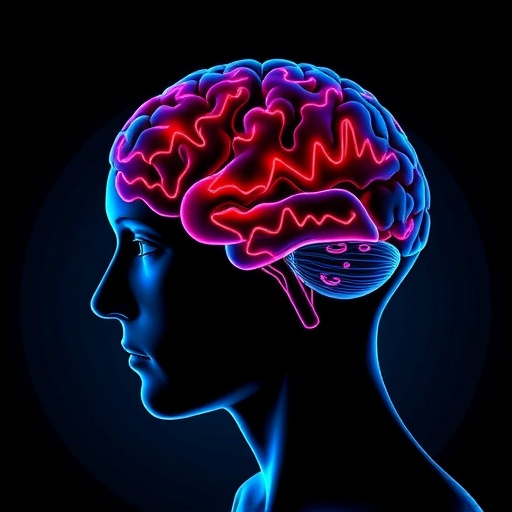
The research team employed advanced electrophysiological techniques involving simultaneous recordings from the motor cortex and globus pallidus in Parkinsonian animal models, complemented by sophisticated computational analyses of beta frequency coherence and phase relationships. They meticulously quantified the patterns of beta synchronization during naturalistic turning behaviors and compared these with normal locomotion. Their data revealed a striking phenomenon: excessive and persistent beta synchrony between the cortex and pallidum, which was markedly heightened during impaired turning episodes. This hyper-synchronization appeared to “lock” motor circuits in a rigid state, preventing the flexible updating of motor commands essential for directional shifts.
Interestingly, the study delineates the temporal specificity of cortico-pallidal beta dynamics, highlighting that aberrant beta bursts were not uniform but occurred in distinct phases relative to the initiation and execution of turning. Early beta overactivity hindered preparatory motor planning processes, whereas sustained beta coherence during the turning itself interfered with motor execution and feedback integration. This dual-phase disruption underscores the multifaceted role of beta oscillations in motor control and reveals why turning—a movement demanding rapid, coordinated changes in direction— is disproportionately affected in Parkinson’s disease compared to simpler linear locomotion.
Beyond the basal ganglia, the researchers also discuss how abnormal beta activity propagates through the broader motor network, including the supplementary motor area and premotor cortex, effectively “entraining” widespread motor regions into dysfunctional synchrony. This pathological network state parallels clinical observations of freezing of gait and festination—phenomena where patients experience sudden motor blocks or involuntary hastening—often triggered during turning or negotiating obstacles. These insights bridge neurophysiological data with behavioral manifestations, providing a holistic framework for understanding motor impairments in Parkinson’s disease.
Therapeutically, the findings have profound implications. Current treatments such as deep brain stimulation (DBS) targeting the subthalamic nucleus or globus pallidus interna exert their beneficial effects partly by disrupting beta oscillations. However, this study suggests that precisely modulating the cortico-pallidal beta interaction, perhaps through closed-loop DBS systems or novel neuromodulatory devices, could optimize symptom relief specifically for turning and complex movement deficits that remain challenging to address. Advances in non-invasive methods such as transcranial alternating current stimulation (tACS) might also leverage these insights to tailor beta rhythm disruption without surgical intervention.
Crucially, the authors emphasize that beta oscillations, while pathological when exaggerated, are also integral to normal motor function, reflecting a need for nuanced interventions that restore physiological beta dynamics rather than bluntly suppressing all beta activity. This perspective aligns with emerging paradigms viewing Parkinson’s disease as a circuit disorder characterized by abnormal neural dynamics rather than purely neurodegeneration, advocating for precision neuromodulation grounded in a deep understanding of network oscillations.
The study’s methodology incorporated a multidisciplinary approach, combining in vivo electrophysiology, behavioral assays of turning, computational modeling, and pharmacological manipulations to systematically dissect the contribution of dopamine depletion to cortico-pallidal beta abnormalities. The researchers demonstrated that restoring dopaminergic tone via pharmacotherapy partially normalized beta bursts and improved turning performance, reinforcing the dopamine-beta link as a pathogenetic axis in Parkinson’s disease.
Moreover, the research highlights the heterogeneity within Parkinson’s disease, noting variability in beta dynamics across subjects and disease stages. This variability suggests potential biomarkers that could stratify patients and personalize neuromodulatory interventions. By mapping beta synchrony signatures to clinical metrics of turning impairment, future clinical applications could non-invasively monitor disease progression and therapeutic efficacy.
From a mechanistic standpoint, the study contributes to the understanding of how beta oscillations arise within the basal ganglia-thalamo-cortical loop. The globus pallidus, with its distinct external (GPe) and internal (GPi) segments, participates differentially in generating and propagating pathological beta rhythms. The authors propose refined models in which cortico-pallidal beta synchronization involves reciprocal excitatory-inhibitory feedback loops, modulated by dopamine-dependent changes in synaptic plasticity and intrinsic neuronal properties. This intricate interplay provides fertile ground for further experimental and theoretical investigation into basal ganglia oscillopathies.
The research also touches on potential links between cortico-pallidal beta dynamics and non-motor symptoms in Parkinson’s disease, such as cognitive inflexibility and impaired motor learning. Given that beta oscillations are implicated broadly in maintaining the current motor or cognitive state, their pathological perpetuation might underlie the difficulty patients experience in switching tasks or adapting to new motor demands, phenomena particularly evident during complex behaviors like turning.
Importantly, this study represents a foundational advance in Parkinson’s disease research, charting a novel conceptual territory by focusing on turning-specific motor dysfunctions rather than generic bradykinesia or tremor. By dissecting the oscillatory mechanisms that uniquely impair turning, the authors have identified a critical target for therapeutic innovation with potentially outsized impact on patient mobility and quality of life.
The translational potential of these findings is vast. Neurologists and clinicians can harness this mechanistic insight to refine symptom assessment scales, incorporating turning-specific biomarkers for early diagnosis and progression monitoring. Furthermore, engineers designing next-generation neuromodulation devices may utilize real-time beta oscillation detection to implement adaptive stimulation protocols, precisely timed to disrupt pathological synchronization and restore normal motor flow during turning.
Future directions highlighted by the authors include extending these investigations to human patients using non-invasive electrophysiology and leveraging machine learning algorithms to decode individual beta patterns predictive of turning difficulty. Additionally, exploration into molecular modulators of beta oscillations could complement electrical neuromodulation approaches, offering combinatory strategies to normalize network dynamics.
Ultimately, this landmark study elegantly demonstrates how cutting-edge neuroscience can unravel the complex circuitry underlying a single, yet highly debilitating motor behavior in Parkinson’s disease. By illuminating the cortico-pallidal beta dynamics as a core element in turning impairment, it lays the groundwork for transformative advances in both fundamental understanding and clinical management of Parkinson’s motor deficits.
Subject of Research: Understanding the neural oscillatory mechanisms, specifically cortico-pallidal beta dynamics, underlying impaired turning movements in Parkinson’s disease.
Article Title: Cortico-pallidal beta dynamics underlie impaired turning in Parkinson’s disease.
Article References:
Shukla, P.D., Bath, J.E., Louie, K.H. et al. Cortico-pallidal beta dynamics underlie impaired turning in Parkinson’s disease. npj Parkinsons Dis. (2026). https://doi.org/10.1038/s41531-026-01421-9
Image Credits: AI Generated
Tags: basal ganglia dysfunction in Parkinson’sbeta frequency disruptions in motor cortexbeta rhythms and bradykinesia correlationcoordination impairments in Parkinsonian turningcortico-basal ganglia network pathologycortico-pallidal beta oscillations in Parkinson’sdopaminergic neuron degeneration effectsglobus pallidus role in motor controlneural mechanisms of turning deficitsneuromodulation therapies for movement disordersParkinson’s disease motor circuit abnormalitiestargeted brain stimulation for Parkinson’s motor