• HOME
  • NEWS
  • EXPLORE
    • CAREER
      • Companies
      • Jobs
    • EVENTS
    • iGEM
      • News
      • Team
    • PHOTOS
    • VIDEO
    • WIKI
  • BLOG
  • COMMUNITY
    • FACEBOOK
    • INSTAGRAM
    • TWITTER
Sunday, August 16, 2026
BIOENGINEER.ORG
No Result
View All Result
  • Login
  • HOME
  • NEWS
  • EXPLORE
    • CAREER
      • Companies
      • Jobs
        • Lecturer
        • PhD Studentship
        • Postdoc
        • Research Assistant
    • EVENTS
    • iGEM
      • News
      • Team
    • PHOTOS
    • VIDEO
    • WIKI
  • BLOG
  • COMMUNITY
    • FACEBOOK
    • INSTAGRAM
    • TWITTER
  • HOME
  • NEWS
  • EXPLORE
    • CAREER
      • Companies
      • Jobs
        • Lecturer
        • PhD Studentship
        • Postdoc
        • Research Assistant
    • EVENTS
    • iGEM
      • News
      • Team
    • PHOTOS
    • VIDEO
    • WIKI
  • BLOG
  • COMMUNITY
    • FACEBOOK
    • INSTAGRAM
    • TWITTER
No Result
View All Result
Bioengineer.org
No Result
View All Result
Home NEWS Science News Health

Corals go hungry long before they bleach

Bioengineer by Bioengineer
April 19, 2021
in Health
Reading Time: 3 mins read
0
IMAGE
Share on FacebookShare on TwitterShare on LinkedinShare on RedditShare on Telegram

IMAGE

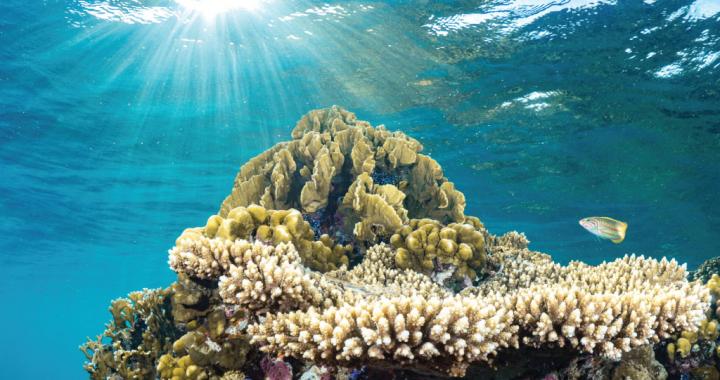
Credit: © 2021 Morgan Bennett Smith

The results of coral beaching are obvious — stark underwater forests of white coral skeletons — yet the physiological processes of bleaching are not well understood. Now, KAUST researchers show that, long before signs of bleaching appear, prolonged spells of warm water cause heat stress that disrupts the nutrient cycling of the coral and its symbiotic algae.

Coral reefs occur in warm low-nutrient waters. Stony corals include the coral animal, which is a cnidarian host that lives in symbiosis with Symbiodiniaceae, single-celled algae that photosynthesize to help “feed” the coral in exchange for the protection of the coral tissue. During a bleaching event, the algae are expelled by the coral, which may lead to the coral’s starvation and death. Current thinking, explains Nils Rädecker, a former Ph.D. student at KAUST and now at the École Polytechnique Fédérale de Lausanne (EPFL), “was that this starvation was the result of the corals losing the algae as their main source of energy.” However, a few signals suggested that it is not as simple as that.

To investigate, the research team transported five colonies of a cauliflower coral (Stylophora pistillata) from Abu Shosha reef in the Red Sea to KAUST’s aquarium tanks, which were set up to closely mimic reef conditions. Once acclimatized, the corals were subjected to heat stress conditions that matched local maximum summer temperatures in 2017.

The research team showed that the stable coral-algal symbiosis relies on the algae remaining nitrogen-limited as it “ensures the algae transfer photosynthetic carbon as sugars to the coral host instead of investing it in their own growth,” explains Rädecker. “However, during heat stress the corals consume their own energy reserves (amino acids) and release waste ammonium that, in turn, stimulates algal symbiont growth.”

This sets up a new cycle. “This metabolic imbalance destabilizes the symbiotic nutrient cycling: as the algal symbionts grow, they translocate less carbon to their coral host,” says Rädecker. “Then, because the coral host receives less carbon from its algae, it releases ammonium, thereby stimulating algal growth.” The expulsion of the algae during bleaching is not the cause of coral stress, says Nils, but rather “bleaching is a symptom of a disturbed symbiosis, in which the algae no longer provide food to their coral host,” he says.

Current management strategies focus on quantifying the severity of bleaching, but these new results suggest an alternative focus. “Regular monitoring of the nutritional status of corals could help to detect long-term trends in the response of corals to changing environmental conditions and to anticipate problems before reefs are bleaching,” explains Rädecker.

These findings also emphasize broad benefits “from identifying reefs that are vulnerable to bleaching and implementing appropriate countermeasures, rather than having to ‘rescue’ them once bleached,” says Christian Voolstra, formerly of KAUST and now at the University of Konstanz in Germany. “Our study shows that controlling the water quality, such as nitrate levels, in the environment could help repress destabilizing the metabolic feedback loop when reef water temperatures go up.”

###

Media Contact
Michael Cusack
[email protected]

Original Source

https://discovery.kaust.edu.sa/en/article/1114/corals-go-hungry-long-before-they-bleach

Related Journal Article

http://dx.doi.org/10.1073/pnas.2022653118

Tags: BiodiversityBiologyClimate ChangeEcology/EnvironmentMarine/Freshwater BiologyNutrition/NutrientsZoology/Veterinary Science
Share12Tweet8Share2ShareShareShare2

Related Posts

PARP1 Drives Neuropathic Pain Through GPX4-Dependent Ferroptosis in Injured Mice’s Sensory Neurons

August 15, 2026

Genome-wide skin pQTL map reveals genetic regulators and mechanisms underlying skin disorders

August 15, 2026

Levistilide A Drives Ferroptosis via RNF40-HSP90α Axis, Suppressing Colorectal Cancer Lung Metastasis

August 15, 2026

Sintilimab, IBI305, and Chemotherapy Show Promise in First-Line Advanced Gastric and GEJ Adenocarcinoma

August 15, 2026
Please login to join discussion

POPULAR NEWS

  • KAIST develops semiconductor neuron that harnesses noise to selectively process signals

    29 shares
    Share 12 Tweet 7
  • Imagining natural and extra robotic thumbs together strengthens kinesthetic sensorimotor networks

    29 shares
    Share 12 Tweet 7
  • PARP1 Drives Neuropathic Pain Through GPX4-Dependent Ferroptosis in Injured Mice’s Sensory Neurons

    29 shares
    Share 12 Tweet 7
  • Strubbelig–NHL3 Receptor Complex Helps Arabidopsis Respond to Cellulose Deficiency

    29 shares
    Share 12 Tweet 7

About

We bring you the latest biotechnology news from best research centers and universities around the world. Check our website.

Follow us

Recent News

KAIST develops semiconductor neuron that harnesses noise to selectively process signals

Imagining natural and extra robotic thumbs together strengthens kinesthetic sensorimotor networks

PARP1 Drives Neuropathic Pain Through GPX4-Dependent Ferroptosis in Injured Mice’s Sensory Neurons

Subscribe to Blog via Email

Success! An email was just sent to confirm your subscription. Please find the email now and click 'Confirm' to start subscribing.

Join 85 other subscribers
  • Contact Us

Bioengineer.org © Copyright 2023 All Rights Reserved.

Welcome Back!

Login to your account below

Forgotten Password?

Retrieve your password

Please enter your username or email address to reset your password.

Log In
No Result
View All Result
  • Homepages
    • Home Page 1
    • Home Page 2
  • News
  • National
  • Business
  • Health
  • Lifestyle
  • Science

Bioengineer.org © Copyright 2023 All Rights Reserved.