• HOME
  • NEWS
  • EXPLORE
    • CAREER
      • Companies
      • Jobs
    • EVENTS
    • iGEM
      • News
      • Team
    • PHOTOS
    • VIDEO
    • WIKI
  • BLOG
  • COMMUNITY
    • FACEBOOK
    • INSTAGRAM
    • TWITTER
Thursday, May 14, 2026
BIOENGINEER.ORG
No Result
View All Result
  • Login
  • HOME
  • NEWS
  • EXPLORE
    • CAREER
      • Companies
      • Jobs
        • Lecturer
        • PhD Studentship
        • Postdoc
        • Research Assistant
    • EVENTS
    • iGEM
      • News
      • Team
    • PHOTOS
    • VIDEO
    • WIKI
  • BLOG
  • COMMUNITY
    • FACEBOOK
    • INSTAGRAM
    • TWITTER
  • HOME
  • NEWS
  • EXPLORE
    • CAREER
      • Companies
      • Jobs
        • Lecturer
        • PhD Studentship
        • Postdoc
        • Research Assistant
    • EVENTS
    • iGEM
      • News
      • Team
    • PHOTOS
    • VIDEO
    • WIKI
  • BLOG
  • COMMUNITY
    • FACEBOOK
    • INSTAGRAM
    • TWITTER
No Result
View All Result
Bioengineer.org
No Result
View All Result
Home NEWS Science News

Controlling the optical properties of solids with acoustic waves

Bioengineer by Bioengineer
December 2, 2019
in Science News
Reading Time: 2 mins read
0
IMAGE
Share on FacebookShare on TwitterShare on LinkedinShare on RedditShare on Telegram

IMAGE

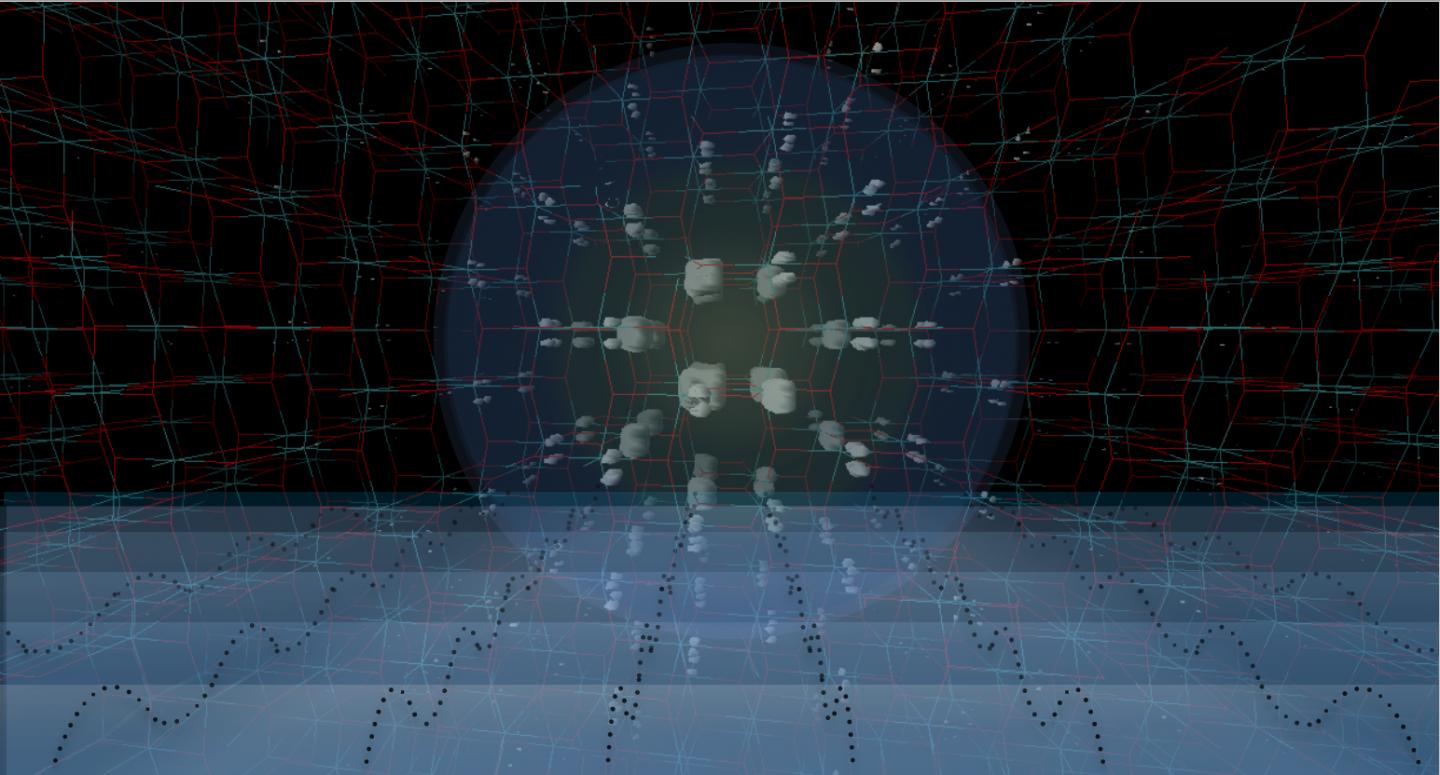
Credit: Adriel Dominguez (Max Planck Institute, Hamburg)


One of the main challenges in materials science research is to achieve high tunability of the optical properties of semiconductors at room temperature. These properties are governed by “excitons”, which are bound pairs of negative electrons and positive holes in a semiconductor.

Excitons have become increasingly important in optoelectronics and the last years have witnessed a surge in the search for control parameters – temperature, pressure, electric and magnetic fields – that can tune excitonic properties. However, moderately large changes have only been achieved under equilibrium conditions and at low temperatures. Significant changes at ambient temperatures, which are important for applications, have so far been lacking.

This has now just been achieved in the lab of Majed Chergui at EPFL within the Lausanne Centre for Ultrafast Science, in collaboration with the theory groups of Angel Rubio (Max-Planck Institute, Hamburg) and Pascal Ruello (Université de Le Mans). Publishing in Science Advances, the international team shows, for the first time, control of excitonic properties using acoustic waves. To do this, the researchers launched a high-frequency (hundreds of gigahertz), large-amplitude acoustic wave in a material using ultrashort laser pulses. This strategy further allows for the dynamical manipulation of the exciton properties at high speed.

This remarkable result was reached on titanium dioxide at room temperature, a cheap and abundant semiconductor that is used in a wide variety of light-energy conversion technologies such as photovoltaics, photocatalysis, and transparent conductive substrates.

“Our findings and the complete description we offer open very exciting perspectives for applications such as cheap acousto-optic devices or in sensor technology for external mechanical strain,” says Majed Chergui. “The use of high-frequency acoustic waves, as those generated by ultrashort laser pulses, as control schemes of excitons pave a new era for acousto-excitonics and active-excitonics, analogous to active plasmonics, which exploits the plasmon excitations of metals.”

“These results are just the beginning of what can be explored by launching high-frequency acoustic waves in materials,” adds Edoardo Baldini, the lead author of the article who is currently at MIT. “We expect to use them in the future to control the fundamental interactions governing magnetism or trigger novel phase transitions in complex solids”.

###

Other contributors

University of the Basque Country

Max Planck Institute for the Structure and Dynamics of Matter

Simons Foundation (Flatiron Institute)

CNRS Joint Research Units

Reference

Edoardo Baldini, Adriel Dominguez, Tania Palmieri, Oliviero Cannelli, Angel Rubio, Pascal Ruello, Majed Chergui. Exciton control in a room temperature bulk semiconductor with coherent strain pulses. Science Advances 29 November 2019. DOI: 10.1126/sciadv.aax2937

Media Contact
Nik Papageorgiou
[email protected]
41-216-932-105

Related Journal Article

http://dx.doi.org/10.1126/sciadv.aax2937

Tags: AcousticsBiomedical/Environmental/Chemical EngineeringChemistry/Physics/Materials SciencesMaterialsMolecular Physics
Share12Tweet8Share2ShareShareShare2

Related Posts

Nationwide Study Reveals Decreased Triptan Use for Migraine in Women One Year After Starting Semaglutide for Weight Loss

May 14, 2026

CU Anschutz School of Medicine Launches Innovative 3-Year MD Program to Combat Physician Shortages and Reduce Training Costs

May 14, 2026

Call for Submissions: JMIR Biomedical Engineering Explores “Sex and Gender in Biomedical Engineering: Advancing Equity in Workforce and Modeling”

May 14, 2026

Expanding Proton Therapy Access: Five New Centres Planned Across Romania, Greece, Italy, Northern Ireland, and Poland to Serve Patients Europe-Wide

May 14, 2026
Please login to join discussion

POPULAR NEWS

  • Research Indicates Potential Connection Between Prenatal Medication Exposure and Elevated Autism Risk

    842 shares
    Share 337 Tweet 211
  • New Study Reveals Plants Can Detect the Sound of Rain

    729 shares
    Share 291 Tweet 182
  • Salmonella Haem Blocks Macrophages, Boosts Infection

    62 shares
    Share 25 Tweet 16
  • Breastmilk Balances E. coli and Beneficial Bacteria in Infant Gut Microbiomes

    58 shares
    Share 23 Tweet 15

About

We bring you the latest biotechnology news from best research centers and universities around the world. Check our website.

Follow us

Recent News

Nationwide Study Reveals Decreased Triptan Use for Migraine in Women One Year After Starting Semaglutide for Weight Loss

CU Anschutz School of Medicine Launches Innovative 3-Year MD Program to Combat Physician Shortages and Reduce Training Costs

Call for Submissions: JMIR Biomedical Engineering Explores “Sex and Gender in Biomedical Engineering: Advancing Equity in Workforce and Modeling”

Subscribe to Blog via Email

Enter your email address to subscribe to this blog and receive notifications of new posts by email.

Join 82 other subscribers
  • Contact Us

Bioengineer.org © Copyright 2023 All Rights Reserved.

Welcome Back!

Login to your account below

Forgotten Password?

Retrieve your password

Please enter your username or email address to reset your password.

Log In
No Result
View All Result
  • Homepages
    • Home Page 1
    • Home Page 2
  • News
  • National
  • Business
  • Health
  • Lifestyle
  • Science

Bioengineer.org © Copyright 2023 All Rights Reserved.