• HOME
  • NEWS
  • EXPLORE
    • CAREER
      • Companies
      • Jobs
    • EVENTS
    • iGEM
      • News
      • Team
    • PHOTOS
    • VIDEO
    • WIKI
  • BLOG
  • COMMUNITY
    • FACEBOOK
    • INSTAGRAM
    • TWITTER
Tuesday, July 7, 2026
BIOENGINEER.ORG
No Result
View All Result
  • Login
  • HOME
  • NEWS
  • EXPLORE
    • CAREER
      • Companies
      • Jobs
        • Lecturer
        • PhD Studentship
        • Postdoc
        • Research Assistant
    • EVENTS
    • iGEM
      • News
      • Team
    • PHOTOS
    • VIDEO
    • WIKI
  • BLOG
  • COMMUNITY
    • FACEBOOK
    • INSTAGRAM
    • TWITTER
  • HOME
  • NEWS
  • EXPLORE
    • CAREER
      • Companies
      • Jobs
        • Lecturer
        • PhD Studentship
        • Postdoc
        • Research Assistant
    • EVENTS
    • iGEM
      • News
      • Team
    • PHOTOS
    • VIDEO
    • WIKI
  • BLOG
  • COMMUNITY
    • FACEBOOK
    • INSTAGRAM
    • TWITTER
No Result
View All Result
Bioengineer.org
No Result
View All Result
Home NEWS Science News Health

Connective tissue on the wrong road — When organs start to scar

Bioengineer by Bioengineer
January 31, 2019
in Health
Reading Time: 2 mins read
0
IMAGE
Share on FacebookShare on TwitterShare on LinkedinShare on RedditShare on Telegram

Physicians discover a protein that reprogrammes connective tissue cells
IMAGE

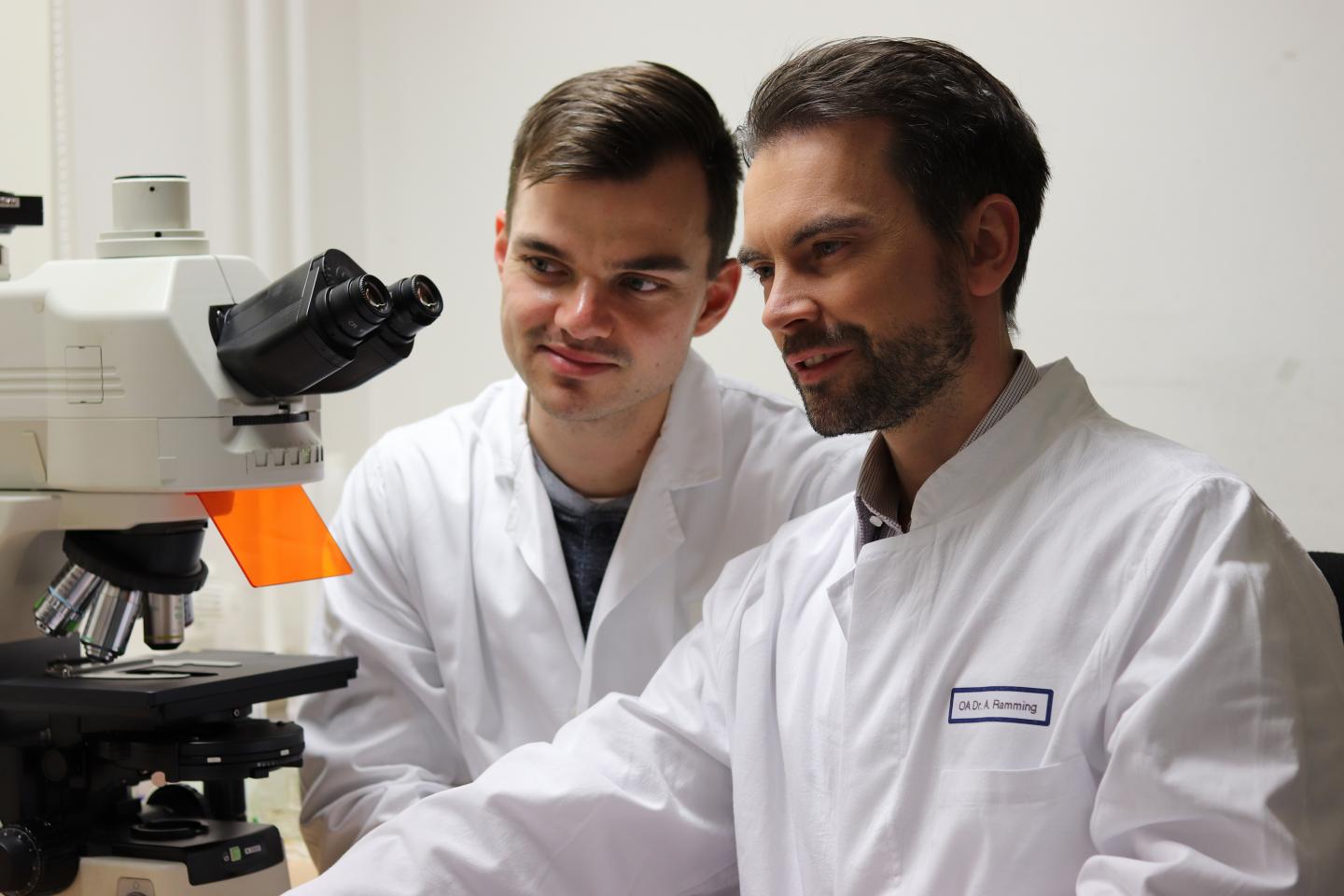
Credit: Uni-Klinikum Erlangen/Andreas Ramming


Scientists from Friedrich-Alexander-Universität Erlangen-Nürnberg (FAU), Department of Medicine 3 – Rheumatology and Immunology, headed by Prof. Dr. Georg Schett, have now decrypted a molecular network that controls these processes and could in future provide a new way to treat organ scarring. The results show that the protein PU.1 causes pathological deposition of connective tissue. The scientists have now published their results in the renowned journal Nature.*

In connective tissue diseases such as systemic sclerosis, referred to collectively as ‘fibrosis’, excessive activation of connective tissue cells leads to hardening of the tissue and scarring within the affected organ. In principle, these diseases can affect any organ system and very often lead to disruption of organ function. Connective tissue cells play a key role in normal wound healing in healthy individuals. However, if the activation of connective tissue cells cannot be switched off, fibrotic diseases occur, in which an enormous amount of matrix is deposited in the tissue, leading to scarring and dysfunction of the affected tissue. Until now, scientists did not fully understand why repair processes malfunction in fibrotic diseases.

An international team of scientists led by Dr. Andreas Ramming from the Chair of Internal Medicine III at FAU has now been able to decipher a molecular mechanism responsible for the ongoing activation of connective tissue cells. In experimental studies, the researchers targeted the protein PU.1. In normal wound healing, the formation of PU.1 is inhibited by the body so that at the end of the normal healing process the connective tissue cells can return to a resting state.

‘We were able to show that PU.1 is activated in various connective tissue diseases in the skin, lungs, liver and kidneys. PU.1 binds to the DNA in the connective tissue cells and reprogrammes them, resulting in a prolonged deposition of tissue components,’ explains Dr. Ramming. PU.1 is not the only factor involved in fibrosis, as factors that are involved in the deposition of scar tissue have already been identified in the past. What has been discovered now, however, is that PU.1 plays a central role in a network of factors controlling this process. ‘PU.1 is like the conductor in an orchestra,’ explains Ramming, ‘if you take it out, the entire concert collapses.’ This approach has already been tested using an experimental drug, fuelling the hope that clinical trials on inhibiting PU.1 may soon be able to be launched, aimed at treating fibrosis better.

###

The work was supported by Collaborative Research Centre 1181 ‘Checkpoints for Resolution of Inflammation’ of the German Research Foundation.

* http://dx.doi.org/10.1038/s41586-019-0896-x

Media Contact
Andreas Ramming
[email protected]
49-913-185-39109

Related Journal Article

http://dx.doi.org/10.1038/s41586-019-0896-x

Tags: Medicine/Health
Share12Tweet8Share2ShareShareShare2

Related Posts

Flame retardant BDE-209 targets molecularly linked to ulcerative colitis

July 6, 2026

Kidney transplant outcomes in older adults studied by German researchers

July 6, 2026

Salmonella protein SopB curbs early inflammation to slow disease progression

July 6, 2026

Multi-metal cooperation drives lung cancer chemoresistance, reversed by MiADMSA

July 6, 2026
Please login to join discussion

POPULAR NEWS

  • Detection of EDCs in Breast Milk and Infant Urine Up to Six Months Highlights Early Exposure Risks

    77 shares
    Share 31 Tweet 19
  • New Drug Candidate Developed at McMaster Shows Potential for Treating Brain Cancer

    58 shares
    Share 23 Tweet 15
  • Saying Goodbye to PGY-6: Pediatric Fellowship Realities

    103 shares
    Share 41 Tweet 26
  • KTU Researchers Explore Ultrasound’s Role in Enhancing Blood Flow Beyond Diagnostics

    53 shares
    Share 21 Tweet 13

About

We bring you the latest biotechnology news from best research centers and universities around the world. Check our website.

Follow us

Recent News

Flame retardant BDE-209 targets molecularly linked to ulcerative colitis

Ultra-high frequency particle impacts mimic rockbursts to shatter hard rock

Kidney transplant outcomes in older adults studied by German researchers

Subscribe to Blog via Email

Enter your email address to subscribe to this blog and receive notifications of new posts by email.

Join 83 other subscribers
  • Contact Us

Bioengineer.org © Copyright 2023 All Rights Reserved.

Welcome Back!

Login to your account below

Forgotten Password?

Retrieve your password

Please enter your username or email address to reset your password.

Log In
No Result
View All Result
  • Homepages
    • Home Page 1
    • Home Page 2
  • News
  • National
  • Business
  • Health
  • Lifestyle
  • Science

Bioengineer.org © Copyright 2023 All Rights Reserved.