


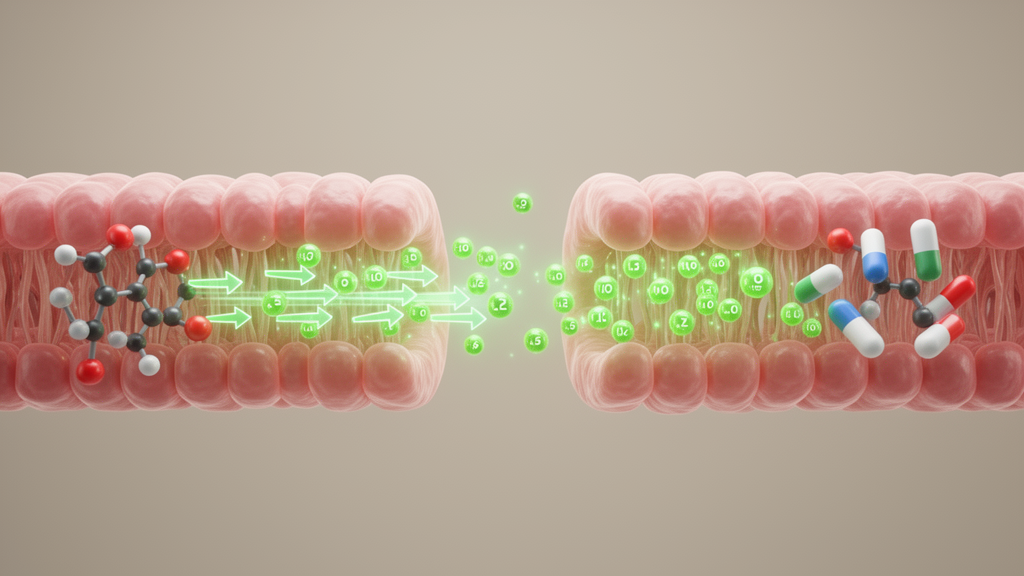
People with type 2 diabetes are routinely prescribed drugs that each act on the body’s handling of minerals and micronutrients — and, according to a scoping review published in Diabetology & Metabolic Syndrome, several of these classes pull magnesium in opposing directions at the same time. The review, reported per PRISMA-ScR guidelines, searched five databases up to 31 March 2026 and charted 65 sources of evidence covering proton pump inhibitors (PPIs), sodium-glucose cotransporter 2 (SGLT2) inhibitors, diuretics and metformin. Because each drug class has previously been studied only as a single exposure, the authors set out to map the evidence across all four and to characterise the net effect of the combinations that individual patients actually experience.
No meta-analysis was performed and no pooled estimate was generated for the overall pathway, since the literature lacks a common effect measure. Instead, each link in a proposed PPI–mineral–tissue pathway was scored against a pre-specified, author-developed heuristic requiring separate human evidence at the exposure-biomarker, biomarker-tissue and tissue-outcome steps. The review is explicit that this heuristic is exploratory and not a validated evidence-grading system. Even so, the assembled data describe a striking pharmacological tug-of-war. SGLT2 inhibitors raise serum magnesium by approximately 0.07 mmol/L (95% CI 0.06–0.08) as a class effect and have been used therapeutically in refractory hypomagnesaemia. Loop and thiazide diuretics deplete magnesium. PPI-associated hypomagnesaemia is heterogeneous, with a pooled relative risk of 1.44 (95% CI 1.13–1.76), and is concentrated in patients also taking diuretics, in whom the interaction is formally significant.
The review frames these exposures as acting on a loop rather than a static deficit, because hypomagnesaemia both follows from and worsens insulin resistance. The interactions extend beyond magnesium. PPIs raise metformin exposure by 15–16% through inhibition of organic cation transporters, and both PPIs and metformin independently reduce vitamin B12 absorption. Add-on PPI therapy was associated with a 0.36% reduction in glycated haemoglobin, while selenium supplementation was reported to increase incident type 2 diabetes — a finding that underpins the review’s blunt conclusion that supplementation is not supported and, for selenium, is contraindicated.
On the central question of cardiovascular risk, the evidence falls short of a strong claim. No mineral scores at the highest level across all three steps of the heuristic for a PPI-attributable cardiac effect. An original exploratory triangulation analysis indicates that, under several unverified assumptions — including log-linearity and transportability between genetic and pharmacological effects — the magnesium pathway could account for approximately 2–10% of the observed cardiovascular association. The authors conclude that the pathway appears biologically real but quantitatively small, and unlikely on its own to explain the reported cardiovascular associations with these drugs.
What does survive appraisal is a restricted claim: in diuretic-treated patients, PPI co-exposure may lower magnesium enough to matter clinically, and SGLT2 inhibitor co-exposure may offset that effect. Both halves of the claim, the review notes, are testable in cohorts that already exist. The broader message is that drug-induced mineral disturbance in type 2 diabetes cannot be attributed to any single agent, because three commonly co-prescribed classes act on magnesium in opposing directions within the same patients. The article was published open access on 30 September 2026 and is currently available as an accepted manuscript version subject to further edits before the final Version of Record.
Subject of Research: How commonly co-prescribed diabetes and gastrointestinal drugs opposingly affect magnesium and micronutrient status and cardiovascular risk in type 2 diabetes
Article Title: Opposing Drug Effects on Magnesium and Micronutrient Status in Type 2 Diabetes and their Relation to Cardiovascular Risk: Proton Pump Inhibitors, SGLT2 Inhibitors, Diuretics and Metformin: A scoping review
Article References: Hullon, D., Ahad, A., Oskouyan, Z., Singh, T., & Padaria, J. (2026). Opposing Drug Effects on Magnesium and Micronutrient Status in Type 2 Diabetes and their Relation to Cardiovascular Risk: Proton Pump Inhibitors, SGLT2 Inhibitors, Diuretics and Metformin: A scoping review. Diabetology & Metabolic Syndrome. https://doi.org/10.1186/s13098-026-02313-x
Image Credits: AI Generated
DOI: 10.1186/s13098-026-02313-x
Keywords: type 2 diabetes, magnesium, proton pump inhibitors, SGLT2 inhibitors, diuretics, metformin, hypomagnesaemia, cardiovascular risk, scoping review, vitamin B12, micronutrients, drug interactions
News Source: Ophelia Keating. (October 30, 2026). Common Diabetes Drugs Pull Magnesium in Opposite Directions, Review Finds. Scienmag.



