• HOME
  • NEWS
  • EXPLORE
    • CAREER
      • Companies
      • Jobs
    • EVENTS
    • iGEM
      • News
      • Team
    • PHOTOS
    • VIDEO
    • WIKI
  • BLOG
  • COMMUNITY
    • FACEBOOK
    • INSTAGRAM
    • TWITTER
Thursday, May 21, 2026
BIOENGINEER.ORG
No Result
View All Result
  • Login
  • HOME
  • NEWS
  • EXPLORE
    • CAREER
      • Companies
      • Jobs
        • Lecturer
        • PhD Studentship
        • Postdoc
        • Research Assistant
    • EVENTS
    • iGEM
      • News
      • Team
    • PHOTOS
    • VIDEO
    • WIKI
  • BLOG
  • COMMUNITY
    • FACEBOOK
    • INSTAGRAM
    • TWITTER
  • HOME
  • NEWS
  • EXPLORE
    • CAREER
      • Companies
      • Jobs
        • Lecturer
        • PhD Studentship
        • Postdoc
        • Research Assistant
    • EVENTS
    • iGEM
      • News
      • Team
    • PHOTOS
    • VIDEO
    • WIKI
  • BLOG
  • COMMUNITY
    • FACEBOOK
    • INSTAGRAM
    • TWITTER
No Result
View All Result
Bioengineer.org
No Result
View All Result
Home NEWS Science News Biology

Closer to identifying leukemic stem cells

Bioengineer by Bioengineer
January 2, 2020
in Biology
Reading Time: 2 mins read
0
IMAGE
Share on FacebookShare on TwitterShare on LinkedinShare on RedditShare on Telegram

Researchers at the Josep Carreras Leukaemia Research Institute have developed an innovative diagnostic assay to identify cells resistant to leukemia treatment
IMAGE

Credit: Jordi Petriz

Acute myeloid leukemia is the most common type of leukemia in adults. It is characterized by the pathological expansion of immature cells (myeloblasts) that invade the bone marrow and expand into the blood, affecting the production of the rest of the healthy cells. Although patients usually respond well to chemotherapy-based treatments, a large proportion of them eventually relapse or show resistance to these procedures.

The cause of relapse or resistance to treatment is sometimes due to the existence of leukemic stem cells capable of starting cancer again, and in turn, for being resistant to chemotherapy. However, identifying them is a challenge since there are no specific markers to detect and isolate them.

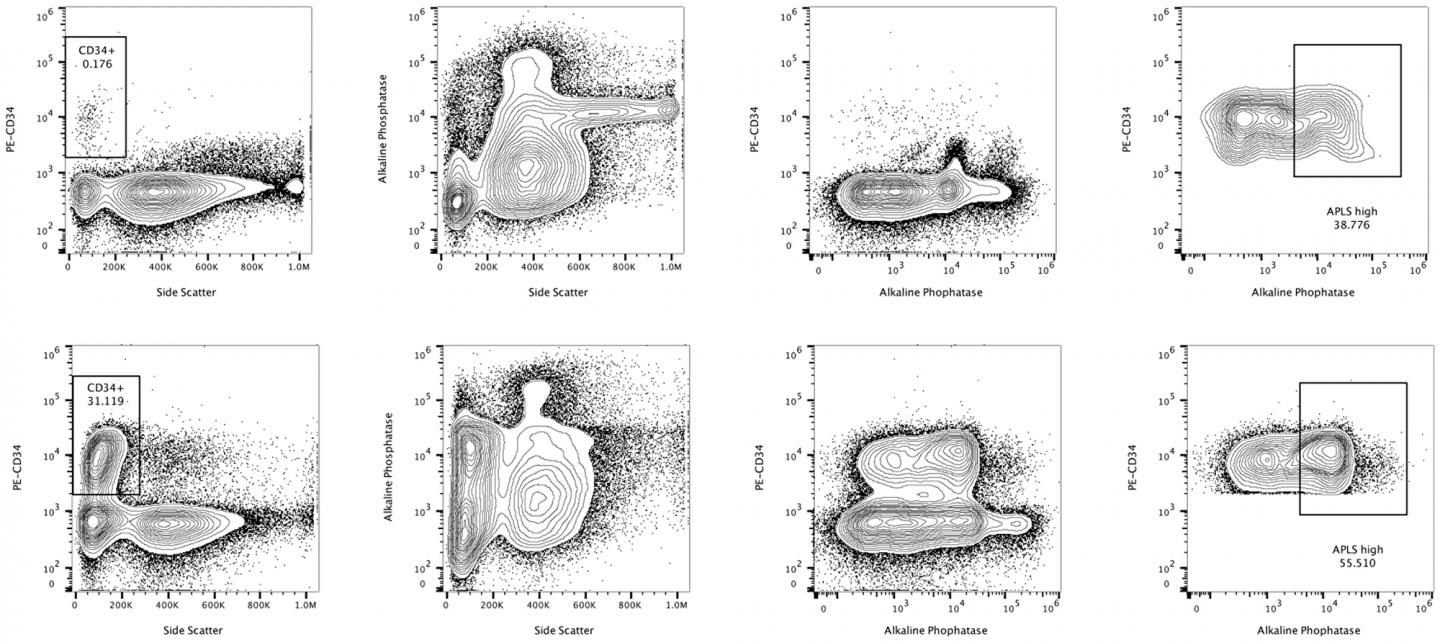
The Functional Cytomics Research Group at the Josep Carreras Leukaemia Research Institute has developed innovative trials that allow the identification of these cells by testing the activity of a protein, alkaline phosphatase, present in myeloblasts.

To do this, they have used advanced cytomical methodologies that allow multiple functional characteristics to be analyzed cell by cell, individually, in a very few minutes.

The researchers identified a group of patients whose leukemic cells had high levels of alkaline phosphatase activity and another group of patients with lower levels of this activity. Both groups showed a differential response to chemotherapy treatment, with the most active phosphatase group showing the worst reaction to treatment and the shortest survival. Surprisingly, no significant association was detected between the results obtained through different cytogenetic analysis techniques and molecular studies, with the determination of prognostic factors of greater or lesser risk.

“These results represent a new approach to improve the prognosis in the diagnostic evaluation of acute myeloid leukemia and to estimate the probability of relapse and persistence of the disease. This will allow us to open new lines of research aimed at applying alternative strategies in terms of treatment,” said Dr. Jordi Petriz, director of the study.

###

Media Contact
Isabel Troytiño
[email protected]
34-636-761-712

Related Journal Article

http://dx.doi.org/10.18632/oncotarget.27356

Tags: BiologyBiotechnologycancerCell BiologyDiagnosticsMedicine/Health
Share12Tweet8Share2ShareShareShare2

Related Posts

How Atlantic Herring Rewired Their Reproductive Strategy to Thrive in Changing Oceans — Biology

How Atlantic Herring Rewired Their Reproductive Strategy to Thrive in Changing Oceans

May 20, 2026
Study Finds Young Fraser River Chinook Salmon Swimming in Chemical Mixture — Biology

Study Finds Young Fraser River Chinook Salmon Swimming in Chemical Mixture

May 20, 2026

Thousands of UK Beekeepers Contribute Honey to Advance Environmental Science

May 20, 2026

New Fossil Finds in Northwest Canada Transform Understanding of Early Animal Evolution

May 20, 2026
Please login to join discussion

POPULAR NEWS

  • blank

    New Study Reveals Plants Can Detect the Sound of Rain

    733 shares
    Share 292 Tweet 183
  • ESMO 2025: mRNA COVID Vaccines Enhance Efficacy of Cancer Immunotherapy

    301 shares
    Share 120 Tweet 75
  • Research Indicates Potential Connection Between Prenatal Medication Exposure and Elevated Autism Risk

    846 shares
    Share 338 Tweet 212
  • Breastmilk Balances E. coli and Beneficial Bacteria in Infant Gut Microbiomes

    58 shares
    Share 23 Tweet 15

About

We bring you the latest biotechnology news from best research centers and universities around the world. Check our website.

Follow us

Recent News

Primate Frontal Cortex Encodes Action Symbols

Mitochondrial l-2-Hydroxyglutarate Signals Cellular Metabolism

Tent5a-Mediated Insulin mRNA Polyadenylation Controls Beta Cells

Subscribe to Blog via Email

Enter your email address to subscribe to this blog and receive notifications of new posts by email.

Join 82 other subscribers
  • Contact Us

Bioengineer.org © Copyright 2023 All Rights Reserved.

Welcome Back!

Login to your account below

Forgotten Password?

Retrieve your password

Please enter your username or email address to reset your password.

Log In
No Result
View All Result
  • Homepages
    • Home Page 1
    • Home Page 2
  • News
  • National
  • Business
  • Health
  • Lifestyle
  • Science

Bioengineer.org © Copyright 2023 All Rights Reserved.