


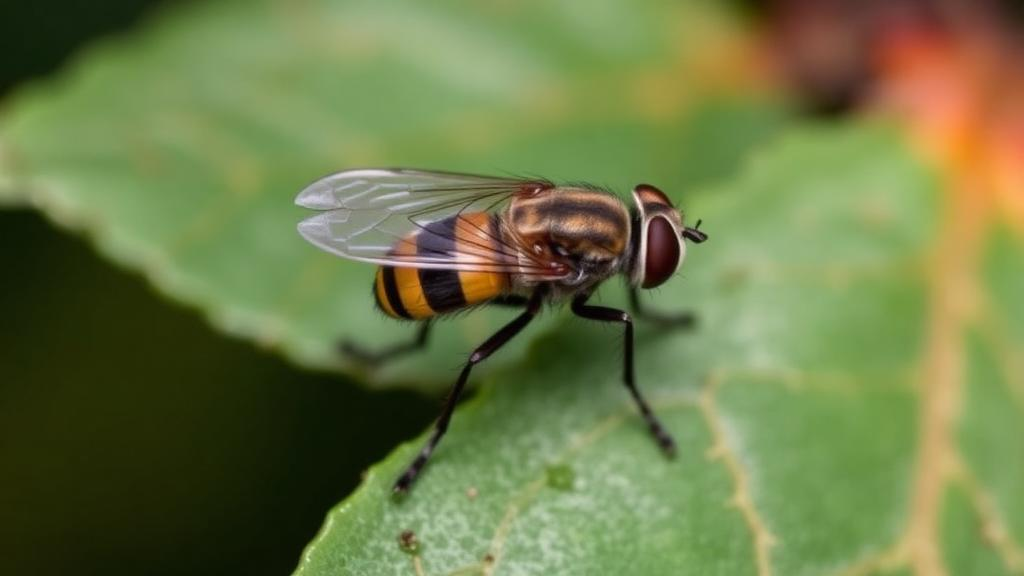
Bactrocera (Zeugodacus) diaphora, a destructive quarantine fruit fly pest, could see its climatically suitable habitat in China shift substantially under future climate change, according to a modeling study published in BMC Ecology and Evolution. Using an optimized MaxEnt species distribution model, researchers projected where the pest’s habitat suitability may expand, fluctuate, or contract across the country through the end of the century.
The model was built from 83 verified occurrence records of the species. The team optimized the MaxEnt configuration, selecting an LQP feature combination and a regularization multiplier of 0.5, and the resulting model achieved an average AUC exceeding 0.96, indicating strong predictive discrimination. Before modeling, the researchers screened candidate environmental variables using Pearson correlation analysis and jackknife testing, retaining six bioclimatic predictors.
Two climate variables dominated the suitability estimate.
Under present climate conditions, the model estimates that climatically suitable niches cover 25.73 percent of China’s land area, equivalent to about 247.47 million hectares expressed as 247.47 × 10⁴ square kilometers. These areas are concentrated mainly in eastern Sichuan, Chongqing, and coastal South China.
The researchers then projected future suitable ranges under four CMIP6 shared socioeconomic pathway (SSP) emission scenarios and found divergent trends. Suitable areas expanded under low and medium-emission scenarios, fluctuated under moderate-high emissions, and shrank continuously under the highest-emission pathway, with a 17.87 percent decrease projected for the period 2081–2100.
Across the scenarios, the overall suitability centroid was projected to shift northward and eastward. Such a shift would move the modeled core of suitable climate away from the current southwestern and southern strongholds, with implications for where monitoring efforts may need to focus in the coming decades.
As with all correlative species distribution models, these projections describe where climate conditions may become suitable, not confirmed occurrences of the pest. The occurrence dataset was relatively small at 83 verified records, and the model captures climatic niche rather than other factors that influence real populations, such as host plant availability, land use, or control measures. The authors also note the article is being shared early as a peer-reviewed, accepted version that is citable but still subject to further edits before the final version of record.
The study’s climate-based niche results are presented as a quantitative foundation for targeted monitoring, early warning, and region-specific management of B. diaphora under future climate scenarios. Because the species is regarded as a quarantine pest, refined maps of potential suitability could help plant protection authorities prioritize surveillance in areas where the modeled climate matches the fly’s current niche.
Subject of Research: Species distribution modeling of the fruit fly pest Bactrocera diaphora in China under present and future CMIP6 climate scenarios
Article Title: Predicting distributional changes of Bactrocera diaphora (Hendel) (Diptera: Tephritidae) in China using an optimized MaxEnt model
Article References: Liu, R., Gao, H., Wu, W., Lin, Z., Hong, Q., Lu, C., Du, X., Song, Y., Cai, P., & Hong, Y. (2026). Predicting distributional changes of Bactrocera diaphora (Hendel) (Diptera: Tephritidae) in China using an optimized MaxEnt model. BMC Ecology and Evolution. https://doi.org/10.1186/s12862-026-02591-z
Image Credits: AI Generated
DOI: 10.1186/s12862-026-02591-z
Keywords: Bactrocera diaphora, fruit fly, MaxEnt, species distribution model, climate change, CMIP6, SSP scenarios, China, quarantine pest, bioclimatic variables, habitat suitability, pest monitoring
News Source: Sloane Callahan. (October 29, 2026). Climate change may reshape the range of a destructive fruit fly pest in China. Scienmag.



