• HOME
  • NEWS
  • EXPLORE
    • CAREER
      • Companies
      • Jobs
    • EVENTS
    • iGEM
      • News
      • Team
    • PHOTOS
    • VIDEO
    • WIKI
  • BLOG
  • COMMUNITY
    • FACEBOOK
    • INSTAGRAM
    • TWITTER
Monday, June 29, 2026
BIOENGINEER.ORG
No Result
View All Result
  • Login
  • HOME
  • NEWS
  • EXPLORE
    • CAREER
      • Companies
      • Jobs
        • Lecturer
        • PhD Studentship
        • Postdoc
        • Research Assistant
    • EVENTS
    • iGEM
      • News
      • Team
    • PHOTOS
    • VIDEO
    • WIKI
  • BLOG
  • COMMUNITY
    • FACEBOOK
    • INSTAGRAM
    • TWITTER
  • HOME
  • NEWS
  • EXPLORE
    • CAREER
      • Companies
      • Jobs
        • Lecturer
        • PhD Studentship
        • Postdoc
        • Research Assistant
    • EVENTS
    • iGEM
      • News
      • Team
    • PHOTOS
    • VIDEO
    • WIKI
  • BLOG
  • COMMUNITY
    • FACEBOOK
    • INSTAGRAM
    • TWITTER
No Result
View All Result
Bioengineer.org
No Result
View All Result
Home NEWS Science News Biology

Climate change could threaten sea snails in mid-Atlantic waters

Bioengineer by Bioengineer
March 11, 2020
in Biology
Reading Time: 2 mins read
0
IMAGE
Share on FacebookShare on TwitterShare on LinkedinShare on RedditShare on Telegram

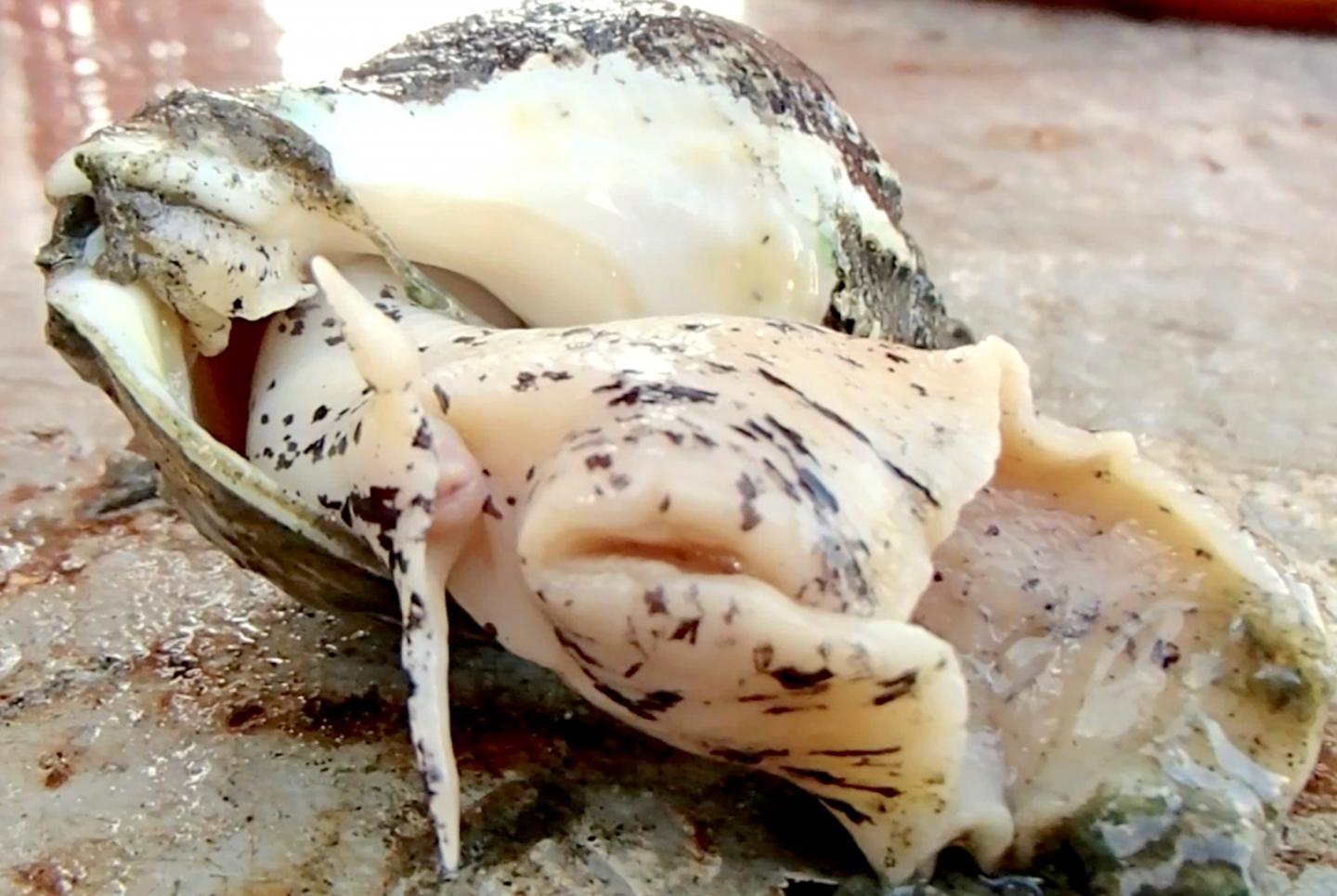
Common whelk live in one of the fastest warming marine areas, Rutgers-led study says
IMAGE

Credit: Sarah Borsetti/Rutgers University-New Brunswick


Climate change could threaten the survival and development of common whelk – a type of sea snail – in the mid-Atlantic region, according to a study led by scientists at Rutgers University-New Brunswick.

The common, or waved, whelk (Buccinum undatum) is an important commercial species that has been harvested for decades in Europe and Canada for bait and human consumption. Its habitat within the mid-Atlantic region is one of the Earth’s fastest warming marine areas and annual fluctuations in the bottom temperature are among the most extreme on the planet due to unique oceanographic conditions.

Climate change will result in higher temperatures and that’s a problem because temperatures are closely linked to the whelk’s spawning cycle and temperature increases could threaten its survival, according to the study in the journal Helgoland Marine Research. This is the first time the species’ annual reproductive cycle in the mid-Atlantic has been documented.

“Previous studies showed that the common whelk, a cold-water species, has some resilience to warmer temperatures,” said lead author Sarah Borsetti, a doctoral student at Rutgers’ Haskin Shellfish Research Laboratory in the School of Environmental and Biological Sciences. “But rising temperatures may have a negative impact on whelk survival, recruitment, development and growth.”

Commercial fishermen are interested in developing a fishery for this species in the mid-Atlantic. Similar to the United States, whelk fisheries have expanded in many countries, resulting in a global increase in whelk landings over the last 20 years.

But whelk have highly variable traits, such as reproductive timing, that need to be studied before intense fishing begins, Borsetti added. The species is vulnerable to overexploitation if fishery managers assume populations are uniform throughout its habitat.

“The resilience of whelk comes with a trade-off: fewer offspring, which can negatively impact the whelk population and fisheries landings,” said co-author Daphne Munroe, an associate professor in the Department of Marine and Coastal Sciences who is based at the Haskin Shellfish Research Laboratory in Port Norris, New Jersey.

Previous research led by the Rutgers group examined traits such as the size whelk reach in maturity, sex ratio and abundance. For the study on whelk reproduction, the team caught 602 whelk off the coast from Cape May County to the Delmarva Peninsula from January 2017 to September 2017. The study examined fluctuations in whelk body metrics, gonad weights and sea-bottom temperatures.

###

Researchers at the Virginia Institute of Marine Science and NOAA’s Northeast Fisheries Science Center contributed to the study.

Media Contact
Todd Bates
[email protected]
848-932-0550

Original Source

https://www.rutgers.edu/news/climate-change-could-threaten-sea-snails-mid-atlantic-waters

Related Journal Article

http://dx.doi.org/10.1186/s10152-020-00537-6

Tags: BiologyClimate ChangeClimate ScienceEcology/EnvironmentFisheries/AquacultureFood/Food ScienceMarine/Freshwater BiologyOceanographyTemperature-Dependent Phenomena
Share12Tweet8Share2ShareShareShare2

Related Posts

Natural Hallucinogens: Evolution’s Ecological Tools, Not Mere Chemical Byproducts

June 25, 2026

This Famous Butterfly Revealed: Three Distinct Species Hidden in One

June 25, 2026

Scientists Attack Soybean Cyst Nematode by Starving Its Food Source

June 25, 2026

Decoding the Secret Code of a Crucial Immune Sensor

June 24, 2026
Please login to join discussion

POPULAR NEWS

  • Saying Goodbye to PGY-6: Pediatric Fellowship Realities

    103 shares
    Share 41 Tweet 26
  • Multi-Hospital Study Reveals Long Covid Burden Is Twice as High as Current Estimates

    92 shares
    Share 36 Tweet 23
  • Detection of EDCs in Breast Milk and Infant Urine Up to Six Months Highlights Early Exposure Risks

    77 shares
    Share 31 Tweet 19
  • New Drug Candidate Developed at McMaster Shows Potential for Treating Brain Cancer

    58 shares
    Share 23 Tweet 15

About

We bring you the latest biotechnology news from best research centers and universities around the world. Check our website.

Follow us

Recent News

Tracking Lanthanide-Labeled Microplastics in Plants

POSTECH Researchers Slash Cost of Reconstituted Cell-Free Systems by 95%

AI and Physics Collaborate to Design Advanced Hydrogen Storage Materials

Subscribe to Blog via Email

Success! An email was just sent to confirm your subscription. Please find the email now and click 'Confirm' to start subscribing.

Join 82 other subscribers
  • Contact Us

Bioengineer.org © Copyright 2023 All Rights Reserved.

Welcome Back!

Login to your account below

Forgotten Password?

Retrieve your password

Please enter your username or email address to reset your password.

Log In
No Result
View All Result
  • Homepages
    • Home Page 1
    • Home Page 2
  • News
  • National
  • Business
  • Health
  • Lifestyle
  • Science

Bioengineer.org © Copyright 2023 All Rights Reserved.