In a groundbreaking study published in the prestigious journal Genes & Diseases, researchers from the South China University of Technology School of Medicine have uncovered a novel molecular mechanism that suppresses colorectal cancer (CRC) progression while simultaneously enhancing the efficacy of immunotherapy. This investigation centers on chloride channel accessory 4 (CLCA4), a protein whose diminished expression is closely linked to chemoresistance and aggressive tumor behavior in CRC. The compelling findings not only illuminate the complex biology of cancer stem cells (CSCs) but also propose an innovative therapeutic avenue to overcome immune resistance in colorectal tumors.
Colorectal cancer remains a formidable health challenge worldwide, marked by its propensity for recurrence, metastasis, and resistance to conventional therapies. Cancer stem cells, a subpopulation within tumors endowed with self-renewal and multipotency, play pivotal roles in these phenomena. These cells harbor the ability to evade chemotherapy and foster tumor regrowth, underscoring the urgency to identify regulators that can dismantle CSC-driven tumor progression. CLCA4 emerges as a critical suppressor of these stem-like attributes, orchestrating intricate cellular programs that mitigate CRC malignancy.
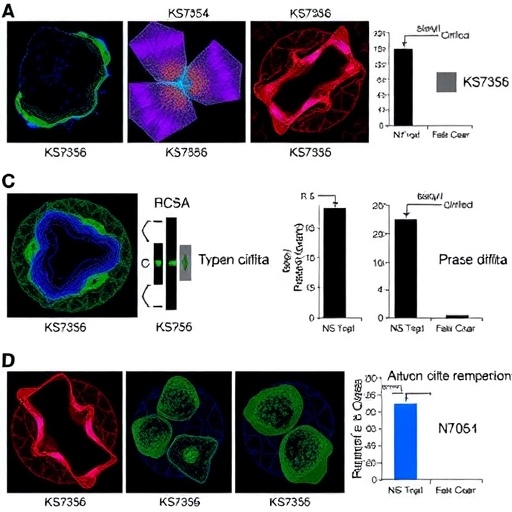
The research team embarked on clinical cohort analyses paired with comprehensive in vitro experiments, revealing a stark downregulation of CLCA4 expression in chemoresistant CRC cells and CSCs characterized by CD133 and CD44 positivity. This decline in CLCA4 expression correlates strongly with tumor advancement and poor patient prognosis. To probe causality, stable colorectal cancer cell lines overexpressing CLCA4 were established, which exhibited markedly reduced capacity for tumorsphere formation—a surrogate for stemness—as well as a notable decrease in cell motility and invasiveness.
At the molecular level, overexpression of CLCA4 induced a pronounced suppression of key transcriptional regulators of stemness, including Bmi-1 and Oct4. Both genes are intricately involved in maintaining the pluripotency and self-renewal of CSCs, thereby establishing CLCA4’s role as a tumor suppressor that disrupts CSC maintenance. Further transcriptomic and proteomic analyses confirmed the downregulation of these markers, validating the impact of CLCA4 on the core machinery driving colorectal cancer stemness.
Delving deeper into the mechanistic underpinnings, the researchers utilized mass spectrometry alongside immunoprecipitation assays to identify a direct interaction between CLCA4 and vimentin, an intermediate filament protein frequently implicated in epithelial-mesenchymal transition (EMT) and increased tumor aggressiveness. Intriguingly, CLCA4 promotes the degradation of vimentin, effectively dismantling this key structural scaffold that supports tumor cell motility and invasiveness. This degradation event leads to the downstream inactivation of focal adhesion kinase (FAK) signaling—a pathway integrally involved in integrin-mediated cell adhesion, migration, and survival.
The vimentin-FAK axis stands out as a pivotal signaling network regulating CSC behavior, and CLCA4’s ability to disrupt this pathway offers a targeted mechanism to curb tumor progression. Notably, reintroduction of vimentin or artificial activation of FAK successfully reversed the tumor-suppressive effects of CLCA4, underscoring the specificity and critical importance of this molecular circuit. This discovery paints CLCA4 as a pivotal molecular gatekeeper capable of modulating EMT and stem-like properties in CRC.
To translate these findings into a physiological context, the study employed in vivo mouse xenograft and liver metastasis models. Elevation of CLCA4 levels was shown to significantly impair tumor growth and metastatic dissemination, thereby validating the therapeutic potential of targeting this pathway. More strikingly, modulation of CLCA4 reshaped the tumor immune microenvironment by enhancing the secretion of the chemokine CXCL10, a potent chemoattractant that orchestrates the infiltration of cytotoxic CD8⁺ T lymphocytes.
This robust immune infiltration transformed the tumor milieu from an immunosuppressive to an immunostimulatory state—a crucial change that sensitizes cancer cells to immune checkpoint blockade. When combined with anti-PD-1 immunotherapy, CLCA4 overexpression yielded synergistic anti-tumor effects, dramatically reducing primary tumor burden and hepatic metastases compared to either treatment alone. This synergy reveals an unprecedented axis linking CSC suppression with immune activation, potentially revolutionizing immunotherapeutic strategies against colorectal cancer.
Beyond its immediate implications, this study offers a paradigm shift in understanding the dualistic role of CLCA4 as both a suppressor of CSC-driven tumor progression and an enhancer of anti-tumor immunity. Targeting the CLCA4-vimentin-FAK signaling axis holds promise for developing combinatory therapies that not only eradicate resistant cancer stem cells but also amplify the body’s immune response to malignancy. Such approaches could profoundly improve clinical outcomes for patients unresponsive to current immunotherapies.
While these discoveries mark significant progress, the authors emphasize the necessity for further research to navigate the translational pathway from bench to bedside. Investigations into the pharmacological modulation of CLCA4, its interactions with other tumor microenvironment components, and potential off-target effects will be critical in advancing this therapeutic strategy. Moreover, elucidating the role of CLCA4 in different cancer subtypes may expand its utility across oncology.
In conclusion, this study heralds CLCA4 as a novel and multifaceted molecular target in colorectal cancer, adept at dismantling stem cell-like tumorigenic properties while priming the immune landscape for effective checkpoint blockade therapies. By integrating insights from cancer stem cell biology with tumor immunology, the work paves the way for innovative treatments that could transcend current limitations and transform patient prognoses in colorectal cancer.
This research was supported by the National Natural Science Foundation of China and The Natural Science Foundation of Guangdong Province, underscoring the importance of international scientific collaboration in tackling complex diseases. As the scientific community continues to decipher the labyrinth of cancer biology, the identification of CLCA4’s dual roles offers a beacon of hope in the relentless fight against colorectal cancer.
Subject of Research: Colorectal cancer, cancer stem cells, immunotherapy, and molecular signaling pathways involving CLCA4.
Article Title: Chloride channel accessory 4 suppresses stem cell-like properties of colorectal cancer and enhances anti-PD-1 immunotherapy.
Web References:
Genes & Diseases journal on ScienceDirect: https://www.sciencedirect.com/journal/genes-and-diseases
Submission portal for Genes & Diseases: https://www.editorialmanager.com/gendis/default.aspx
References: Fang Wei, Qi Zou, Qihui Sun, Tingting Jiang, Tian Cai, Xiaojia Li, Keping Xie. “Chloride channel accessory 4 suppresses stem cell-like properties of colorectal cancer and enhances anti-PD-1 immunotherapy.” Genes & Diseases. DOI: 10.1016/j.gendis.2025.101859
Image Credits: Fang Wei, Qi Zou, Qihui Sun, Tingting Jiang, Tian Cai, Xiaojia Li, Keping Xie
Keywords: Colorectal cancer, cancer stem cells, CLCA4, chemoresistance, immunotherapy, PD-1 blockade, vimentin, FAK signaling, tumor microenvironment, CXCL10, CD8+ T cells.
Tags: biomarkers for colorectal cancer prognosiscancer stem cells in colorectal cancerchloride channel accessory proteins in cancerCLCA4 and cancer stem cell regulationCLCA4 in colorectal cancercolorectal cancer chemoresistance mechanismsimmunotherapy enhancement in CRCmolecular mechanisms of CRC progressionnovel treatments for chemotherapy-resistant colorectal cancerovercoming immune resistance in colorectal tumorsprognostic markers for colorectal cancertherapeutic targets in colorectal cancer