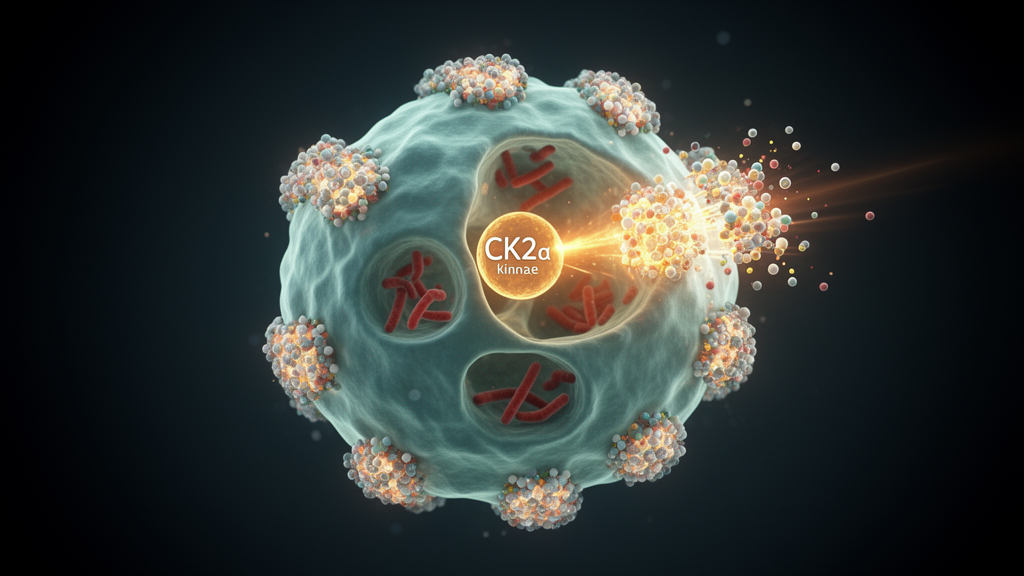
Researchers report that a single kinase, CK2α, acts as an upstream switch controlling P-glycoprotein (P-gp/MDR1) expression in macrophages, the immune cells where the tuberculosis bacterium hides. Because P-gp pumps antibiotics out of cells, its overexpression in macrophages reduces intracellular drug accumulation and contributes to tuberculosis treatment failure. The study, published in Cell Communication and Signaling as a peer-reviewed accepted manuscript, identifies two distinct signaling routes by which CK2α drives this efflux pump, and shows in a mouse model that blocking CK2 alongside rifampin lowered lung bacterial burden compared with rifampin alone.
The first pathway operates as monocytes mature into macrophages. During this differentiation, CK2α activates AKT at the serine 129 position, which triggers NF-κB-dependent induction of P-gp. The second pathway comes into play in mature macrophages exposed to rifampin, a cornerstone tuberculosis drug: rifampin induces P-gp through CK2α-mediated phosphorylation of Hsp90β and the subsequent stabilization of PXR, a nuclear receptor that regulates drug metabolism genes. According to the authors, CK2 inhibition or knockdown of the CSNK2A1 gene, which encodes CK2α, suppressed P-gp expression through both routes and increased intracellular accumulation of rhodamine-123, a fluorescent probe used to measure P-gp efflux function.
The evidence was assembled across several experimental systems. The main mechanistic work was carried out in PMA-differentiated THP-1 macrophages using immunoblotting, RT-PCR, qRT-PCR, immunofluorescence, co-immunoprecipitation and subcellular fractionation, with confirmatory immunoblotting in U-937 macrophages. Signaling pathways were dissected with pharmacological inhibitors, siRNA knockdown and overexpression. Importantly, the same CK2α-dependent dual-pathway regulation was observed in primary macrophages derived from peripheral blood mononuclear cells, which the researchers assessed by flow cytometry, lending support to the relevance of the cell-line findings beyond laboratory models.
The therapeutic test was conducted in BALB/c mice infected with Mycobacterium tuberculosis H37Rv. In these animals, co-administration of the CK2 inhibitor DRB with rifampin suppressed P-gp expression in the lungs, reduced pulmonary bacterial burden relative to rifampin monotherapy, and attenuated lung inflammation. The authors note that CK2 inhibitors already have clinical safety data from oncology trials, and they suggest these compounds may warrant evaluation as adjunctive agents against P-gp-mediated drug resistance in tuberculosis treatment. The findings are preclinical: they derive from cell lines, primary human macrophages and a single mouse model, and no human tuberculosis patients were studied, so any clinical application would require further investigation. The article is being shared early to provide faster access to peer-reviewed, accepted research and remains subject to further edits before the final version of record.
Subject of Research: How the kinase CK2α regulates P-glycoprotein-mediated drug resistance in macrophages during tuberculosis infection
Article Title: CK2α-mediated dual signaling drives P-glycoprotein-dependent tuberculosis drug resistance in macrophages
Article References: Hasanuzzaman, M., Kim, S. M., Kim, H., Park, D., Lee, S., Gu, Y., Kim, L.-H., Shin, S. J., & Kim, S. W. (2026). CK2α-mediated dual signaling drives P-glycoprotein-dependent tuberculosis drug resistance in macrophages. Cell Communication and Signaling. https://doi.org/10.1186/s12964-026-03320-1
Image Credits: AI Generated
DOI: 10.1186/s12964-026-03320-1
Keywords: tuberculosis, CK2α, P-glycoprotein, drug resistance, macrophages, rifampin, NF-κB, PXR, AKT, Hsp90β, DRB, Mycobacterium tuberculosis
News Source: Drew Townsend. (October 29, 2026). CK2α kinase drives P-glycoprotein buildup that undermines tuberculosis drug treatment in macrophages. Scienmag.