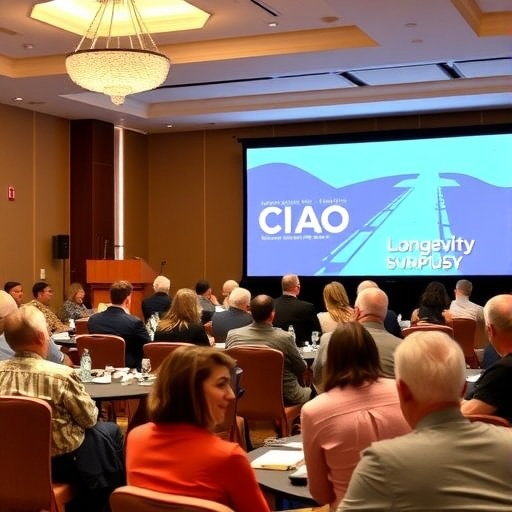
The Cilento Initiative on Aging Outcomes (CIAO) recently convened its 11th annual research symposium at the Sanford Burnham Prebys Medical Discovery Institute, marking a significant milestone in the international quest to unravel the complex biology underpinning human longevity and healthy aging. This symposium brought together a distinguished cadre of scientists and clinicians from Europe and the United States, who shared pioneering insights derived from years of rigorous study centered on one of the world’s most remarkable longevity hotspots: the Cilento region of southern Italy.
Cilento’s claim to fame in biogerontology stems from its extraordinary concentration of centenarians—individuals aged 100 years and beyond—who paradoxically maintain robust health well past the global average life expectancy of approximately 73.5 years. This phenomenon has attracted intense scientific scrutiny as researchers strive to empirically dissect the intricate interplay of biological, psychological, and social determinants that contribute to delayed aging and extreme longevity. The ongoing CIAO Study, launched in 2015, serves as a multidisciplinary platform employing cutting-edge methodologies including genetics, epigenetics, multi-omics, and advanced clinical phenotyping to decode these longevity determinants systematically.
Central to the CIAO Study’s uniqueness is its focus on the natural population of Acciaroli and surrounding communities within Cilento, an area historically celebrated for its Mediterranean lifestyle—a blend of diet, physical activity, social cohesion, and other behavioral factors believed to collectively foster exceptional healthspan. However, as the investigators underscored, the surface behavioral attributes belie a deeper, cellular architecture of aging that remains to be fully elucidated. Their integrative approach is designed to unravel these molecular hallmarks and identify actionable biological pathways amenable to therapeutic targeting for the broader population.
Prominent highlights from the symposium illustrated the multifactorial nature of aging, structured within the framework of the established “hallmarks of aging,” which categorize cellular and molecular damage into primary, antagonistic, and integrative processes. Paola Antonini, MD, PhD, illuminated the pivotal role of sirtuin-6 (SIRT6), a NAD⁺-dependent deacetylase with diverse epigenetic regulatory functions. SIRT6’s enhancement of DNA repair mechanisms across long-lived species points to a conserved evolutionary strategy mitigating genomic instability, a primary hallmark driving age-associated functional decline and inflammaging—a chronic low-grade inflammatory state implicated in numerous age-related diseases.
Complementing these molecular insights, Sheldon Morris, MD, MPH, provided a clinical portrait contrasting centenarians with younger control cohorts. Intriguingly, centenarians exhibited physiologic parameters typically deemed beneficial for healthy aging: lower blood pressure, body mass index, smoking prevalence, alcohol consumption, and more favorable lipid profiles. Furthermore, sleep duration emerged as a critical behavioral correlate, with most centenarians achieving five or more hours of nightly rest. These clinical phenotypes are not mere anecdotes but are anchored in rigorously gathered data, underscoring evidence-based longevity hallmarks.
At the metabolomic frontier, Mohit Jain, MD, PhD, unveiled compelling discoveries about the metabolic shifts inherent in aging. Their extensive profiling of approximately 30,000 blood metabolites revealed distinct metabolic signatures in centenarians, with significant alterations in hundreds of metabolites that collectively constitute a “metabolic clock.” This biomolecular chronometer transcends chronological age by revealing the biological age of individuals through metabolic health, positioning centenarians as metabolically younger than their years suggest and casting new light on metabolic homeostasis as a key longevity driver.
In a sophisticated systems biology analysis, Sanju Sinha, PhD, presented data on plasma proteomics, highlighting a subset of 57 fibrosis-pathway enriched genes that diverged in centenarians relative to controls. Foremost among these was SERPINE1, a gene encoding Plasminogen Activator Inhibitor-1 (PAI-1), a critical modulator of coagulation and cellular senescence. Emerging evidence intimates that modulating SERPINE1 activity could prolong lifespan and attenuate fibrotic pathologies, making it a tantalizing therapeutic target currently undergoing clinical trials, particularly in oncology and metabolic disorders.
Adding a novel dimension to peptide hormone biology, Andreas Bergmann, PhD, discussed peptidylglycine alpha-amidating monooxygenase (PAM), an enzyme essential for activating over 60 peptide hormones and neuropeptides through C-terminal amidation. This enzymatic step is crucial for regulating vascular, neuronal, metabolic, and cognitive functions. Notably, elevated PAM activity correlates with improved blood-brain barrier integrity, cerebral perfusion, amyloid clearance, and cognitive outcomes in preclinical models. Cilento residents notably exhibit enhanced PAM levels and peptide amidation patterns, which may constitute a biochemical basis for their superior neurological health and longevity.
From a genomic standpoint, Ludmil Alexandrov, PhD, revealed that centenarians in Cilento accumulate fewer single nucleotide variants and insertion-deletion mutations, implicating enhanced genomic stability. Lower telomere attrition rates suggest decelerated cellular aging and hematopoietic maintenance, reinforcing the notion that genome integrity preservation correlates strongly with extended healthspan and lifespan. Telomere dynamics thus serve as critical biomarkers reflective of systemic biological aging processes.
Expanding on the cellular milieu, Peter D. Adams, PhD, shed light on senescence—the permanent cessation of cell division accompanied by a pro-inflammatory secretory phenotype. While cellular senescence confers tumor suppression, its accumulation underlies age-associated tissue dysfunction and chronic inflammation. Experimental interventions targeting MDM2, a molecular regulator of cell cycle and DNA repair, rejuvenated aged murine livers, suppressed frailty, and extended lifespan, signaling promising avenues for translating these molecular discoveries into clinical anti-aging strategies.
Collectively, the CIAO Study epitomizes a paradigm shift in aging research by integrating comprehensive phenotypic characterization with molecular dissection. Its emphasis on a well-defined geographic and genetic cohort enhances the validity and reproducibility of findings, moving beyond anecdotal narratives towards actionable scientific knowledge. The synergistic convergence of omics technologies and clinical insights positions CIAO at the forefront of geroscience, with promising ramifications for public health interventions aimed at extending not just lifespan but healthspan.
Looking ahead, the CIAO initiative envisions expanding its longitudinal scope and interventional studies, propelled by early promising results. The translational potential inherent in modulating identified hallmarks—ranging from epigenetic modifiers and metabolic networks to proteostasis regulators and senolytics—holds considerable promise for redefining the aging experience. With rigorous, standardized methodologies underpinning their approach, CIAO’s roadmap offers a robust template for unraveling the labyrinthine biology of longevity and catalyzing the development of precision interventions to promote healthy aging globally.
Subject of Research: Biological, psychological, and social determinants of healthy aging and extreme longevity in Cilento centenarians.
News Publication Date: 2026-05-22
Web References:
Sanford Burnham Prebys Medical Discovery Institute, sbpdiscovery.org
Sanford Stem Cell Institute, stemcells.ucsd.edu
Great Health Science, greathealthscience.com
Image Credits: Sanford Burnham Prebys
Keywords: Human longevity, healthy aging, centenarians, Cilento region, epigenetics, metabolomics, proteomics, SIRT6, DNA methylation, metabolic clock, peptide hormone amidation, PAM enzyme, telomere attrition, cellular senescence, aging biomarkers
Tags: advanced clinical phenotyping agingbiogerontology of agingCIAO Study longevity researchCilento centenarians healthgenetics and epigenetics in agingglobal life expectancy extensionhealthy aging biomarkerslongevity hotspots researchmulti-omics in longevity studiesmultidisciplinary aging researchnatural population longevity studiespsychosocial factors in aging