Calcium-based montmorillonite, one of the most abundant and inexpensive clay minerals on Earth, can dramatically accelerate the formation of carbon dioxide hydrates, according to a new study published in the journal Carbon Neutrality. A team led by Hongyu Ye, Peng Dong and Mucong Zi reports that when the clay is treated with hydrochloric acid, its carbon dioxide capture capacity reaches 93.9 millimoles of CO2 per mole of water, an 83.9 percent improvement over the untreated mineral. The finding points toward a low-cost route for hydrate-based carbon capture, a technology long praised for its storage density but held back by sluggish reaction kinetics.
Hydrate-based CO2 capture works by forcing carbon dioxide gas into contact with water under elevated pressure and low temperature. The water molecules assemble into cage-like clathrate structures that physically trap CO2 in a solid form. In theory, one volume of hydrate can store 160 to 180 volumes of CO2 gas, based on the ideal stoichiometry of CO2·5.75H2O with complete cage occupancy. In practice, the process rarely approaches that theoretical ceiling. Mass transfer limitations, the stochastic nature of nucleation, uneven temperature and pressure fields inside the reactor, and the inherent incompleteness of the hydration reaction all conspire to reduce yields. Slow kinetics and the high energy consumption needed to drive formation have kept the technology from large-scale deployment.
In each experiment, an 80-gram suspension containing 0 to 5 weight percent clay was loaded into the vessel, pressurized with CO2 to 4.5 megapascals, stirred for three hours to dissolve the gas, then cooled from 293.15 kelvin to 275.15 kelvin, where it was held for 15 hours while hydrate formation was monitored. All cases were run with three parallel replicates, with average values and standard deviations reported.
The first phase of experiments examined montmorillonite suspensions alone under low mass transfer conditions, with stirring at 400 revolutions per minute. The clay shortened induction times, the delay before hydrate crystals first appeared, with the effect strengthening as concentration increased, because particle surfaces provide abundant nucleation sites. But when it came to final capture capacity, the pattern reversed. The dilute 0.5 weight percent suspension achieved the best result, 69.2 millimoles of CO2 per mole of water, outperforming both pure water and all higher-concentration systems. The authors attribute this to viscosity: concentrated suspensions become thick and strongly polarize water layers around the clay, hindering the transfer of CO2 from gas to liquid phase and preventing stirring from breaking up the hydrate film that forms at the gas-liquid interface.
To overcome that bottleneck, the researchers tested two external enhancement strategies. Adding sodium dodecyl sulfate, a common surfactant, produced a clear threshold effect. At 500 parts per million, below the surfactant’s critical micelle concentration, there was little improvement. Once concentrations reached or exceeded 1000 parts per million, SDS formed micelles that locally enriched dissolved CO2, sharply reducing induction times and sustaining higher capture rates. The 4000 parts per million system, despite a slower start likely caused by increased viscosity, ultimately delivered the highest capacity of the entire study: 107.4 millimoles per mole, with experimental data stabilizing near the CO2 phase equilibrium curve. Raising the stirring rate to 600 revolutions per minute also proved decisive. High-speed agitation continuously disrupted the dense hydrate film at the interface, visible as persistent gaps in video recorded through the sapphire windows, allowing gas to keep feeding the reaction. Under these strong mass transfer conditions, a 1 weight percent montmorillonite suspension reached approximately 93.4 millimoles per mole, and every 600 rpm case outperformed its 400 rpm counterpart.
The study then turned from external conditions to the intrinsic properties of the material itself. The team compared montmorillonite with illite, a non-expanding clay whose layers are locked together by potassium ions. Illite performed markedly worse across nearly all concentrations, showing longer induction times and lower capture rates and capacities. The contrast highlights why montmorillonite works so well: its expandable interlayer structure and high specific surface area create nanoconfined spaces that accommodate water and CO2, supplying numerous efficient nucleation sites. Illite, limited to external surfaces for nucleation, simply cannot match that geometry.
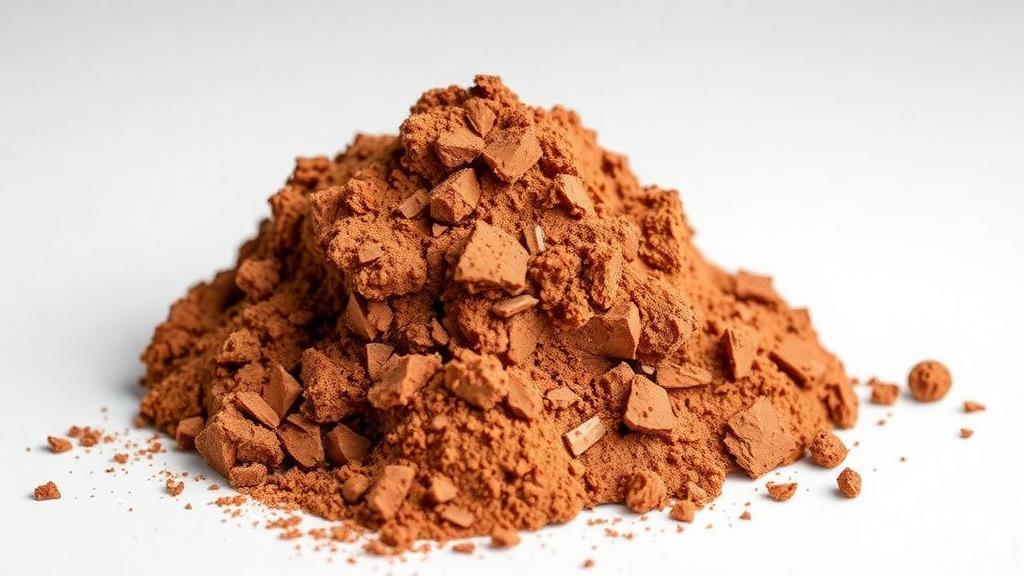
The centerpiece of the work was acid leaching. The researchers treated high-purity calcium-based montmorillonite with 6 molar hydrochloric acid at a 1:10 mass ratio, holding the mixture at 95 degrees Celsius for four hours with continuous stirring, then rinsing, filtering and drying. Scanning electron microscopy and powder X-ray diffraction showed the treatment dismantled the mineral’s dense, ordered layered crystal structure, replacing it with a loose, porous, amorphous network. Nitrogen adsorption measurements quantified the transformation: the BET specific surface area surged thirteenfold, from 23.54 to 312.12 square meters per gram, while total pore volume jumped from 0.09 to 0.73 cubic centimeters per gram. Thermogravimetric analysis indicated the acid also removed impurities, raising purity and thermal stability.
That structural reconstruction translated directly into performance. Under the mild 400 rpm stirring conditions, acid-leached montmorillonite showed substantially shorter induction times at every tested concentration, faster capture rates throughout the growth phase, and higher final capacities than the pristine mineral. The 1 weight percent system reached 93.9 millimoles of CO2 per mole of water, the 83.9 percent gain over untreated montmorillonite, matching or exceeding what unmodified clay achieved even under energy-intensive high-speed stirring. The authors interpret this as a successful shift from forced enhancement, which relies on external energy input, to intrinsic enhancement built into the material’s architecture. Recyclability tests over six consecutive formation-decomposition cycles showed the modified clay maintained short induction times and high capture capacity throughout.
Mechanistically, the study found that dissolved CO2 in the aqueous phase, peaking near 30 millimoles per mole before hydrate formation begins, serves as the critical precursor that montmorillonite’s nucleation sites convert into solid hydrate. Notably, the amount of CO2 remaining dissolved at equilibrium stayed roughly constant across all systems, pure water, montmorillonite, illite and modified clay alike, indicating that the promoters do not significantly increase physical solubility. Instead, they work by altering nucleation and growth kinetics. In the modified material, mesopores provide abundant nucleation sites while micropores adsorb and concentrate CO2, and the acid-induced reduction in surface hydroxyl groups makes the surface less hydrophilic and more favorable for CO2 adsorption.
The economic argument may prove as important as the kinetic one. Unlike synthetic promoters such as metal-organic frameworks or graphene-based materials, which carry high preparation costs and difficult scale-up, calcium-based montmorillonite is naturally abundant, widely distributed on land and cheap to obtain, and its acid-leaching modification is a simple process. The authors caution that hydrate-based capture still faces the energy demands of cooling and pressurization, and that their results come from laboratory-scale batch experiments rather than continuous industrial operation. Still, by demonstrating that a naturally occurring clay, restructured with a commodity acid, can deliver capture performance rivaling energy-intensive external enhancement, the study offers a concrete, cost-effective pathway for advancing hydrate-based carbon capture technology.
Subject of Research: Kinetic enhancement of CO2 hydrate formation using natural and acid-modified calcium-based montmorillonite for hydrate-based carbon capture
Article Title: Enhancing CO2 hydrate kinetics with cost-effective calcium-based montmorillonite for carbon capture
Article References: Ye, H., Dong, P., Niu, M., Yao, Y., Chen, D., Duan, J., & Zi, M. (2026). Enhancing CO2 hydrate kinetics with cost-effective calcium-based montmorillonite for carbon capture. Carbon Neutrality, 5(1), Article 16. https://doi.org/10.1007/s43979-026-00172-z
Image Credits: AI Generated
DOI: 10.1007/s43979-026-00172-z
Keywords: CO2 hydrate, carbon capture, montmorillonite, clay minerals, acid leaching, gas hydrates, SDS surfactant, mass transfer, CCUS, porous materials, kinetics, carbon neutrality
News Source: Sloane Callahan. (October 29, 2026). Cheap Clay Mineral Supercharges CO2 Hydrate Formation for Carbon Capture. Scienmag.