Credit: European Union, 2018
Shifting to a healthy diet is not only good for us, but it also saves a lot of precious fresh water, according to a new study by the JRC published in Nature Sustainability.
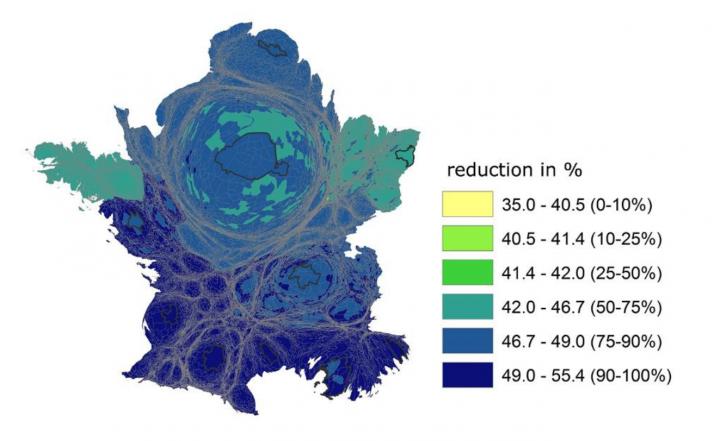
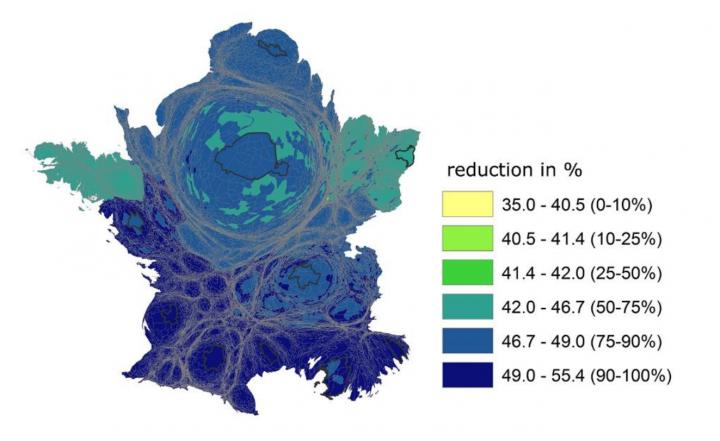
Compared to existing diets, the water required to produce our food could be reduced by between 11% and 35% for healthy diets containing meat, 33% and 55% for healthy pescetarian diets and 35% and 55% for healthy vegetarian diets.
Researchers compared these three diet patterns, defined by respective national dietary guidelines, to the current actual food consumption, using available data from more than 43 thousand areas in France, the UK and Germany.
They found that eating more healthily could substantially reduce the water footprint of people's diets, consistent across all the geographical entities analysed in the study.
The study is the most detailed nationwide food consumption-related water footprint ever made, taking into account socio-economic factors of food consumption, for existing and recommended diets.
Influences on the food we eat
The scientists also show how individual food consumption behaviour – and their related water footprints – depend strongly on the socio-economic factors like age, gender and education level.
They found interesting correlations between such factors and both the water footprint of specific foods and their resulting impact on overall water footprints.
For example, the study shows how in France, the water footprint of milk consumption decreases with age across the municipalities analysed.
Across London, they show a strong correlation between the water footprint of wine consumption and the percentage of the population of each area with a high education level.
Background
The water footprint is defined as the total volume of freshwater that is used to produce goods consumed, food in this particular case.
The scientists used national dietary surveys to assess differences in food product group consumption between regions and socio- economic factors within regions.
The diet scenarios analysed in the study take into account total daily energy and protein requirements as well as maximum daily fat amounts.
They are based upon national dietary guidelines, in which for every food product group specific recommendations are given according to age and gender.
By downscaling national water footprints to the lowest possible administrative boundaries within a country, the scientists provide a useful tool for policy makers at various levels.
The methodology could also be applied to other footprints assessments – like the carbon, land or energy footprints related to food consumption.
Animal products – and especially meat – have a high water footprint.
The average European diet is characterised by overconsumption in general, particularly of animal products.
A healthy diet would contain less sugar, crop oils, meat and animal fats, and more vegetables and fruit.
Due to the numerous negative impacts of an intensive livestock production system on the planet's resources and ecosystems, as well as the growing demands of non-western countries for animal products, moving to a more resource-efficient (and healthier) vegetable-rich diet in the EU is a necessity.
###
Media Contact
Barbara Piotrowska
[email protected]
http://ec.europa.eu/jrc
Original Source
https://ec.europa.eu/jrc/en/news/change-your-diet-save-both-water-and-your-health http://dx.doi.org/10.1038/s41893-018-0133-x