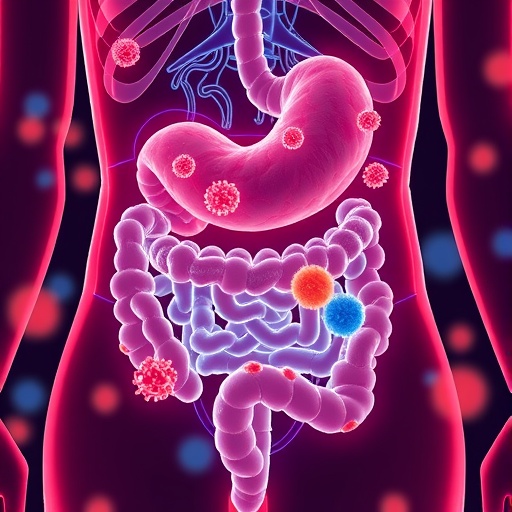
In the complex battle against bacterial infections, an intriguing new discovery highlights the pivotal role of gut microbiota in determining the severity of sepsis outcomes. Researchers at the Korea Research Institute of Bioscience and Biotechnology (KRIBB), in a groundbreaking collaboration with Chungbuk National University, have unveiled how specific gut microbial communities can amplify immune system overreactions, transforming manageable infections into deadly hyperinflammatory sepsis. This revelation challenges the traditional focus solely on pathogens, emphasizing the gut microbiome’s influence on immune regulation and disease prognosis.
Sepsis arises when the body’s immune response to infection spirals into uncontrolled inflammation, damaging vital organs and often resulting in fatality. Historically, efforts to predict or mitigate sepsis severity have concentrated on the virulence factors of invading bacteria. However, this latest investigation reveals that the host’s internal microbial milieu critically modulates immune thresholds, shifting the balance between effective defense and destructive hyperactivation.
Using genetically identical murine models exposed to uniform pathogenic doses, the team observed strikingly divergent infection trajectories. Some animals endured the assault with mild symptoms, while others rapidly succumbed to massive immune activation and multi-organ failure. This disparity led scientists to probe the underlying microbial differences within the gut ecosystems of these mice, uncovering a significant enrichment of the bacterial family Muribaculaceae in the subjects exhibiting severe disease manifestation.
Delving deeper, the work pinpointed a bacterium named Sangeribacter muris KT1-3 as a key player secreting metabolites that predispose immune cells to an exaggerated state of alertness. These metabolite-induced primed immune cells reacted disproportionately to pathogenic stimuli, crossing thresholds that triggered widespread inflammatory cascades. This mechanism elucidates how even small infectious insults can be transformed into catastrophic immune responses when influenced by certain gut microbiota profiles.
To establish causality beyond correlation, the researchers conducted fecal microbiota transplantation (FMT) experiments. Resistant mice receiving microbiota from severely affected counterparts rapidly developed heightened sepsis sensitivity and diminished survival rates. Conversely, transferring healthier microbial consortia restored immune balance and improved outcomes, underscoring the microbiome’s causative impact on immune modulation.
Their findings carry profound implications for predictive medicine and therapeutic intervention. By identifying gut microbial signatures associated with hyperinflammatory sepsis susceptibility, clinicians could potentially forecast patient risk profiles before infection onset. Furthermore, microbiome modulation strategies, ranging from targeted probiotics to precision dietary interventions, could usher a new frontier in sepsis management by fine-tuning immune responsiveness.
At a molecular level, the study sheds light on how microbial metabolites interact with toll-like receptor 4 (TLR4) pathways, amplifying Acinetobacter baumannii-triggered inflammatory signals. This TLR4-dependent mechanism suggests that gut microbial metabolites act as immune sensitizers, lowering the activation threshold and enabling pathogens to induce disproportionately severe responses.
Importantly, these insights transcend sepsis alone, with potential relevance to diverse conditions characterized by immune dysregulation. Antibiotic-resistant infections, chronic inflammatory diseases, and even autoimmune disorders might be influenced by similar microbiota-immune system dynamics, positioning gut microbes as central determinants of health and disease.
The research, published in the esteemed journal Nature Communications on April 30, 2026, represents a collaborative triumph combining expertise in microbiology, immunology, and bioinformatics. Principal investigators Dr. Hwi-Won Seo and Dr. Choong-Min Ryu of KRIBB, alongside Prof. Doo-Jin Kim of Chungbuk National University, exemplify interdisciplinary synergy advancing biomedical frontiers.
KRIBB’s role as a premier institution facilitating such transformative studies cannot be overstated. With a commitment to pioneering biotechnology research and fostering innovation, the institute continues to illuminate critical biological mechanisms with far-reaching clinical applications.
Funded by South Korea’s Ministry of Science and ICT and KRIBB’s major research initiatives, this work exemplifies the power of public investment in scientific inquiry aimed at tackling global health challenges. The study’s outcomes may ultimately pave the way for microbiome-informed diagnostics and therapies revolutionizing infection management worldwide.
In conclusion, this landmark discovery redefines our understanding of sepsis pathogenesis, positioning gut microbiota as fundamental architects shaping immune responses. It invites a paradigm shift where managing microbial ecosystems becomes integral to combating infectious diseases and mitigating their most devastating impacts. The road ahead promises exciting developments harnessing microbiome science to enhance patient survival and resilience.
Subject of Research: Gut microbiota influence on sepsis susceptibility and immune hyperactivation
Article Title: A Muribaculaceae-enriched microbiota exacerbates TLR4-dependent Acinetobacter baumannii-induced hyperinflammatory sepsis
News Publication Date: 30-Apr-2026
Web References: http://dx.doi.org/10.1038/s41467-026-72435-3
Image Credits: Korea Research Institute of Bioscience and Biotechnology (KRIBB)
Keywords: gut microbiota, sepsis, immune system, hyperinflammation, Muribaculaceae, Sangeribacter muris, microbiome transplantation, TLR4, Acinetobacter baumannii, immune sensitization, microbiome therapy, infection prognosis
Tags: bacterial infections and immune hyperactivationgut ecosystem diversity and sepsisgut microbes influencing immune responsegut microbial communities and inflammationgut microbiota and sepsis severityhyperinflammatory immune reactions in sepsisKRIBB sepsis researchmicrobiome impact on sepsis outcomesmicrobiome-host interactions in infectionmurine models in sepsis studiesrole of gut bacteria in sepsis prognosissepsis and immune system overactivation