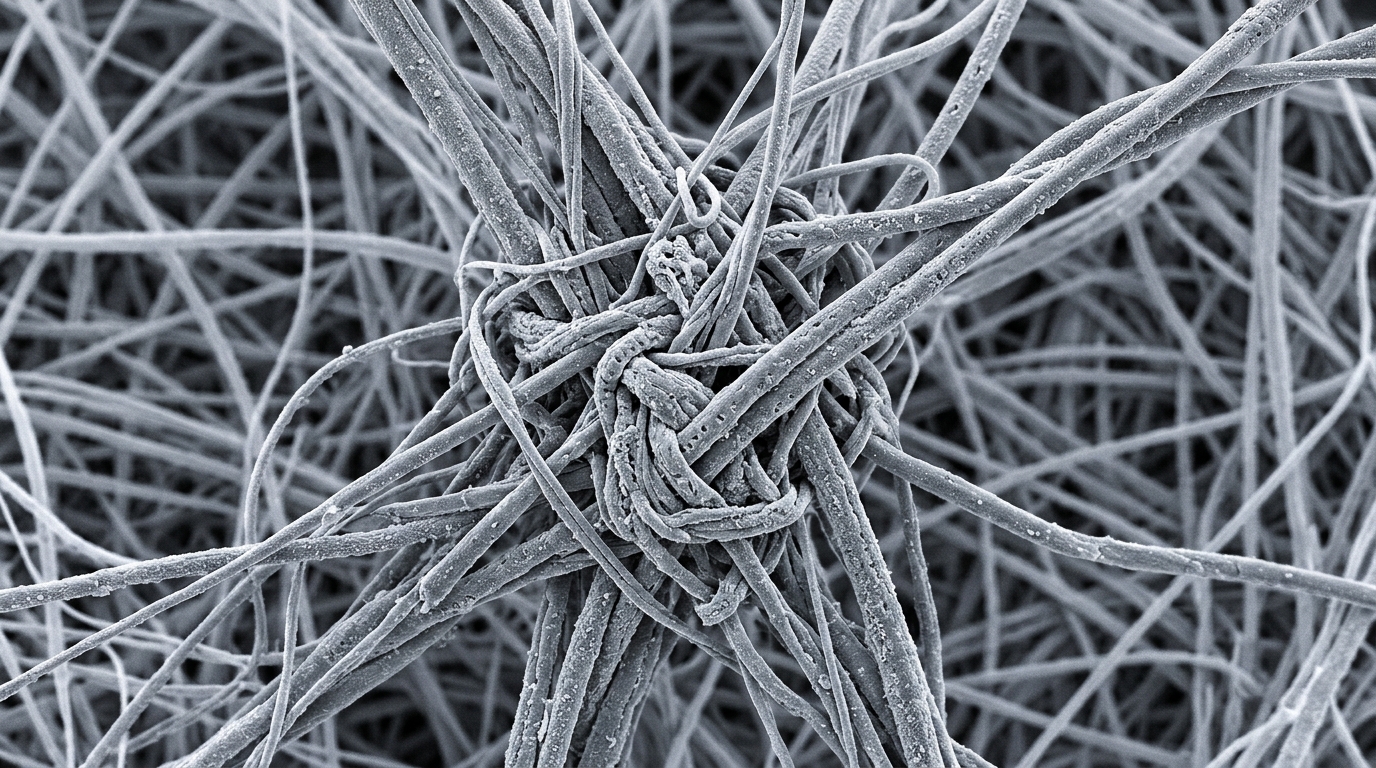
The Cross-Scale Fiber SEM Detection Transformer achieves an average precision of 88.2 at an intersection-over-union threshold of 0.50 and a precision of 87.6 in detecting agglomerations within scanning electron microscopy images of high-performance fiber ultrastructure. Developed to address persistent issues in ultrastructural analysis, the framework, termed CFS-DETR, delivers improvements of 2.2 and 5.8 percentage points in average precision and precision, respectively, compared to classic detection models. Agglomeration detection in scanning electron microscopy imagery has previously been challenged by cross-scale feature shifts and complex textures across specimen surfaces. To overcome these specific obstacles, the specialized detection framework incorporates two targeted components: a Cross-Scale Invariant Module and a Fiber SEM Edge Enhancement Network.
Within the CFS-DETR framework, the Cross-Scale Invariant Module addresses scale variability by employing adversarial training mechanisms. Specifically, the module uses adversarial training to guide the underlying backbone network in learning cross-scale invariant feature representations. By acquiring feature representations that remain invariant across varying observation scales, the system directly mitigates the scale-related feature shift issues common to ultrastructural microscopy. Working in coordination with this module, the Fiber SEM Edge Enhancement Network focuses on boundary clarity. The edge enhancement network achieves selective enhancement of edge features, thereby improving the model’s overall capability for representing ultrastructural edge information amidst complex background textures.
The performance of the CFS-DETR architecture was validated experimentally on the specialized DHU-OD-696 dataset. This benchmark contains 696 scanning electron microscopy images and 3,705 individual agglomeration instances. The experimental data spans observation scales collected across physical dimensions ranging from 300 nanometers to 500 micrometers, providing a rigorous test environment for evaluating cross-scale detection capabilities in fiber ultrastructure.
On the DHU-OD-696 dataset, CFS-DETR achieved an average precision of 88.2 at an intersection-over-union threshold of 0.50, designated as AP50, alongside an overall precision of 87.6. In comparative evaluations against classic detection models, CFS-DETR demonstrated strong competitiveness in precision, reflecting absolute gains of 2.2 percentage points in AP50 and 5.8 percentage points in precision. These quantitative outcomes show that combining adversarial invariant feature learning with selective edge enhancement effectively mitigates cross-scale shifts and complex textural interference in fiber ultrastructural agglomeration detection.
Subject of Research: Cross-scale agglomeration detection in high-performance fiber ultrastructure using SEM imagery
Article Title: CFS-DETR: cross-scale invariant feature learning for fiber ultrastructure detection
Article References: Wei, M., Wei, B., Hao, K., Gao, L., & Wang, H. (2026). CFS-DETR: cross-scale invariant feature learning for fiber ultrastructure detection. Complex & Intelligent Systems. https://doi.org/10.1007/s40747-026-02537-4
Image Credits: AI Generated
DOI: 10.1007/s40747-026-02537-4
Keywords: CFS-DETR, fiber ultrastructure, scanning electron microscopy, agglomeration detection, cross-scale invariant feature learning, object detection, adversarial training, edge enhancement, cross-scale, invariant, feature, learning
News Source: Denise Maddox. (November 5, 2026). CFS-DETR Framework Enhances Agglomeration Detection in Fiber Ultrastructure Microscopy. Scienmag.