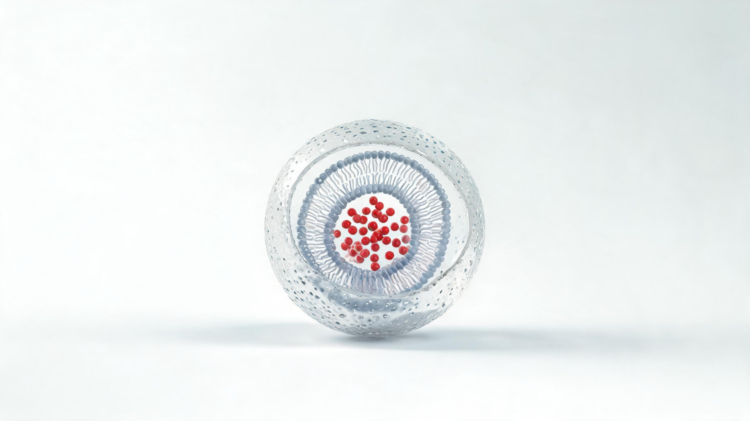
A class of hybrid nanoparticles could help address one of nanomedicine’s most persistent problems: how to carry a therapeutic molecule through the body without losing it too early or releasing it indiscriminately. In a review published in Discover Industrial Chemistry and Materials, Vidya Sabale and colleagues examine nanohybrid cerasomes, vesicles that combine a flexible lipid bilayer with a thin, ceramic-like polysiloxane shell. The design is intended to unite the biological compatibility and cargo capacity of liposomes with the mechanical strength and chemical durability of silica-based materials. The authors describe cerasomes as adaptable platforms for targeted drug delivery, gene transfer, imaging, cancer treatment and vaccine development. Their analysis also emphasizes that these particles remain experimental: no cerasome-based formulation has entered clinical trials, and important questions about manufacturing, long-term safety and regulation still need to be resolved.
The appeal of cerasomes begins with the limitations of conventional carriers. Liposomes, which are spherical structures assembled from phospholipids, can accommodate water-soluble compounds in their internal aqueous compartment and fat-soluble compounds within the membrane. They are generally biocompatible and their surfaces can be chemically modified, but they may fuse with one another, aggregate, leak their cargo and disappear rapidly from circulation. Silica nanoparticles offer a contrasting set of strengths, including structural integrity, tunable surfaces, high areas for chemical attachment and resistance to some environmental stresses. Yet purely inorganic particles can be less flexible, less biomimetic and less suitable for certain drugs. Cerasomes are designed as a compromise: a lipid-based vesicle is reinforced from the outside by an interconnected siloxane network, producing a structure that remains biologically versatile while resisting deformation and premature breakdown.
The concept traces back to work on organic–inorganic hybrid materials and to the first cerasomes reported by Katagiri and collaborators in 2007. The particles are made from specialized cerasome-forming lipids containing silicon-bearing head groups, hydrophobic hydrocarbon tails and molecular linkers. In water, these amphiphilic molecules can organize into a bilayer, much as ordinary lipids do. Their silicon-containing groups then undergo hydrolysis and condensation reactions, the central chemical steps of a sol–gel process. Hydrolysis converts reactive alkoxysilane groups into silanol groups, while condensation connects them through Si–O–Si bonds. The resulting polyorganosiloxane layer forms over the vesicle surface rather than replacing the membrane. This architecture gives the particle an organic interior and an inorganic exterior, with the thickness and properties of each component influenced by the molecular structure of the starting lipids.
The review describes two broad preparation routes. In one, cerasome-forming lipids are dispersed directly in water, often by vortex mixing, allowing vesicle formation and surface rigidification to occur in the same environment. In another, the lipids are first incubated in acidic ethanol so that their silicon-containing groups hydrolyze before the solution is injected into water. Sonication can reduce multilamellar structures and produce smaller vesicles, while subsequent incubation and drying help complete formation of the hybrid network. The exact outcome depends strongly on pH, temperature, solvent composition, precursor concentration and hydrolysis time. These variables affect condensation, particle size, surface charge, encapsulation efficiency and release kinetics. That sensitivity is scientifically useful because it permits tuning, but it also creates a reproducibility problem when researchers attempt to move from small laboratory batches to industrial production.
Once formed, a cerasome can carry several kinds of cargo at the same time or in different formulations. Hydrophilic drugs can be enclosed in the aqueous core, whereas hydrophobic compounds can lodge in the lipid region. Amphiphilic molecules can interact with both environments. The siloxane shell restricts membrane motion and creates a barrier that can reduce leakage, extending release over hours or days depending on composition and cross-linking. In examples summarized by the authors, doxorubicin-loaded cerasomes retained about 92 percent of their encapsulated drug after 90 days of storage, compared with approximately 35 percent for conventional liposomes. Paclitaxel-loaded cerasomes also released the drug more slowly than paclitaxel-loaded liposomes under laboratory conditions. Such results suggest that stability can be a practical advantage, although a release rate that is too slow could prevent enough drug from reaching its intended target.
Surface chemistry provides a second level of control. Cerasome surfaces contain reactive silanol groups that can be modified with polymers, peptides, antibodies, aptamers, fluorophores or other molecules. The review describes a route in which 3-aminopropyltriethoxysilane introduces exposed amino groups, followed by glutaraldehyde chemistry that creates attachment sites for targeting ligands and imaging agents. Polyethylene glycol can make the surface more hydrophilic, reduce aggregation and extend circulation. Folic acid, peptides and antibodies can be added to recognize receptors that are unusually abundant on particular cancer cells. HER2-directed cerasomes, for example, have been investigated as carriers for doxorubicin in HER2-positive breast cancer models. Other designs use triphenylphosphonium to direct cargo toward mitochondria, where disrupting energy production can intensify cancer-cell damage. These strategies are intended to improve selectivity, but the biological identity of any nanoparticle can change after proteins from blood coat its surface.
Cerasomes can also be engineered to respond to conditions associated with disease or intracellular trafficking. Tumour tissue and endosomal compartments are often more acidic than blood, creating an opportunity for pH-sensitive release. Redox-responsive designs exploit reducing conditions and elevated glutathione concentrations inside cells, which can cleave specially designed linkages and promote release after uptake. Temperature-sensitive formulations have been studied for treatments that use localized heating, while light-responsive systems can provide remote control where the activating wavelength can reach the tissue. Near-infrared light is attractive because it penetrates more deeply than ultraviolet or visible light, although tissue penetration remains a constraint. Ultrasound-responsive cerasomes represent another approach, allowing externally applied energy to trigger local effects. The review notes that dual-responsive particles, such as systems reacting to both pH and redox conditions, may offer finer control than single-trigger carriers.
The same structural features that make cerasomes attractive for drugs also broaden their potential uses. Positively charged cerasomes can bind plasmid DNA, small interfering RNA and other nucleic acids, while their partial ceramic coating helps prevent fusion with other vesicles and protects cargo from premature degradation. A reported cerasome–DNA complex was about 70 nanometres across, a size that can support cellular uptake and intracellular trafficking. The particles have also been explored for cancer theranostics, a combination of diagnosis and treatment. Fluorescent dyes, quantum dots, magnetic nanoparticles and porphyrins can be incorporated into or attached to the vesicles, enabling optical imaging, magnetic resonance imaging or photodynamic therapy. In vaccine delivery, the hybrid shell may protect antigens and improve storage stability, while surface ligands could help direct antigens toward antigen-presenting cells. Related investigations have considered insulin delivery, antimicrobial applications, neurodegenerative disease and precision medicine.
Yet the review’s most important message may be its account of the obstacles between promising experiments and medical products. Silica-containing materials can accumulate in organs such as the liver and spleen, so researchers must establish how composition, size, charge and surface chemistry influence toxicity, inflammation, biodistribution and elimination. Cerasomes can gradually hydrolyze, producing soluble silicic-acid species, but their degradation depends on the structure and the surrounding biological environment. Protein-corona formation may alter targeting and circulation in ways that are still poorly understood for this specific class of particles. Manufacturing presents another challenge: conventional methods can produce batch-to-batch variation in size, charge, shell formation and drug loading. Microfluidic and continuous-flow methods may improve mixing and reproducibility, while quality-by-design approaches could link manufacturing conditions to critical product properties. For now, the authors conclude, cerasomes are promising next-generation nanocarriers rather than established therapies. Standardized characterization, extensive animal studies, long-term safety testing and carefully designed clinical investigations will determine whether their unusual marriage of lipid biology and silica chemistry can deliver on its therapeutic promise.
The cerasome architecture is important because it separates several design functions within one particle. The lipid bilayer supplies a water-compatible interior and a hydrophobic domain, while the polysiloxane framework provides a chemically addressable outer surface. This compartmentalization allows researchers to select cargo according to its physicochemical properties rather than forcing every therapeutic molecule into the same environment. It also creates opportunities to adjust membrane composition, shell formation and surface chemistry independently, although changes in one component may influence the stability, permeability and biological behaviour of the whole nanostructure.
Surface functionalization can be understood as a way of regulating interactions at the biological interface. Silanol groups on the silica-containing exterior provide sites for chemical modification, potentially enabling attachment of ligands that recognize cellular receptors or polymers that alter colloidal behaviour. Such modifications do not guarantee selective delivery: targeting molecules must remain accessible in biological fluids, and the particle must still circulate, reach the relevant tissue, bind to cells and undergo uptake. Consequently, the performance of a targeted cerasome depends not only on ligand choice but also on particle size, surface charge, ligand density and the stability of the coating under physiological conditions.
The review places cerasomes within a broader progression in nanocarrier design, from single-function vesicles toward multifunctional systems that combine transport, sensing and treatment. Their ability to incorporate imaging agents alongside therapeutic or genetic cargo supports pharmacokinetic studies and theranostic concepts, in which localization and response might be monitored during treatment. At the same time, multifunctionality increases the number of properties that must be measured and controlled. Meaningful evaluation therefore requires more than demonstrating cargo loading: studies must relate shell chemistry and degradation to release, cellular uptake, biological distribution and eventual clearance. Establishing those relationships will be central to determining whether the advantages of organic–inorganic integration translate into reproducible therapeutic benefit.
Subject of Research: Nanohybrid cerasomes for targeted drug and biomedical delivery
Article Title: Nanohybrid cerasomes as silica lipid carriers for targeted therapeutics
Article References: Sabale, V., Dhage, R., Chawade, S., Kaithwas, A., Nikam, M., & Sabale, P. (2026). Nanohybrid cerasomes as silica lipid carriers for targeted therapeutics. Discover Industrial Chemistry and Materials, 1(1), Article 17. https://doi.org/10.1007/s44508-026-00018-7
Image Credits: AI Generated
DOI: 10.1007/s44508-026-00018-7
Keywords: Cerasomes, Nanomedicine, Drug delivery, Silica nanoparticles, Liposomes, Cancer therapy, Gene delivery, Theranostics, Nanohybrid, silica, lipid, carriers
Cite Scienmag News
APA
MLA
Chicago
Scienmag. (August 28, 2026). Cerasomes Combine Liposomes and Silica for More Precise Drug Delivery. https://scienmag.com/cerasomes-combine-liposomes-and-silica-for-more-precise-drug-delivery/
Scienmag. “Cerasomes Combine Liposomes and Silica for More Precise Drug Delivery.” Scienmag, 28 August 2026, https://scienmag.com/cerasomes-combine-liposomes-and-silica-for-more-precise-drug-delivery/. Accessed 28 August 2026.
Scienmag. “Cerasomes Combine Liposomes and Silica for More Precise Drug Delivery.” Scienmag. August 28, 2026. https://scienmag.com/cerasomes-combine-liposomes-and-silica-for-more-precise-drug-delivery/
Copy citation
Download RIS
Tags: bio-compatible vesicle innovationsCancer Therapycarriersceramic-like shell in nanocarriersCerasomesclinical translation of nanomedicineDrug deliveryGene deliveryhybrid cerasomes for targeted therapylipidliposome-silica nanohybrid materialsLiposomesNanohybridnanohybrid vesicles for gene transferNanomedicinenanomedicine drug delivery challengesnanoparticle drug delivery systemsnanoparticle manufacturing and safetysilicaSilica nanoparticlessilica-coated liposome stabilitytargeted cancer treatment nanocarriersTheranosticsvaccine delivery nanotechnology