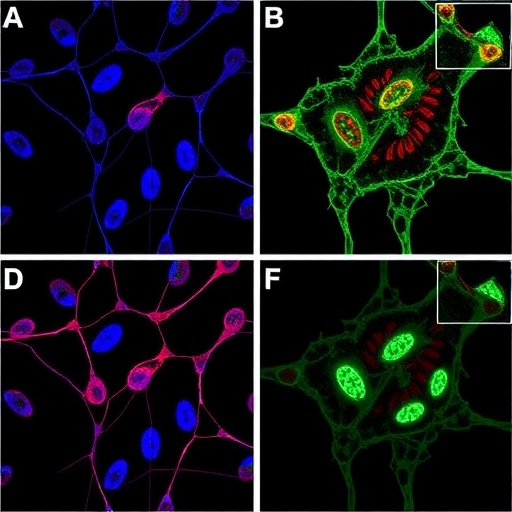
In the evolving landscape of oncology research, the intricate molecular mechanisms that drive the progression of ovarian cancer continue to unveil new layers of complexity. A recent significant correction published in Medical Oncology sheds light on the pivotal regulatory role of the transcription factor CEBPB in modulating ERK1/2 activity via SOS1, revealing profound implications for ovarian cancer biology and therapeutic strategies. This discovery not only deepens our understanding of the intracellular signaling cascades influencing tumor growth but also opens potential avenues for targeted interventions tailored to disrupt these oncogenic pathways.
Ovarian cancer, notorious for its late diagnosis and poor prognosis, is fueled by aberrant signaling networks that orchestrate malignant cell proliferation, survival, and metastasis. Among the numerous signaling axes implicated, the RAS-RAF-MEK-ERK pathway stands out as a critical mediator of cellular responses to external growth stimuli. ERK1/2, key kinases within this cascade, execute diverse functions by phosphorylating substrates that regulate gene expression, cellular metabolism, and cytoskeletal dynamics. Precise regulation of ERK1/2 is therefore vital, and dysregulation often correlates with oncogenic transformation and therapy resistance.
Against this backdrop, the transcription factor CEBPB has emerged as a central figure in tumor biology. Known predominantly for regulating genes involved in inflammation and cellular differentiation, recent evidence indicates that CEBPB exerts influence beyond its traditional roles, particularly in ovarian cancer. This correction article elucidates how CEBPB modulates ERK1/2 activity through the regulation of the SOS1 protein, a guanine nucleotide exchange factor that catalyzes RAS activation. SOS1’s function is crucial for propagating upstream signals to the ERK pathway, positioning it as a significant checkpoint in cellular communication.
The study underscores that CEBPB enhances the transcriptional activity of SOS1, thereby increasing the catalytic conversion of inactive GDP-bound RAS to its active GTP-bound form. This activation amplifies downstream ERK1/2 phosphorylation, which in turn promotes proliferative and survival signals within ovarian cancer cells. Such a mechanistic insight implicates CEBPB as a linchpin that interlinks transcriptional regulation and signal transduction, converting extracellular cues into sustained oncogenic outputs.
At a molecular level, the interaction between CEBPB and the SOS1 promoter region facilitates elevated SOS1 mRNA and protein expression, as evidenced by chromatin immunoprecipitation assays and reporter gene analyses. This upregulation reinforces the feed-forward loop that intensifies RAS-ERK signaling—a hallmark often observed in aggressive ovarian malignancies. Disrupting this axis therefore represents a tantalizing therapeutic target, which could potentially reverse or attenuate the malignant phenotype.
The implications of these findings extend beyond fundamental biology to clinical oncology. Current treatments for ovarian cancer, including platinum-based chemotherapies and PARP inhibitors, often face limitations due to intrinsic or acquired resistance mediated by compensatory signaling pathways such as ERK. Understanding the regulatory influence of CEBPB on SOS1-driven ERK activation unveils alternative interventional points that could synergize with existing modalities, improving patient outcomes and survival rates.
Moreover, the research highlights the necessity to develop therapeutic agents that directly or indirectly target CEBPB or SOS1, potentially via small molecule inhibitors, antisense oligonucleotides, or CRISPR-based gene editing. Precision medicine approaches tailored to inhibit this regulatory axis could mitigate ERK pathway hyperactivation characteristic of aggressive ovarian tumors, thereby restraining tumor progression and enhancing chemosensitivity.
From a broader perspective, this correction reinforces the dynamic nature of scientific inquiry, emphasizing the importance of continuous validation and refinement of data. It reaffirms that a comprehensive grasp of transcriptional-coupled signaling mechanisms is essential for decoding cancer pathophysiology. Additionally, it serves as a template for investigating similar regulatory circuits in other tumor types, given the ubiquitous involvement of ERK signaling in various cancers.
Future research directions inspired by these findings include delineating how CEBPB-mediated SOS1 activation integrates with other oncogenic pathways and influences the tumor microenvironment. The cross-talk between cancer cells, stromal components, and immune infiltrates might be substantially affected by fluctuations in ERK1/2 activity, orchestrated in part by CEBPB, suggesting a broader impact on tumor progression and metastasis.
Furthermore, understanding how post-translational modifications of CEBPB—such as phosphorylation, acetylation, or ubiquitination—affect its capacity to regulate SOS1 provides an intricate layer of control that might be exploited pharmacologically. Decoding these modifications can augment the therapeutic repertoire aiming to intercept aberrant ERK signaling.
In conclusion, the corrected insights into the role of CEBPB in regulating ERK1/2 via SOS1 significantly advance the molecular narrative of ovarian cancer progression. This nexus of transcriptional regulation and kinase signaling underscores the sophisticated control mechanisms cancer cells deploy to sustain malignancy. Therapeutic targeting of this axis represents a promising horizon, potentially transforming ovarian cancer management and yielding better prognostic outcomes for patients burdened by this formidable disease.
Subject of Research: The regulatory role of CEBPB in ERK1/2 signaling through SOS1 in ovarian cancer progression.
Article Title: Correction to: CEBPB regulates ERK1/2 activity through SOS1 and contributes to ovarian cancer progression.
Article References:
Tan, J., Wang, D., Tu, A. et al. Correction to: CEBPB regulates ERK1/2 activity through SOS1 and contributes to ovarian cancer progression. Med Oncol 43, 119 (2026). https://doi.org/10.1007/s12032-025-03136-y
Image Credits: AI Generated
Tags: cancer cell proliferation and survivalCEBPB ovarian cancer researchERK1/2 activity regulationlate diagnosis ovarian cancermolecular mechanisms of tumor progressiononcogenic signaling networksovarian cancer therapeutic strategiesRAS-RAF-MEK-ERK pathwaySOS1-ERK1/2 signaling pathwaytargeted interventions in oncologytherapy resistance in ovarian cancertranscription factors in cancer