Credit: Krister Par Andersson/CU Boulder
Paying rural villagers to cut down fewer trees boosts conservation not only while the payments are being made but even after they're discontinued, according to a new University of Colorado Boulder study involving 1,200 tropical forest users in five developing countries.
The study, published Monday in the journal Nature Sustainability, also found that when forest users trust each other, their conservation efforts are further enhanced even after cash incentives go away.
"There has been considerable pushback in recent years against the idea of using money as an incentive to conserve nature," said lead author Krister Andersson, a political science professor and researcher at the Institute of Behavioral Science. "This study shows that under the right circumstances, money can actually induce people to make the right decision for nature longer term."
The study comes at a time when so-called Payments for Ecosystem Services (PES) are becoming an increasingly common tool among policymakers wanting to promote conservation of land, water and forests. More than 550 such programs exist globally already, including programs in Ecuador and Costa Rica, according to an editorial in the same journal.
Research is mixed as to whether such programs work, and little has been done to assess what happens after payment goes away. Meanwhile, some research suggests cash payments can backfire and "crowd out" other intrinsic non-monetary motivations people already have, and thus leave them less likely to conserve after payments are withdrawn than before they started.
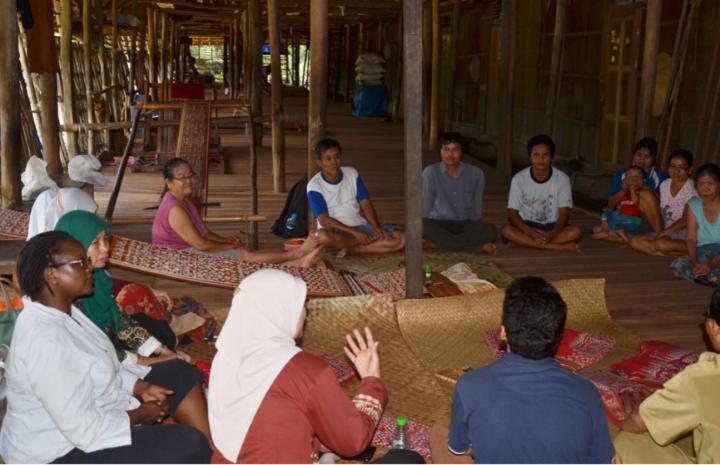
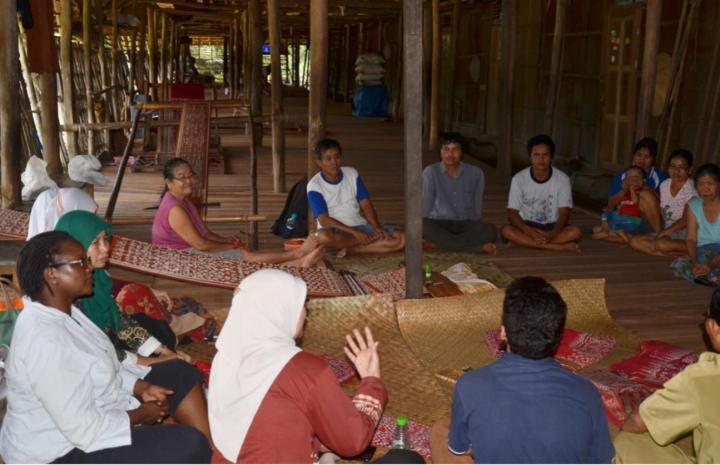
To shed light on the debate, Andersson and his colleagues traveled to 54 villages near tropical forests in Bolivia, Indonesia, Peru, Tanzania and Uganda.
There, they staged a half-day table-top simulation game in which local forest users were divided into groups of eight and asked to make decisions about how many trees they would harvest from a shared forest.
They had the opportunity to earn more than a full day's pay based upon their decisions.
In the first stage, they were not allowed to communicate with others in their group and made individual decisions based on their own needs and values. In the second stage, they were offered money to cut down fewer trees (to mimic a PES), asked to discuss for five minutes and decide as group, or both. In the third stage, they went back to making decisions alone with no cash incentive.
Participants who got cash in the second stage cut down 19 percent fewer trees. Those who got cash and were encouraged to communicate in their decisions cut down 48 percent fewer trees.
Even after payments stopped, those groups that had been paid continued to conserve, with the group that got cash and worked together maintaining a 23 percent reduction (compared to pre-payment) in the number of trees cut down.
Those who had indicated in surveys prior to the game that they trusted their other community members conserved the most, cutting down 35 percent fewer trees in the game post-payment than prior to payment.
"Our experimental results suggest that payments, especially when they are conditional on group cooperation, can help people realize the value of cooperation and that lasting cooperation can lead to better forest conditions," said Andersson.
Andersson acknowledged that, in some cases, "throwing money around" can backfire, crowding out value-based reasons for doing the right thing. For instance, in one famous experiment in Israel, when researchers at 10 daycare centers began fining parents for picking up their children late, rates of tardiness among parents got worse as the parents went from being on time to avoid inconveniencing the childcare workers to assuming that they could just be late and pay for it.
In the case of rainforest preservation, however, most forest users have an economic stake in the forest so their decision-making is already shaped by market logic. In such cases, the "crowding out" theory may not apply as much, Andersson said.
About 20 percent of global greenhouse gas emissions come from deforestation, studies show. As rainforests are cut down – often to make way for agribusiness operations – and either burned or decompose, they release CO2 into the atmosphere.
Andersson said he hopes the research will shed light on one key tool for helping to effectively reduce that deforestation.
"If policymakers really want to be effective in the use of these Payments for Ecosystem Services, I would advise them to structure payments so that they reward cooperative behavior, pay attention to how much trust there is among the groups they are working with and do what they can to foster communication. These can be huge factors in making this work."
###
Media Contact
Lisa Ann Marshall
[email protected]
303-492-3115
@cubouldernews
http://www.colorado.edu/news
Related Journal Article
http://dx.doi.org/10.1038/s41893-018-0034-z