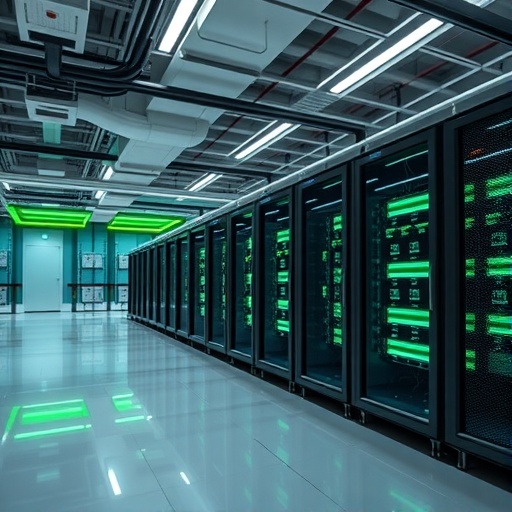
As artificial intelligence drives an unprecedented surge in data processing demands, the environmental footprint of data centers is set to expand significantly. A recent study, co-authored by Hon Chung Lau, adjunct professor at Rice University’s Department of Chemical and Biomolecular Engineering and founder of Low Carbon Energies LLC, reveals the critical potential of carbon capture and storage (CCS) technology in mitigating the carbon emissions from this rapidly growing sector.
Published in Energy & Fuels, the study projects that U.S. data center power capacity will escalate from 40 gigawatts in 2025 to an astounding 169 gigawatts by 2030. This explosive growth threatens to increase yearly carbon dioxide emissions from data centers’ fossil-fueled electricity sources from roughly 90 million metric tons to more than 400 million metric tons. Lau emphasizes the dual challenge posed by AI-era data centers: scaling infrastructure reliably and sustainably, while aligning with stringent decarbonization objectives.
The research team analyzed public data on announced U.S. data centers, scrutinizing their geographic distribution, power capacities, and energy sources. Key hotspots of expansion include Texas, Virginia, Pennsylvania, Ohio, and several western states. Texas alone may need an additional 25 gigawatts of power capacity by 2030 to meet anticipated demands. Given the necessity for steady, uninterrupted power, natural gas combined cycle plants fitted with CCS emerged as a viable solution. These plants offer lower CO2 emissions than coal-fired counterparts and are often located near vast underground saline aquifers ideal for long-term carbon storage.
The study’s geological assessment identified that 34 states have sufficient saline aquifer capacity to sequester over 100 years’ worth of data center-related carbon emissions beyond 2030. By 2025, these aquifers could potentially store around 59 million metric tons of CO2, representing 66% of that year’s emissions. By 2030, the capacity could rise to 299 million metric tons, nearly three-quarters of projected emissions. Including out-of-state storage possibilities, over 90% of these emissions might be captured and securely stored underground.
Lau clarifies that carbon capture is not the sole remedy but underscores that existing geology combined with current technology offers a pragmatic route to decarbonizing digital infrastructure hotspots. The study’s conservative assumptions—such as considering only publicly disclosed data center plans and holding state energy mixes static through 2030—highlight a realistic, if modest, approach to modeling emissions trajectories and mitigation potential.
This work provides a crucial framework linking the exponential rise of data centers, energy production demands, and scalable solutions for carbon management. As AI continues to reshape economies and energy landscapes, integrating CCS with natural gas power generation in key regions presents a tangible pathway toward responsible, low-carbon computing infrastructure.
In sum, the AI economy’s looming energy requirements necessitate innovative strategies for balancing growth with climate imperatives. Lau and colleagues’ findings illuminate how carbon storage technology, geographically targeted and technically feasible, can play a pivotal role in shaping a sustainable digital future.
Subject of Research: Carbon capture and storage for decarbonizing U.S. data centers
Article Title: The Role of Carbon Capture and Storage in Decarbonizing U.S. Data Centers
News Publication Date: 15-May-2026
Web References: http://dx.doi.org/10.1021/acs.energyfuels.6c01309
Image Credits: Low Carbon Energies, LLC
Keywords
Carbon capture, data centers, carbon storage, natural gas power plants, AI energy demand, decarbonization, saline aquifers, carbon dioxide emissions
Tags: AI data center energy consumptionAI-driven data processing environmental footprintcarbon capture and storage technologydecarbonization of data centersenvironmental impact of AI infrastructurefossil fuel energy sources in data centersgeographic distribution of data centersmitigating climate change with CCSpower capacity expansion for data centersreducing data center carbon emissionssustainable data center developmentU.S. data center growth projections