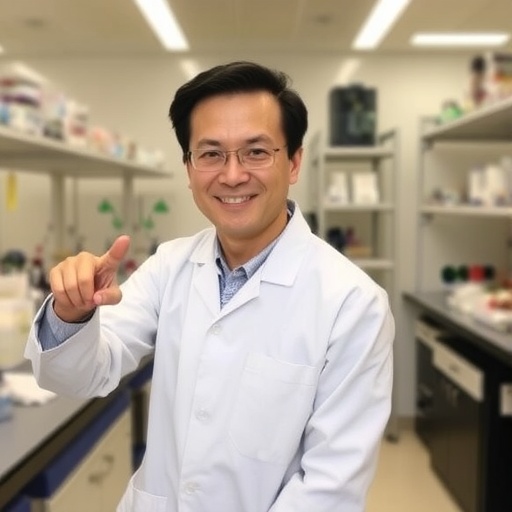
The future of chemical manufacturing is set to shift dramatically as microbial biomanufacturing edges closer to commercial viability. At KAIST, a research team led by Distinguished Professor Sang Yup Lee has mapped out the critical challenges hindering the industrial adoption of microbial cell factories and unveiled an AI-driven roadmap to navigate these obstacles successfully.
Traditional chemical production heavily relies on petroleum, but increasing environmental concerns have spotlighted microbial processes as sustainable alternatives. Microbial cell factories, engineered through systems metabolic engineering, reprogram microbes to produce valuable chemicals. Despite high lab-scale productivity, scaling these processes to industrial levels exposes gaps—dubbed the “valley of death”—where production efficiency falters, costs escalate, and competitiveness plummets.
The KAIST team delved into two pivotal bioproducts: succinic acid, a bio-based chemical feedstock, and polyhydroxyalkanoate (PHA), a biodegradable plastic. Succinic acid’s market viability hinges not just on fermentation output but also on cost dynamics spanning raw materials, purification, and market scale. The researchers suggest launching biomanufacturing efforts by targeting high-value sectors like pharmaceuticals and cosmetics before tackling broader commodity markets.
PHA embodies eco-friendly plastic alternatives but grapples with intrinsic challenges such as brittleness and narrow thermal stability windows, limiting direct substitution for conventional plastics. Moreover, its costly production and recovery processes impede economic feasibility. A phased market entry starting with high-margin applications, including medical and food packaging, may pave the way for broader adoption.
Central to overcoming these bottlenecks is the integration of artificial intelligence across the biomanufacturing pipeline. AI can refine enzyme and microbial engineering, simulate production digitally, and enhance simultaneous economic and environmental assessments. This convergence promises shorter development cycles, reduced cost burdens, and higher commercialization success rates.
The researchers highlight the importance of embedding techno-economic analysis and life cycle assessment early in research phases, moving past token post-development evaluations. They also emphasize fortifying supply chain resilience to mitigate raw material uncertainties and geopolitical shifts.
This comprehensive industrialization strategy marks a pivotal leap from isolated technology development toward a holistic approach encompassing raw material sourcing, microbial design, fermentation, product purification, and market strategy. By advancing biomanufacturing commercialization, the study lays groundwork for a sustainable, bio-based future poised to gradually supplant petroleum-dependent chemical industries.
Published in Nature Communications, this work not only underscores the pressing hurdles but also charts a pragmatic path for bridging lab innovation with industrial reality, heralding a new era in eco-conscious manufacturing.
Subject of Research: Industrial-scale biomanufacturing and microbial cell factory optimization
Article Title: Beyond petrochemicals: challenges and opportunities in industrial-scale biomanufacturing
News Publication Date: 14 July 2026
Web References: http://dx.doi.org/10.1038/s41467-026-73835-1
Image Credits: KAIST
Keywords
Biomanufacturing, microbial cell factories, systems metabolic engineering, succinic acid, polyhydroxyalkanoate, biodegradable plastics, artificial intelligence, techno-economic analysis, life cycle assessment, bioeconomy
Tags: AI-driven biomanufacturing roadmapbiodegradable plastics PHAbioproducts succinic acidenvironmental impact of microbial processesindustrial biomanufacturing challengesKAIST microbial researchmicrobial biomanufacturingmicrobial cell factoriesmicrobial engineering for chemical synthesisscaling microbial processessustainable chemical productionsystems metabolic engineering