• HOME
  • NEWS
  • EXPLORE
    • CAREER
      • Companies
      • Jobs
    • EVENTS
    • iGEM
      • News
      • Team
    • PHOTOS
    • VIDEO
    • WIKI
  • BLOG
  • COMMUNITY
    • FACEBOOK
    • INSTAGRAM
    • TWITTER
Saturday, June 27, 2026
BIOENGINEER.ORG
No Result
View All Result
  • Login
  • HOME
  • NEWS
  • EXPLORE
    • CAREER
      • Companies
      • Jobs
        • Lecturer
        • PhD Studentship
        • Postdoc
        • Research Assistant
    • EVENTS
    • iGEM
      • News
      • Team
    • PHOTOS
    • VIDEO
    • WIKI
  • BLOG
  • COMMUNITY
    • FACEBOOK
    • INSTAGRAM
    • TWITTER
  • HOME
  • NEWS
  • EXPLORE
    • CAREER
      • Companies
      • Jobs
        • Lecturer
        • PhD Studentship
        • Postdoc
        • Research Assistant
    • EVENTS
    • iGEM
      • News
      • Team
    • PHOTOS
    • VIDEO
    • WIKI
  • BLOG
  • COMMUNITY
    • FACEBOOK
    • INSTAGRAM
    • TWITTER
No Result
View All Result
Bioengineer.org
No Result
View All Result
Home NEWS Science News Health

Can good sleep patterns offset genetic susceptibility to heart disease and stroke?

Bioengineer by Bioengineer
December 18, 2019
in Health
Reading Time: 2 mins read
0
IMAGE
Share on FacebookShare on TwitterShare on LinkedinShare on RedditShare on Telegram

IMAGE

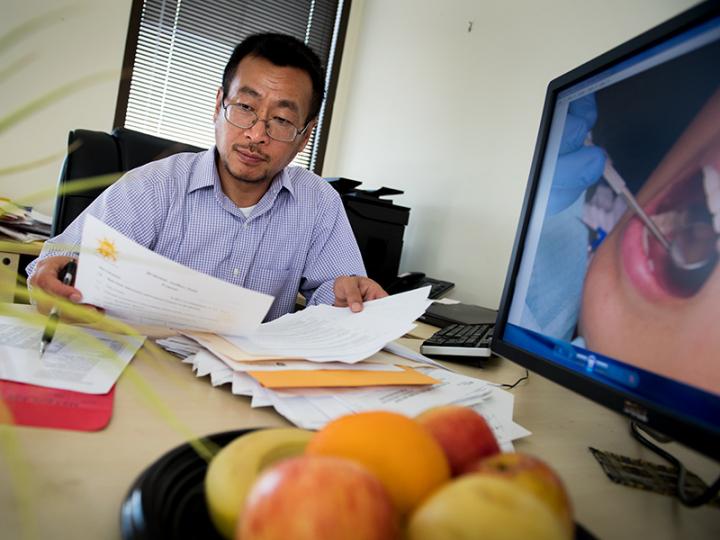
Credit: Paula Burch-Celentano


Getting a good night’s sleep could be beneficial for long-term health. A pioneering new study led by Dr. Lu Qi, director of the Tulane University Obesity Research Center, found that even if people had a high genetic risk of heart disease or stroke, healthy sleep patterns could help offset that risk. The study is published in the European Heart Journal.

The researchers looked at genetic variations known as SNPs (single nucleotide polymorphisms) that were already known to be linked to the development of heart disease and stroke. They analysed the SNPs from blood samples taken from more than 385,000 healthy participants in the UK Biobank project and used them to create a genetic risk score to determine whether the participants were at high, intermediate or low risk of cardiovascular problems.

The researchers followed the participants for an average of 8.5 years, during which time there were 7,280 cases of heart disease or stroke.

“We found that compared to those with an unhealthy sleep pattern, participants with good sleeping habits had a 35% reduced risk of cardiovascular disease and a 34% reduced risk of both heart disease and stroke,” Qi says. Researchers say those with the healthiest sleep patterns slept 7 to 8 hours a night, without insomnia, snoring or daytime drowsiness.

When the researchers looked at the combined effect of sleep habits and genetic susceptibility on cardiovascular disease, they found that participants with both a high genetic risk and a poor sleep pattern had a more than 2.5-fold greater risk of heart disease and a 1.5-fold greater risk of stroke compared to those with a low genetic risk and a healthy sleep pattern. This meant that there were 11 more cases of heart disease and five more cases of stroke per 1000 people a year among poor sleepers with a high genetic risk compared to good sleepers with a low genetic risk. However, a healthy sleep pattern compensated slightly for a high genetic risk, with just over a two-fold increased risk for these people.

A person with a high genetic risk but a healthy sleep pattern had a 2.1-fold greater risk of heart disease and a 1.3-fold greater risk of stroke compared to someone with a low genetic risk and a good sleep pattern. While someone with a low genetic risk, but an unhealthy sleep pattern had 1.7-fold greater risk of heart disease and a 1.6-fold greater risk of stroke.

“As with other findings from observational studies, our results indicate an association, not a causal relation,” Qi says. “However, these findings may motivate other investigations and, at least, suggest that it is essential to consider overall sleep behaviors when considering a person’s risk of heart disease or stroke.”

###

Media Contact
Carolyn Scofield
[email protected]
504-247-1443

Original Source

https://news.tulane.edu/pr/can-good-sleep-patterns-offset-genetic-susceptibility-heart-disease-and-stroke

Related Journal Article

http://dx.doi.org/10.1093/eurheartj/ehz849

Tags: AgingCardiologyMedicine/HealthStroke
Share12Tweet8Share2ShareShareShare2

Related Posts

Tracking Lanthanide-Labeled Microplastics in Plants

June 25, 2026

Neural Design Enables Zero-Shot Drug-Binding Proteins

June 25, 2026

Genomic Insights into Human Skin Fungi Diversity

June 25, 2026

Chiral Laser Gyroscopes Surpass Lock-In Limit

June 25, 2026
Please login to join discussion

POPULAR NEWS

  • Saying Goodbye to PGY-6: Pediatric Fellowship Realities

    103 shares
    Share 41 Tweet 26
  • Multi-Hospital Study Reveals Long Covid Burden Is Twice as High as Current Estimates

    92 shares
    Share 36 Tweet 23
  • Detection of EDCs in Breast Milk and Infant Urine Up to Six Months Highlights Early Exposure Risks

    77 shares
    Share 31 Tweet 19
  • New Drug Candidate Developed at McMaster Shows Potential for Treating Brain Cancer

    58 shares
    Share 23 Tweet 15

About

We bring you the latest biotechnology news from best research centers and universities around the world. Check our website.

Follow us

Recent News

Tracking Lanthanide-Labeled Microplastics in Plants

POSTECH Researchers Slash Cost of Reconstituted Cell-Free Systems by 95%

AI and Physics Collaborate to Design Advanced Hydrogen Storage Materials

Subscribe to Blog via Email

Success! An email was just sent to confirm your subscription. Please find the email now and click 'Confirm' to start subscribing.

Join 82 other subscribers
  • Contact Us

Bioengineer.org © Copyright 2023 All Rights Reserved.

Welcome Back!

Login to your account below

Forgotten Password?

Retrieve your password

Please enter your username or email address to reset your password.

Log In
No Result
View All Result
  • Homepages
    • Home Page 1
    • Home Page 2
  • News
  • National
  • Business
  • Health
  • Lifestyle
  • Science

Bioengineer.org © Copyright 2023 All Rights Reserved.