

• HOME
  • NEWS
  • EXPLORE
    • CAREER
      • Companies
      • Jobs
    • EVENTS
    • iGEM
      • News
      • Team
    • PHOTOS
    • VIDEO
    • WIKI
  • BLOG
  • COMMUNITY
    • FACEBOOK
    • INSTAGRAM
    • TWITTER
Tuesday, July 7, 2026
BIOENGINEER.ORG
No Result
View All Result
  • Login
  • HOME
  • NEWS
  • EXPLORE
    • CAREER
      • Companies
      • Jobs
        • Lecturer
        • PhD Studentship
        • Postdoc
        • Research Assistant
    • EVENTS
    • iGEM
      • News
      • Team
    • PHOTOS
    • VIDEO
    • WIKI
  • BLOG
  • COMMUNITY
    • FACEBOOK
    • INSTAGRAM
    • TWITTER
  • HOME
  • NEWS
  • EXPLORE
    • CAREER
      • Companies
      • Jobs
        • Lecturer
        • PhD Studentship
        • Postdoc
        • Research Assistant
    • EVENTS
    • iGEM
      • News
      • Team
    • PHOTOS
    • VIDEO
    • WIKI
  • BLOG
  • COMMUNITY
    • FACEBOOK
    • INSTAGRAM
    • TWITTER
No Result
View All Result
Bioengineer.org
No Result
View All Result
Home NEWS Science News Biology

Can a woman’s health during pregnancy reveal a risk for cardiovascular disease and depression later in life?

Bioengineer by Bioengineer
November 1, 2022
in Biology
Reading Time: 3 mins read
0
Lead investigator
Share on FacebookShare on TwitterShare on LinkedinShare on RedditShare on Telegram

A University of Massachusetts Amherst epidemiologist has been awarded a five-year, $2.1 million grant from the National Institutes of Health (NIH) to continue research that aims to understand how physical and mental health during pregnancy can help predict cardiovascular and mental health disorders in middle age.
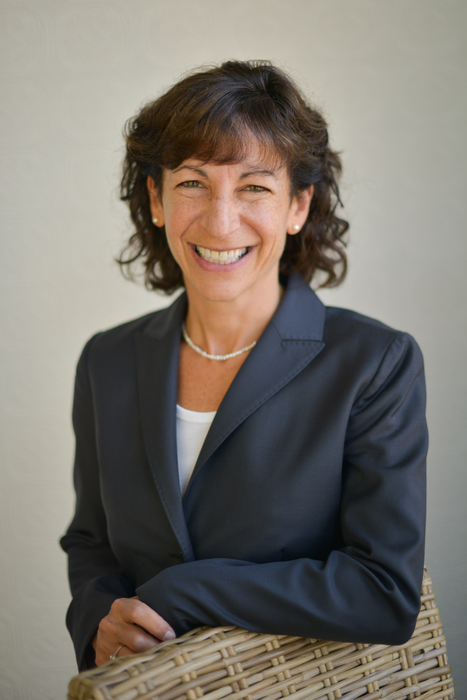
Lead investigator

Credit: UMass Amherst

A University of Massachusetts Amherst epidemiologist has been awarded a five-year, $2.1 million grant from the National Institutes of Health (NIH) to continue research that aims to understand how physical and mental health during pregnancy can help predict cardiovascular and mental health disorders in middle age.

“The demands of pregnancy may act as a ‘stress test’ that reveal a predisposition to future cardiovascular disease,” says Lisa Chasan-Taber, professor of epidemiology and chair of the department of biostatistics and epidemiology in the UMass Amherst School of Public Health and Health Sciences. “We think pregnancy complications may also reveal a predisposition to future depressive disorders.” 

Chasan-Taber will lead the project, collaborating with UMass Amherst neuroscientists Rebecca Spencer and Jerrold Meyer, professor and professor emeritus, respectively, of psychological and brain sciences.

“We will assess prospectively whether pregnancy complications offer a meaningful opportunity for early efforts at cardiovascular disease prevention,” Chasan-Taber says.

The research team will examine the association of pregnancy complications and prenatal mental health with cardiometabolic and mental health in middle-aged Hispanics of Puerto Rican heritage living in the continental U.S. Among Hispanics, Puerto Ricans have the highest prevalence of diabetes, obesity and cardiometabolic risk factors, as well as a population growth rate three times higher than the overall U.S. population. 

“We hypothesize that pregnancy complications will be associated with poorer cardiometabolic health and mental health status in middle adulthood among Puerto Rican women,” Chasan-Taber says.

The researchers will leverage data collected during their previous prospective study, Proyecto Buena Salud (PBS), conducted by Chasan-Taber from 2006 to 2011. In this study, Chasan-Taber recruited 1,627 pregnant women of Puerto Rican and Dominican descent who were receiving prenatal care in Western Massachusetts. 

The PBS study provided novel evidence that pregnancy complications and prenatal depression were highly prevalent in Puerto Ricans and were significantly associated with adverse maternal and baby outcomes. The PBS participants have now reached middle adulthood, providing the opportunity to analyze whether health during pregnancy can predict other health outcomes in middle age.

The researchers estimate that 1,096 of the original PBS participants will be part of the new study. Bilingual and bicultural staff will collect biomarkers of insulin resistance, inflammation, lipids, adiposity, blood pressure and chronic physiological stress (hair cortisol concentrations). The participants also will be interviewed to measure depression, psychosocial stress and anxiety. 

The team will use actigraphy, which monitors sleep and activity cycles using a sensor worn on the wrist, to test their hypothesis that poor sleep and low physical activity may mediate the association between pregnancy complications and subsequent cardiometabolic health.

Chasan-Taber summarized by saying, “Ultimately, we hope that findings from our study will help inform culturally sensitive prenatal interventions for early life prevention of future chronic disorders in this understudied and particularly vulnerable population.”



Share12Tweet8Share2ShareShareShare2

Related Posts

Here are a few rewritten headlines for a science magazine post, each with a slightly different tone: Intriguing & poetic: How do organs sculpt themselves? Sea stars hold the secret Direct & research-focused: Sea stars reveal the hidden rules of organ formation Metaphorical & inviting: Tiny architects beneath the waves: What sea stars teach us about building organs Short & punchy: Star-shaped clues to how our organs take shape Question-led: Could a sea star show us how organs form? Elegant & feature-style: The body’s blueprint, glimpsed in a sea star’s arm

July 6, 2026
Bacteria evolve faster with unconventional gene copies — Biology

Bacteria evolve faster with unconventional gene copies

July 6, 2026

Neighbours rewire soil feedback via root microbiome shifts

July 6, 2026

Evolution-Inspired Biosensors Revolutionize Lipid Tracking in Real Time

July 2, 2026

POPULAR NEWS

  • Detection of EDCs in Breast Milk and Infant Urine Up to Six Months Highlights Early Exposure Risks

    77 shares
    Share 31 Tweet 19
  • New Drug Candidate Developed at McMaster Shows Potential for Treating Brain Cancer

    58 shares
    Share 23 Tweet 15
  • Saying Goodbye to PGY-6: Pediatric Fellowship Realities

    103 shares
    Share 41 Tweet 26
  • KTU Researchers Explore Ultrasound’s Role in Enhancing Blood Flow Beyond Diagnostics

    53 shares
    Share 21 Tweet 13

About

We bring you the latest biotechnology news from best research centers and universities around the world. Check our website.

Follow us

Recent News

Flame retardant BDE-209 targets molecularly linked to ulcerative colitis

Ultra-high frequency particle impacts mimic rockbursts to shatter hard rock

Kidney transplant outcomes in older adults studied by German researchers

Subscribe to Blog via Email

Enter your email address to subscribe to this blog and receive notifications of new posts by email.

Join 83 other subscribers
  • Contact Us

Bioengineer.org © Copyright 2023 All Rights Reserved.

Welcome Back!

Login to your account below

Forgotten Password?

Retrieve your password

Please enter your username or email address to reset your password.

Log In
No Result
View All Result
  • Homepages
    • Home Page 1
    • Home Page 2
  • News
  • National
  • Business
  • Health
  • Lifestyle
  • Science

Bioengineer.org © Copyright 2023 All Rights Reserved.