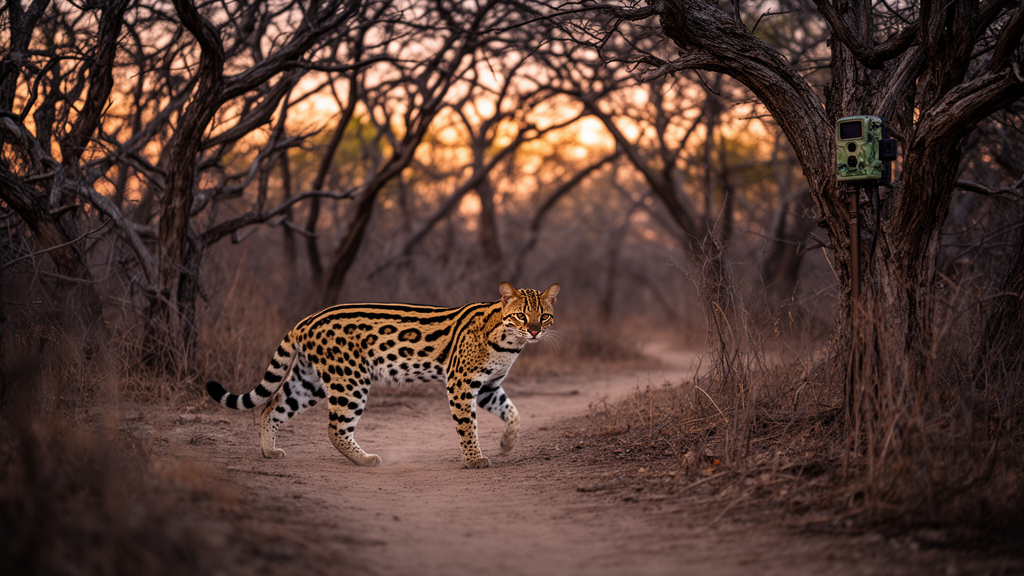
A camera-trap study of ocelots in seasonal tropical dry forests on Mexico’s central Pacific coast estimated that 10 of 46 identified females, or 21.7%, were accompanied by kittens, cubs or juveniles between 2010 and 2016. The observations covered two localities in Michoacán within an effective sampled area of 200 km² and represented the first estimate of population breeding effort and productivity for ocelots in western seasonal dry tropical forests.
The observational study combined surveys at El Naranjal in Aquila during 2010–2011 and San Jose de los Pinos in Arteaga during 2014–2016. The first survey used 10 to 15 camera stations across an effective sampled area averaging 119 km², while the second used 27 stations across an estimated 81 km². Sampling was concentrated in the dry season and after the rainy season, and the analysis considered three-month periods under the closed-population assumption used in camera-trap capture–recapture studies.
Across the two campaigns, cameras accumulated 11,356 trap nights, averaging 1,622 per sampling season, with a range of 844 to 2,151. The effort produced 436 ocelot records, of which 350 were considered adequate for individual identification. Researchers distinguished animals using their rosettes, spots, stripes, scars, relative size and age class, as well as capture location and date. The combined sample included 26 males and 46 females.
Breeding effort was defined as the percentage of identified females observed with young, while productivity was defined as the number of kittens or juveniles per reproductive female, defined as a female observed with offspring. The researchers also calculated per capita productivity by dividing the number of young by the total number of females in each survey, season or the overall study. Young individuals recorded in more than one season were counted only when first observed, to avoid overestimation.
Overall productivity was estimated at 1.25 young per active breeding female, with a per capita rate of 0.26 across the 46 identified females and 12 young. Mean seasonal per capita productivity was 0.152 ± 0.168 standard deviation. It averaged 0.218 ± 0.190 in the first survey and 0.102 ± 0.156 in the second. No cubs, kittens or juveniles were registered during the March–May sampling periods in 2014 or 2015, although breeding activity was recorded in every year overall.
The study estimated female density at 13.2 to 16.5 individuals per 100 km² after adjusting for the observed sex ratio, while cub and juvenile density ranged from 2.4 to 3.4 per 100 km² by survey. Using an assumed 50:50 birth sex ratio, average female cub density was estimated at 0.85 to 1.24 per 100 km² by season. The authors said the study-wide rate would imply 5.6 female cubs per year for a hypothetical population of 100 adult females and complete female replacement in 18.7 years; the lower rate from the second survey would imply a period of 33 years. These were replacement scenarios based on the observed rates, not direct measurements of survival or complete population turnover.
Timing observations showed two juveniles with an adult female in December and January, while five captured kittens or cubs and 14 recaptured individuals were distributed relatively evenly from December through March. No pregnant females were photographed. The study reported that breeding females were active from 19:00 to 05:00, but the camera observations do not establish whether they were entirely inactive during daylight hours.
The authors interpreted the breeding-effort range of 13% to 21% as similar to the 10% to 26% reported for ocelots in humid tropical forests, despite lower annual rainfall of about 1,300 mm and severe droughts in the study region. They suggested that local ecological interactions, including prey availability and interactions with competitors and predators, may influence breeding effort in addition to climate. Previous work in the same landscape reported a negative association between female ocelot activity and the activity of cougars and jaguars, while male activity was associated with prey abundance. The present study did not establish that any of these factors caused the observed differences in reproduction.
Direct comparison between the two surveys was limited because their sampling designs and localities were not balanced, and local factors such as water availability may have influenced habitat use and prey availability. Hunting was also reported in the region, including retaliatory killing of large felines after livestock losses, while agricultural expansion had reduced forests. The authors considered the low and variable productivity indicative of vulnerability to drought, habitat loss and additional mortality, but the long-term viability of the population remained uncertain. They called for continued monitoring with balanced designs, further surveys in the wider region, and assessment of local habitat quality, prey availability, ecological interactions, and kitten and juvenile survival.
Subject of Research: Camera-trap estimates of ocelot breeding effort and productivity in seasonal tropical dry forests in central-western Mexico.
Article Title: Ocelot ( Leopardus pardalis ) breeding effort and productivity in seasonal tropical forests of the central Mexican Pacific
Article References: Monterrubio-Rico, T. C., Núñez-Landa, L., & Charre-Medellín, J. F. (2024). Ocelot (Leopardus pardalis) breeding effort and productivity in seasonal tropical forests of the central Mexican Pacific. Neotropical Biology and Conservation, 19(2), 51-67. https://doi.org/10.3897/neotropical.19.e114194
Image Credits: AI Generated
DOI: 10.3897/neotropical.19.e114194
Keywords: ocelot, camera trapping, breeding effort, population productivity, tropical dry forest, Michoacán, Mexico, wildlife conservation, Neotropics, Leopardus, pardalis, breeding
News Source: Margaret Porter. (October 21, 2026). Camera-trap study estimates ocelot breeding and productivity in central Mexican Pacific dry forests. Scienmag.