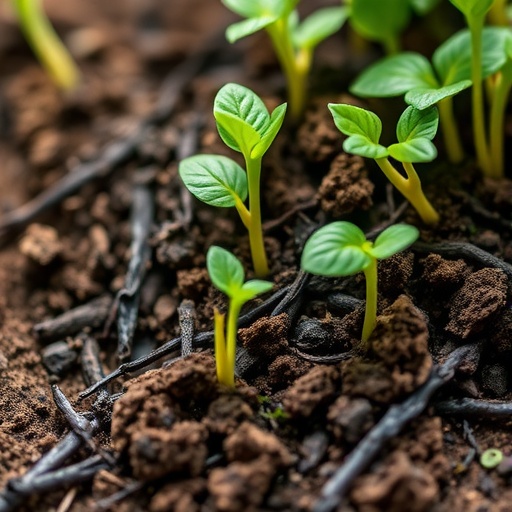
Cadmium is best known as a persistent toxic metal that can threaten soil health, contaminate crops, and harm microorganisms. Yet a new study reports that the pollutant may also produce an unexpected effect in biochar-amended soils: it can increase the amount of carbon retained by biochar and reduce the release of carbon dioxide during decomposition. The finding does not make cadmium environmentally desirable, but it reveals a previously overlooked interaction between heavy-metal contamination, biochar chemistry, and microbial carbon cycling.
The study, published in Biochar X, found that cadmium enhanced biochar-based carbon sequestration through two linked mechanisms. Cadmium ions helped bind biochar to dissolved organic carbon, making the carbon less chemically accessible to decomposers. At the same time, cadmium accumulated on biochar surfaces and inhibited microorganisms that would otherwise break down persistent organic compounds. Together, these processes reduced the mineralization of both native soil organic matter and carbon originating from the biochar.
Researchers led by Huayue Nie investigated the interaction in a 60-day soil incubation experiment. They used carbon isotope tracing to distinguish carbon dioxide released from pre-existing soil organic carbon from carbon released by the added biochar. This approach allowed the team to determine whether cadmium altered the decomposition of the soil’s original carbon pool, the biochar itself, or both. Soil samples were exposed to different cadmium concentrations, either with or without biochar amendment, and carbon mineralization was monitored throughout the incubation period.
The results showed a clear decline in carbon mineralization as cadmium concentrations increased. In soils receiving biochar, mineralization of native soil organic carbon fell by 37.3 percent at medium cadmium exposure and by 43.4 percent at the highest exposure compared with the corresponding uncontaminated treatment. Biochar-derived carbon was also increasingly retained: its mineralization decreased by between 5.8 and 30.0 percent as cadmium concentrations rose. The results indicate that cadmium changed the way biochar interacted with the surrounding soil rather than simply suppressing one isolated decomposition pathway.
One important mechanism involved cation bridging. Cadmium exists in soil solution primarily as a positively charged ion, or cation. Biochar surfaces commonly contain oxygen-rich functional groups, including carboxyl and hydroxyl groups, while dissolved organic carbon contains many of the same negatively charged chemical sites. Cadmium can bind to these sites on both materials, effectively acting as a molecular bridge between biochar and organic matter. This process increases the adsorption of dissolved carbon onto biochar surfaces, where it may become less available to enzymes and microbes.
Molecular calculations supported the formation of cadmium-mediated bonds between oxygen-containing groups on biochar and organic compounds. The researchers also observed that cadmium promoted the formation of larger soil aggregates. These aggregates are clusters of mineral particles and organic matter that can physically isolate carbon from decomposing organisms. When organic molecules become trapped inside aggregate structures or tightly associated with biochar, enzymes and microorganisms may have less access to them, slowing their conversion into carbon dioxide.
A second mechanism was biological. Biochar provides a porous habitat that can support microbial communities, including organisms capable of degrading relatively resistant organic compounds. In the experiment, however, cadmium accumulated on biochar surfaces and reduced microbial biomass carbon associated with the particles. Microbial biomass carbon declined from 211.6 to 137.0 milligrams per kilogram as cadmium exposure increased. Several microbial groups linked to the decomposition of resistant organic matter also declined, suggesting that cadmium toxicity directly weakened the biological processes responsible for breaking down biochar-associated carbon.
The combined chemical and biological effects altered what scientists call the priming response. Biochar can sometimes stimulate the decomposition of native soil organic matter, a process known as positive priming, potentially reducing the net carbon-storage benefit of the amendment. In this study, increasing cadmium exposure shifted the system toward negative priming, meaning that the presence of biochar was associated with lower mineralization of native soil carbon. The result was greater overall carbon retention, although the mechanism depended partly on microbial inhibition by a toxic contaminant.
The researchers describe the interaction as a possible simultaneous benefit for cadmium immobilization and carbon retention, but they emphasize that the environmental trade-offs remain significant. Biochar can reduce the mobility of cadmium by adsorbing it to its surface, potentially lowering the metal’s immediate availability to plants and groundwater. However, immobilization does not eliminate cadmium, and changes in soil acidity, moisture, microbial activity, or biochar aging could cause the metal to become mobile again. Likewise, suppressing soil microorganisms may protect carbon in the short term while damaging nutrient cycling and broader soil functions.
Because the study lasted only 60 days and was conducted under controlled laboratory conditions, its results cannot yet be assumed to apply to agricultural fields. Natural soils experience changing moisture, temperature, oxygen availability, plant root activity, and microbial succession. Biochar also undergoes chemical aging, which can alter its surface charge and its ability to retain metals and organic carbon. Long-term field experiments will therefore be needed to determine whether cadmium-enhanced carbon retention persists, whether it affects crop production, and whether the apparent sequestration benefit outweighs the ecological risks associated with heavy-metal contamination.
Subject of Research: Cadmium contamination, biochar-based carbon sequestration, soil carbon cycling, cation bridging, and microbial toxicity.
Article Title: Cadmium enhances biochar-based carbon sequestration in soils via cation bridging and microbial toxicity
News Publication Date: 11-Jun-2026
Web References: https://doi.org/10.48130/bchax-0026-0016
References: Nie H, Shen C, Han X, Lai Z, Chen M, et al. 2026. “Cadmium enhances biochar-based carbon sequestration in soils via cation bridging and microbial toxicity.” Biochar X 2: e019. DOI: 10.48130/bchax-0026-0016
Image Credits: Huayue Nie, Chang Shen, Xuliang Han, Zikai Lai, Mingwei Chen, Chenxiao Hu, Lanfang Han, and Huan Tang; image title: “Cadmium enhances biochar-based carbon sequestration in soils via cation bridging and microbial toxicity.”
Keywords
Cadmium, biochar, carbon sequestration, soil carbon, carbon mineralization, cation bridging, microbial toxicity, heavy-metal contamination, soil aggregates, negative priming, carbon capture, environmental chemistry
Tags: biochar and heavy metal interactionsbiochar carbon sequestrationcadmium impact on biochar decompositioncadmium soil contaminationcadmium’s role in carbon storage enhancementcarbon isotope tracing in soil studiesenvironmentally adverse effects of cadmium in agricultureheavy metals in soil healthmicrobial activity suppression by cadmiumorganic carbon binding in contaminated soilssoil microbial community response to heavy metalssoil organic matter mineralization inhibition