• HOME
  • NEWS
  • EXPLORE
    • CAREER
      • Companies
      • Jobs
    • EVENTS
    • iGEM
      • News
      • Team
    • PHOTOS
    • VIDEO
    • WIKI
  • BLOG
  • COMMUNITY
    • FACEBOOK
    • INSTAGRAM
    • TWITTER
Monday, May 18, 2026
BIOENGINEER.ORG
No Result
View All Result
  • Login
  • HOME
  • NEWS
  • EXPLORE
    • CAREER
      • Companies
      • Jobs
        • Lecturer
        • PhD Studentship
        • Postdoc
        • Research Assistant
    • EVENTS
    • iGEM
      • News
      • Team
    • PHOTOS
    • VIDEO
    • WIKI
  • BLOG
  • COMMUNITY
    • FACEBOOK
    • INSTAGRAM
    • TWITTER
  • HOME
  • NEWS
  • EXPLORE
    • CAREER
      • Companies
      • Jobs
        • Lecturer
        • PhD Studentship
        • Postdoc
        • Research Assistant
    • EVENTS
    • iGEM
      • News
      • Team
    • PHOTOS
    • VIDEO
    • WIKI
  • BLOG
  • COMMUNITY
    • FACEBOOK
    • INSTAGRAM
    • TWITTER
No Result
View All Result
Bioengineer.org
No Result
View All Result
Home NEWS Science News Biology

Bubbles of life from the past

Bioengineer by Bioengineer
March 4, 2018
in Biology
Reading Time: 2 mins read
0
Share on FacebookShare on TwitterShare on LinkedinShare on RedditShare on Telegram
IMAGE

Credit: Stefan Bengtson

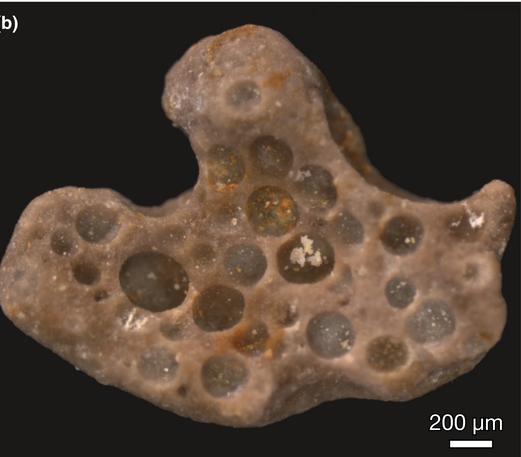
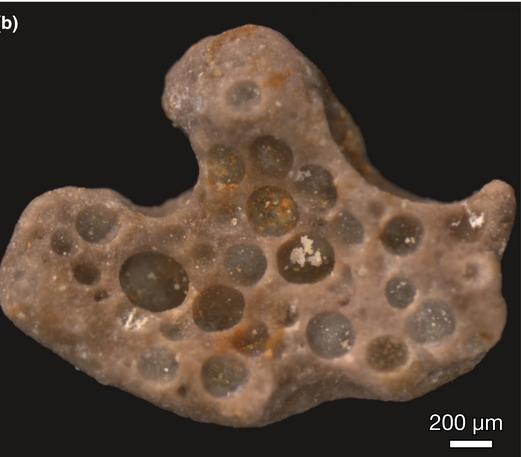
Take a good look at these photos: They show you 1.6 billion years old fossilized oxygen bubbles, created by tiny microbes in what was once a shallow sea somewhere on young Earth.

The bubbles were photographed and analyzed by researchers studying early life on Earth.

Microbes are of special interest: They were not only the first life forms on Earth. They also turned our planet into a tolerable environment for plants and animals and thus their activity paved the way for life as we know it today.

Some of these early microbes were cyanobacteria that thrived in early shallow waters. They produced oxygen by photosynthesis, and sometimes the oxygen got trapped as bubbles within sticky microbial mats.

Fossilized bubbles and cyanobacterial fabric from 1.6 billion-year-old phosphatized microbial mats from Vindhyan Supergroup, central India. Credit Stefan Bengtson.

The bubbles in the photos were preserved, and today they can be seen as a signature for life.

Ph.D. Therese Sallstedt and colleagues from University of Southern Denmark, Swedish Museum of Natural History and Stockholm University studied fossilized sediments from India, and they found round spheres in the microbial mats.

We interpret them as oxygen bubbles created in cyanobacterial biomats in shallow waters 1,6 billion years ago, said Therese Sallstedt.

Cyanobacteria changed the face of the Earth irreversibly since they were responsible for oxygenating the atmosphere. Simultaneously they constructed sedimentary structures called stromatolites, which still exist on Earth today.

Some bubbles have been partly compressed, suggesting a flexible original texture. Credit: Stefan Bengtson.

The researchers now think that cyanobacteria played a larger role than previously believed in creating phosphorites in shallow waters, thereby allowing today's scientists a unique window into ancient ecosystems. They published their findings in the journal Geobiology.

###

Media Contact

Birgitte Svennevig
[email protected]
45-27-59-86-79
@NATsdu

http://www.sdu.dk/en/om_sdu/fakulteterne/naturvide

Original Source

https://www.sdu.dk/en/om_sdu/fakulteterne/naturvidenskab/nyheder2018/2018_02_15_cyanobubbles http://dx.doi.org/10.1111/gbi.12274


Share12Tweet8Share2ShareShareShare2

Related Posts

Uncovering C. elegans Immunity via Genetic Screens — Biology

Uncovering C. elegans Immunity via Genetic Screens

May 16, 2026
Single mother must adapt swiftly — the survival of her colony depends on it — Biology

Single mother must adapt swiftly — the survival of her colony depends on it

May 15, 2026

Why Are Nearly Everyone Right-Handed? It Might Be Linked to How We Learned to Walk

May 15, 2026

Excessive Neuronal Activity Initiates Severe Autoimmune Brain Disorder

May 15, 2026
Please login to join discussion

POPULAR NEWS

  • Research Indicates Potential Connection Between Prenatal Medication Exposure and Elevated Autism Risk

    844 shares
    Share 338 Tweet 211
  • New Study Reveals Plants Can Detect the Sound of Rain

    731 shares
    Share 292 Tweet 182
  • Salmonella Haem Blocks Macrophages, Boosts Infection

    62 shares
    Share 25 Tweet 16
  • Breastmilk Balances E. coli and Beneficial Bacteria in Infant Gut Microbiomes

    58 shares
    Share 23 Tweet 15

About

We bring you the latest biotechnology news from best research centers and universities around the world. Check our website.

Follow us

Recent News

Controlling Surrounding Rock Failure in Coal Pillar Retreats

Gut Microbiome Nitrogen Shift Boosts Ulcerative Colitis Treatment

Sharpening Our View of Bacteria

Subscribe to Blog via Email

Enter your email address to subscribe to this blog and receive notifications of new posts by email.

Join 82 other subscribers
  • Contact Us

Bioengineer.org © Copyright 2023 All Rights Reserved.

Welcome Back!

Login to your account below

Forgotten Password?

Retrieve your password

Please enter your username or email address to reset your password.

Log In
No Result
View All Result
  • Homepages
    • Home Page 1
    • Home Page 2
  • News
  • National
  • Business
  • Health
  • Lifestyle
  • Science

Bioengineer.org © Copyright 2023 All Rights Reserved.