• HOME
  • NEWS
  • EXPLORE
    • CAREER
      • Companies
      • Jobs
    • EVENTS
    • iGEM
      • News
      • Team
    • PHOTOS
    • VIDEO
    • WIKI
  • BLOG
  • COMMUNITY
    • FACEBOOK
    • INSTAGRAM
    • TWITTER
Tuesday, July 14, 2026
BIOENGINEER.ORG
No Result
View All Result
  • Login
  • HOME
  • NEWS
  • EXPLORE
    • CAREER
      • Companies
      • Jobs
        • Lecturer
        • PhD Studentship
        • Postdoc
        • Research Assistant
    • EVENTS
    • iGEM
      • News
      • Team
    • PHOTOS
    • VIDEO
    • WIKI
  • BLOG
  • COMMUNITY
    • FACEBOOK
    • INSTAGRAM
    • TWITTER
  • HOME
  • NEWS
  • EXPLORE
    • CAREER
      • Companies
      • Jobs
        • Lecturer
        • PhD Studentship
        • Postdoc
        • Research Assistant
    • EVENTS
    • iGEM
      • News
      • Team
    • PHOTOS
    • VIDEO
    • WIKI
  • BLOG
  • COMMUNITY
    • FACEBOOK
    • INSTAGRAM
    • TWITTER
No Result
View All Result
Bioengineer.org
No Result
View All Result
Home NEWS Science News Chemistry

Bringing fusion energy to commercial reality

Bioengineer by Bioengineer
September 9, 2020
in Chemistry
Reading Time: 2 mins read
0
IMAGE
Share on FacebookShare on TwitterShare on LinkedinShare on RedditShare on Telegram

UH project will develop superconducting magnets for fusion systems
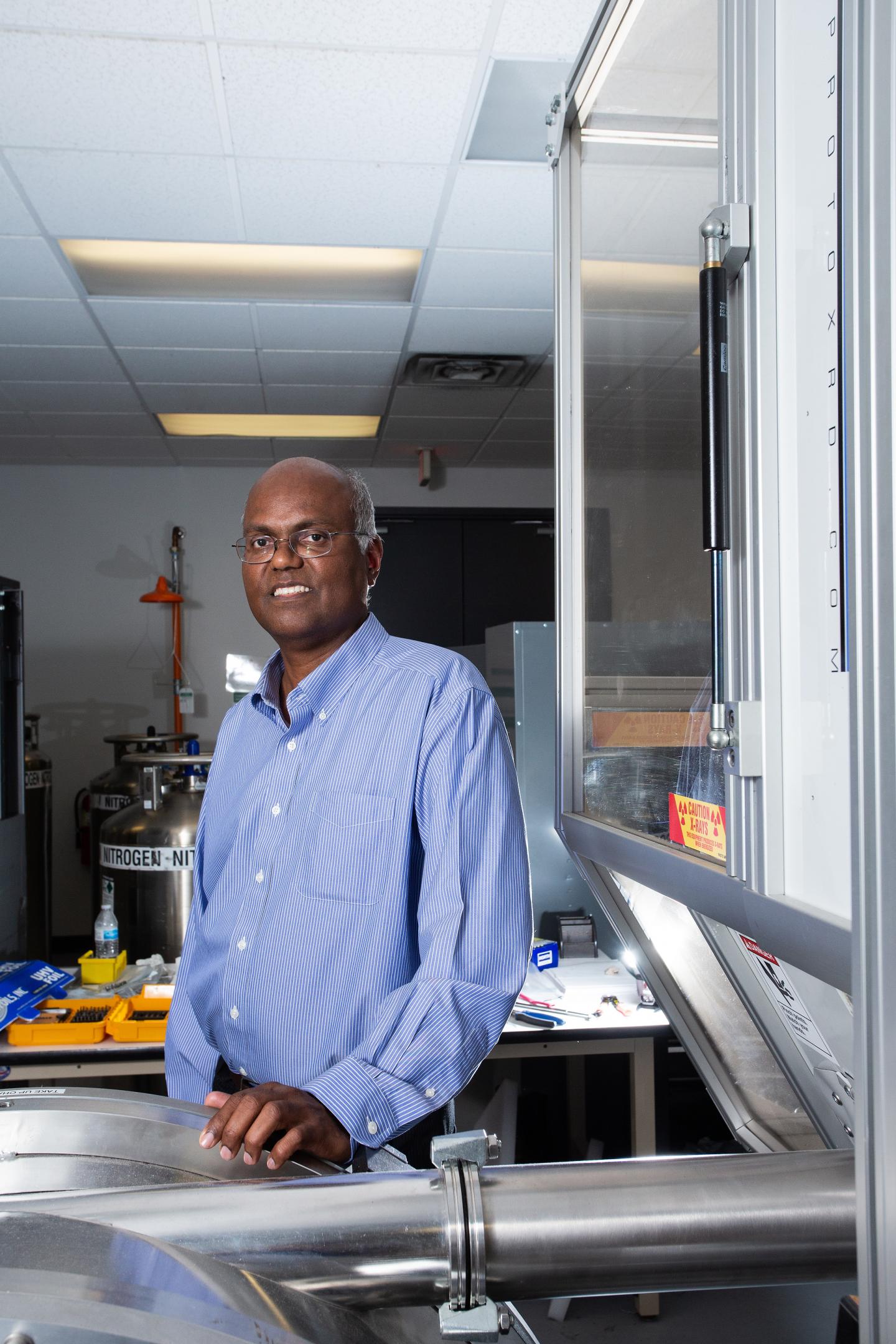
IMAGE

Credit: University of Houston

Despite growing scientific and commercial interest in fusion as an on-demand energy source – producing emissions-free energy through the fusion of hydrogen atoms – significant obstacles remain. A researcher from the University of Houston has joined an effort by the U.S. Department of Energy to jumpstart the technology.

Venkat Selvamanickam, M.D. Anderson Chair Professor of Mechanical Engineering, will lead a $1.5 million project to develop high temperature superconducting magnets made from low-cost raw materials and capable of handling high currents in a magnetic field greater than 20 Tesla, a unit used to measure the strength of magnetic fields. (The earth’s magnetic field, by comparison, is about 0.0001 Tesla.)

The work is part of a $29 million program through DOE’s Advanced Research Projects Agency-Energy, intended to close fusion-specific technological gaps to accelerate deployment of a commercially viable fusion system.

The sun is the best-known example of fusion, producing energy through the fusion of hydrogen atoms. Duplicating that on earth, however, is complicated. For one thing, it requires a way to contain the resulting plasma, which can reach 1 million degrees Centigrade.

Superconducting magnets can contain the plasma, Selvamanickam said, but no system has been designed to implement the technology on a large scale at affordable cost.

That’s where he comes in. Selvamanickam is well-known for his work to advance technologies using high temperature superconducting tapes, including their use in wind turbines, industrial motors, power cables and other applications.

Fusion is a new challenge. “Without these superconductors, fusion is not possible,” he said. “It is an enabling technology. If it works, there is going to be huge demand for the superconducting tapes if we can lower the cost.”

His goal is to reduce the cost of the high temperature superconductors by a factor of 30.

Smaller fusion systems have the potential to lower the cost, but Selvamanickam said that will require more powerful superconducting magnets in order to contain the plasma and increase the power density of the energy produced at smaller scale.

“Our project is to demonstrate that it works,” he said. “We know these magnets can operate in a higher magnetic field, but they are also extremely expensive.”

Making superconductor magnets that can withstand the powerful magnetic fields needed to implement fusion, at a dramatically lower cost, would make commercialization economically viable, he said.

That could play an important role in global efforts to reduce climate-damaging emissions such as carbon and methane. Selvamanickam said the use of fusion energy would also avoid a complication hindering the larger-scale deployment of wind or solar energy: It doesn’t require an energy storage system, as it can be produced on-demand.

“Fusion is a wonderful technology,” he said. “But it’s really demanding in terms of the materials that are required. They have to operate in an extreme environment.”

###

Media Contact
Jeannie Kever
[email protected]

Original Source

https://uh.edu/news-events/stories/2020/september-2020/09092020selva-fusion.php

Tags: Chemistry/Physics/Materials SciencesEnergy/Fuel (non-petroleum)MaterialsSuperconductors/Semiconductors
Share12Tweet8Share2ShareShareShare2

Related Posts

3D-Printed Contact Lenses Made in Just 20 Minutes

3D-Printed Contact Lenses Made in Just 20 Minutes

July 14, 2026
Acidic Cross-Linking Boosts One-Bath Dyeing of Polyester-Cotton Blends

Acidic Cross-Linking Boosts One-Bath Dyeing of Polyester-Cotton Blends

July 14, 2026

New Catalytic Method Converts Polystyrene Waste into Pure Toluene

July 14, 2026

New Catalytic Method Converts Polystyrene Waste into Pure Toluene Efficiently

July 14, 2026
Please login to join discussion

POPULAR NEWS

  • New Drug Candidate Developed at McMaster Shows Potential for Treating Brain Cancer

    58 shares
    Share 23 Tweet 15
  • Detection of EDCs in Breast Milk and Infant Urine Up to Six Months Highlights Early Exposure Risks

    77 shares
    Share 31 Tweet 19
  • Experimental Therapy Simultaneously Destroys Prostate Tumor Cells and Reactivates Antitumor Immunity

    46 shares
    Share 18 Tweet 12
  • 高齢者の骨粗鬆症治療の持続性比較

    51 shares
    Share 20 Tweet 13

About

We bring you the latest biotechnology news from best research centers and universities around the world. Check our website.

Follow us

Recent News

Deep Learning Detects REM Sleep Disorder and Parkinson’s Early via fMRI

Durable Silver Plating Developed for Extended Use

Engineered Bifidobacterium offers promise for oral cancer vaccine delivery

Subscribe to Blog via Email

Enter your email address to subscribe to this blog and receive notifications of new posts by email.

Join 85 other subscribers
  • Contact Us

Bioengineer.org © Copyright 2023 All Rights Reserved.

Welcome Back!

Login to your account below

Forgotten Password?

Retrieve your password

Please enter your username or email address to reset your password.

Log In
No Result
View All Result
  • Homepages
    • Home Page 1
    • Home Page 2
  • News
  • National
  • Business
  • Health
  • Lifestyle
  • Science

Bioengineer.org © Copyright 2023 All Rights Reserved.