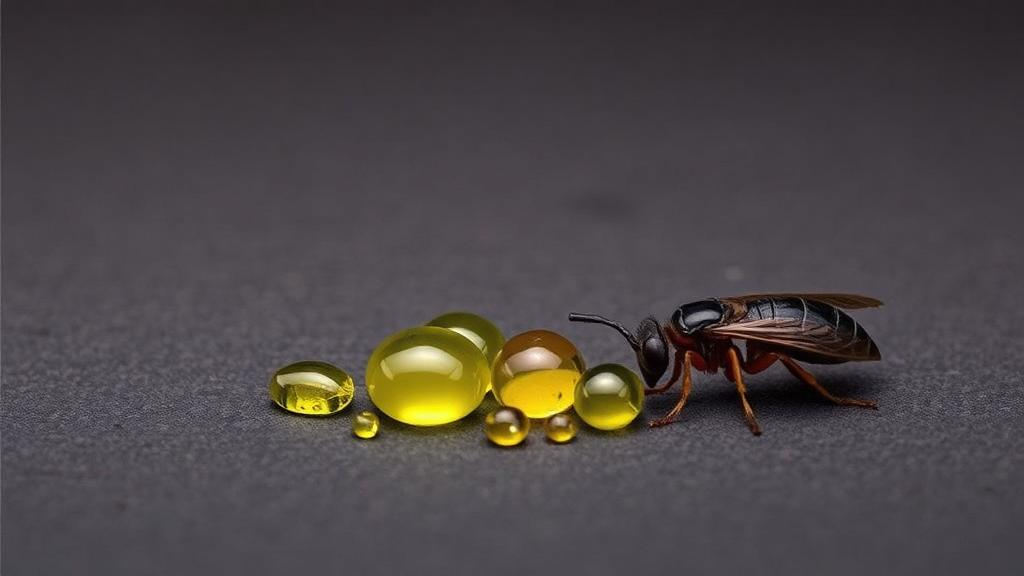
The next generation of edible fats may not come from a palm plantation or a fishery, but from a rearing vat of black soldier fly larvae. A comprehensive review published in Food Chemistry: X argues that the lipid fraction of edible insects, long treated as a byproduct of the booming insect-protein industry, deserves recognition as a distinct class of food ingredients with its own molecular logic, processing requirements, and regulatory pathway. The authors, led by Yuanyuan Huang of Jiangsu University, synthesize evidence spanning lipid chemistry, digestion science, consumer testing, and industrial scale-up to make a case that is as much about engineering as it is about nutrition.
The timing is not accidental. Conventional edible lipids face mounting constraints: unsaturated plant oils often lack the solid-fat functionality demanded by bakery fats and spreads, animal fats carry saturated fatty acids and cholesterol, and fish oil, the main source of long-chain omega-3 fatty acids, is both oxidation-prone and increasingly scarce, with global output falling by roughly 21 percent in 2023 according to the FAO. Meanwhile, insects are already being processed at scale into protein concentrates and defatted meals, leaving behind an oil-rich stream that is frequently underused. Recovering that fraction could yield an additional ingredient while preserving a protein-rich co-product for further valorization.
What makes insect oils genuinely interesting, the review contends, is not their fatty-acid composition alone but their triacylglycerol architecture, the specific way fatty acids are assembled onto the glycerol backbone. Three recurring compositional archetypes emerge from the literature. Black soldier fly larvae oil is lauric-rich, containing roughly 28 to 62 percent lauric acid depending on diet and processing, placing it closer to coconut and palm-kernel fats than to typical animal fats. Mealworm, cricket, and locust oils are dominated by oleic and linoleic acids, resembling liquid vegetable oils. Silkworm pupal oil stands apart as an alpha-linolenic-acid-rich oil, with the omega-3 fatty acid accounting for roughly 35 to 38 percent of total fatty acids in representative samples, a profile more comparable to flaxseed or perilla oil than to fish oil, since it delivers ALA rather than the longer-chain EPA and DHA.
These labels, the authors stress, are descriptive rather than a formal classification system, because composition shifts with species, developmental stage, rearing substrate, and extraction method. Diet is the most accessible pre-harvest lever: rye bran raised the lipid content of yellow mealworm larvae to about 30 percent, while rapeseed oil cake reduced it to around 15 percent. Yet the final oil never simply mirrors the feed, because insect digestion, selective deposition, and de novo fatty-acid synthesis impose species-specific limits. Enriching feed with polyunsaturated fats can improve the target profile while simultaneously raising oxidation susceptibility, a trade-off that feed designers must manage as an integrated system.
The review’s central technical argument is that fatty-acid surveys alone cannot predict how an insect oil will behave in food. Intact triacylglycerol species, their positional distribution, and minor constituents such as tocopherols, sterols, and phospholipids jointly determine crystallization, melting, interfacial behavior, and digestion. Cold-pressed black soldier fly larvae oil, for example, contains trilaurin, dilauroyl-myristoyl, and lauroyl-dimyristoyl triacylglycerols as major species, producing a thermal profile similar to palm-kernel and coconut fats. Yet processing can overturn expectations: larvae killed by freezing, freeze-dried, and defatted with supercritical carbon dioxide yielded an oil with a melting peak at 14.51 degrees Celsius and less than 10 percent solid fat at room temperature, while seven other combinations of killing, drying, and extraction retained more than 40 percent solid fat. Species identity and fatty-acid composition, in other words, do not constitute a thermal specification.
Quality attributes are equally process-dependent. Acid values reported across studies range from about 1.1 to more than 97 milligrams of potassium hydroxide per gram, reflecting hydrolytic damage that can continue after insect killing unless lipases are inactivated; blanching suppressed post-mortem lipolysis in black soldier fly larvae more effectively than freezing. Oxidation requires paired primary and secondary indices, because oils with moderate peroxide values can already carry high loads of aldehydic breakdown products. Sensory quality presents its own challenge: crude insect oils may carry grassy, fermented, or rancid notes from pyrazines, alcohols, and oxidation-derived aldehydes, but deodorization, while effective, risks stripping tocopherols and generating refining-related contaminants such as trans fatty acids and glycidyl esters if conditions are too severe.
On the application side, direct incorporation into foods currently has the strongest evidence. In a consumer study of 344 participants, replacing 25 percent of butter with black soldier fly larvae fat in cakes, cookies, and waffles did not reduce overall liking, and waffles maintained acceptance even at 50 percent replacement. Deodorized yellow mealworm oil replaced 50 to 100 percent of vegetable oil in crackers and hummus without lowering liking among 253 consumers, and among 90 tasters, potato chips fried in a 50:50 blend of vegetable and deodorized mealworm oil were the most frequently preferred. Roasted insect oils have even been incorporated into bone broth, shifting the fatty-acid profile toward that of beef while modifying meat-like aromas. More experimental routes, including wax-based oleogels that convert liquid mealworm oil into a shortening-like solid, whey-protein-coated emulsions that enhance lipolysis of silkworm oil, and enzymatic restructuring that repositions fatty acids on the glycerol backbone, remain largely at the prototype or in-vitro stage.
Biological evidence, the review cautions, is overwhelmingly preclinical and material-specific. Silkworm pupal oil showed higher apparent free-fatty-acid release during simulated digestion than linseed oil, and enzymatically restructured versions released even more, but such endpoints do not establish superior absorption or bioavailability in humans. Animal studies have reported reduced hepatic triglycerides in obese Zucker rats fed black soldier fly larvae fat compared with palm oil, altered lipid-metabolism gene expression in fish, and antioxidant and anti-inflammatory signals in cell and worm models, yet none of these findings can be generalized across insect oils as a category. Human trials using chemically characterized, food-grade oils and realistic intake conditions remain absent.
The path to industrial translation runs through several bottlenecks the review enumerates candidly. Batch variability is substantial, intact triacylglycerol data are scarce for most species, and consumer research has rarely tested purchase intention, price tolerance, or the effect of disclosing insect origin, leaving a gap between blind liking and real purchasing behavior. Residual allergenic proteins, including tropomyosin and arginine kinase that can cross-react with crustacean allergens, cannot be assumed absent from minimally refined oils. Regulatory identity is product-specific: in the European Union, authorization of whole or defatted insects does not automatically cover separately extracted oils, and comparable product-specific assessments apply in the United States and China. A single pilot-scale study processing 5.5 kilograms of mealworms with supercritical carbon dioxide achieved 84 percent defatting with promising life-cycle indicators, but the authors emphasize that such single-route assessments cannot support broad comparisons. Their prescription is a structure-property-application framework: match a reproducible, well-characterized oil to a defined product function, apply modification only where it delivers demonstrable advantage, and validate performance under realistic processing, storage, and sensory conditions before insect oils earn a permanent place on the ingredient shelf.
Subject of Research: Composition, functionality, and food applications of edible insect lipids
Article Title: Insect lipids as novel food ingredients: Linking molecular structure and quality attributes to food applications and industrial translation
Article References: Huang, Y., Kitts, D. D., Dabbour, M., Chen, X., Mintah, B. K., Dai, C., & He, R. (2026). Insect lipids as novel food ingredients: Linking molecular structure and quality attributes to food applications and industrial translation. Food Chemistry: X, 39, Article 104577. https://doi.org/10.1016/j.fochx.2026.104577
Image Credits: AI Generated
DOI: 10.1016/j.fochx.2026.104577
Keywords: insect oil, edible insects, triacylglycerol, black soldier fly, yellow mealworm, silkworm pupal oil, food chemistry, oleogel, oxidative stability, novel food, food processing, sustainable fats
News Source: Gavin Prescott. (October 7, 2026). Insect Oils Move From Farm Waste to Functional Food Fat. Scienmag.