• HOME
  • NEWS
  • EXPLORE
    • CAREER
      • Companies
      • Jobs
    • EVENTS
    • iGEM
      • News
      • Team
    • PHOTOS
    • VIDEO
    • WIKI
  • BLOG
  • COMMUNITY
    • FACEBOOK
    • INSTAGRAM
    • TWITTER
Sunday, July 26, 2026
BIOENGINEER.ORG
No Result
View All Result
  • Login
  • HOME
  • NEWS
  • EXPLORE
    • CAREER
      • Companies
      • Jobs
        • Lecturer
        • PhD Studentship
        • Postdoc
        • Research Assistant
    • EVENTS
    • iGEM
      • News
      • Team
    • PHOTOS
    • VIDEO
    • WIKI
  • BLOG
  • COMMUNITY
    • FACEBOOK
    • INSTAGRAM
    • TWITTER
  • HOME
  • NEWS
  • EXPLORE
    • CAREER
      • Companies
      • Jobs
        • Lecturer
        • PhD Studentship
        • Postdoc
        • Research Assistant
    • EVENTS
    • iGEM
      • News
      • Team
    • PHOTOS
    • VIDEO
    • WIKI
  • BLOG
  • COMMUNITY
    • FACEBOOK
    • INSTAGRAM
    • TWITTER
No Result
View All Result
Bioengineer.org
No Result
View All Result
Home NEWS Science News Biology

Breeding trouble: Meta-analysis identifies fishy issues with captive stocks

Bioengineer by Bioengineer
March 13, 2018
in Biology
Reading Time: 2 mins read
0
Share on FacebookShare on TwitterShare on LinkedinShare on RedditShare on Telegram
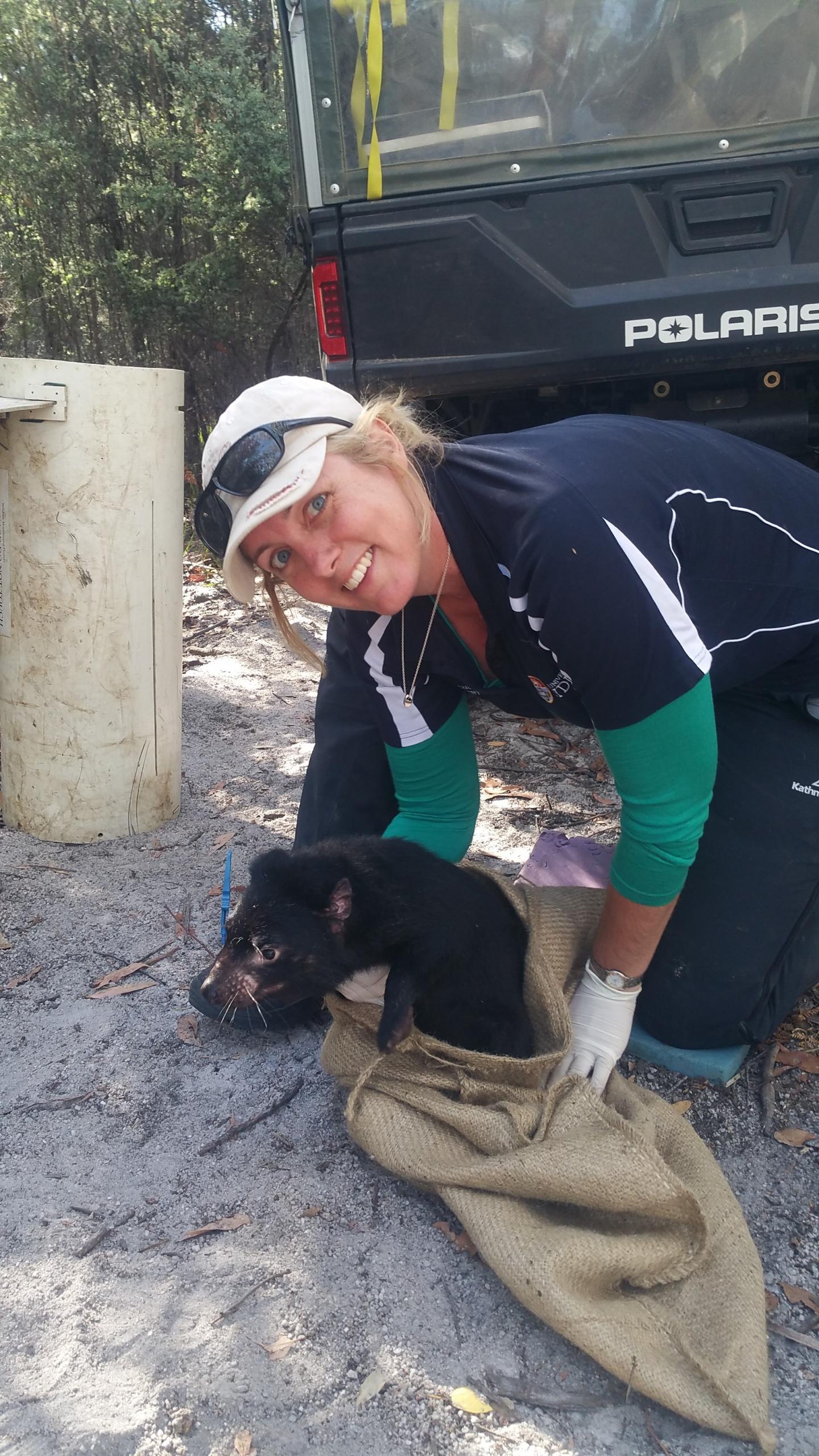
IMAGE

Credit: Phil Wise took the photo on Dr Hogg's camera.

A group of researchers based at the University of Sydney has uncovered patterns that may be jeopardising the long-term success of worldwide animal breeding programs, which increasingly act as an insurance against extinction in conservation, and for food security.

The meta-analysis, led by the University of Sydney's Faculty of Science, found captive-born animals had, on average, almost half the odds of reproductive success compared to their wild-born counterparts in captivity.

In aquaculture, the effects were particularly pronounced, although research and conservation programs showed the same trend.

The study analysed more than 100 results, from 39 animal studies of 44 diverse species including shrimp, fish, mice, ducks, lemurs and Tasmanian devils.

The paper, "A meta-analysis of birth-origin effects on reproduction in diverse captive environments", is published today in Nature Communications.

Dr Catherine Grueber, who supervised the study, said the team was surprised at how universal the patterns were.

"More than 2,000 threatened species rely on successful reproduction through captive breeding programs for conservation alone," said Dr Grueber, from the University of Sydney's School of Life and Environmental Sciences and San Diego Zoo Global.

"In order to maintain our food supply, it's crucial we improve captive breeding; for example, the aquaculture industry is looking at introducing new species for commercialisation."

Lead author, PhD student Ms Kate Farquharson, said the results provide opportunities for improving the long-term success of animal breeding programs.

"Our dataset included measurements of lots of different reproductive traits – such as fertility, number of offspring, and timing of reproduction – but found that certain traits, such as offspring weight and mothering ability, seem to be the most strongly affected," Ms Farquharson said.

"This provides an opportunity for animal breeding programs, by identifying the areas where improvement could boost sustainability."

Research manager at the University of Sydney's Australasian Wildlife Genomics Group, co-author Dr Carolyn Hogg, said the research could be extended by undertaking multi-generational studies.

"Identifying limitations as well as opportunities in captive breeding programs across all industries is an urgent priority," Dr Hogg said.

###

NOTES TO EDITORS

  • The study covered animal breeding programs in aquaculture, conservation and research. It included invertebrates, fish, birds and mammals.
  • Across the animal kingdom, captive-born animals were found to average 42 percent decreased odds of reproductive success, compared to those that are wild-born.
  • Considerable research has explored differences between captive and wild populations; less attention has been given to finding patterns across species.
  • In conservation, captive breeding has been recommended by the International Union for the Conservation of Nature (IUCN) Red List assessors for 2199 species to reduce the threat of extinction.

Media Contact

Vivienne Reiner
[email protected]
61-438-021-390
@SydneyUni_Media

http://www.usyd.edu.au/

Related Journal Article

http://dx.doi.org/10.1038/s41467-018-03500-9

Share12Tweet8Share2ShareShareShare2

Related Posts

The concealed geometry behind breeding constraints

The concealed geometry behind breeding constraints

July 18, 2026
Organic fertilizer helps biochar immobilize cadmium in contaminated soil

Organic fertilizer helps biochar immobilize cadmium in contaminated soil

July 18, 2026

Asteroid impact may have reshaped tuna evolution alongside dinosaur extinction

July 18, 2026

Wild snapdragons subtly change color to attract bees

July 17, 2026
Please login to join discussion

POPULAR NEWS

  • Groundbreaking Discovery: New Shark Species Identified for the First Time — Technology and Engineering

    Groundbreaking Discovery: New Shark Species Identified for the First Time

    34 shares
    Share 14 Tweet 9
  • Controlled Study Defines Pediatric Long COVID Features

    32 shares
    Share 13 Tweet 8
  • Behavioral Nudge Boosts Medication Prescriptions for Alcohol Reduction

    35 shares
    Share 14 Tweet 9
  • Clean Cooking and Remittances Slash Somalia’s Ecological Footprints

    31 shares
    Share 12 Tweet 8

About

We bring you the latest biotechnology news from best research centers and universities around the world. Check our website.

Follow us

Recent News

Sleep Quality Links Synergistically with Frailty to Increase Cardiometabolic Multimorbidity in Elderly Chinese

Cognitive reserve helps older adults resist frailty and recover better

Physical Activity and Health Inequality in China’s Older Adults

Subscribe to Blog via Email

Success! An email was just sent to confirm your subscription. Please find the email now and click 'Confirm' to start subscribing.

Join 85 other subscribers
  • Contact Us

Bioengineer.org © Copyright 2023 All Rights Reserved.

Welcome Back!

Login to your account below

Forgotten Password?

Retrieve your password

Please enter your username or email address to reset your password.

Log In
No Result
View All Result
  • Homepages
    • Home Page 1
    • Home Page 2
  • News
  • National
  • Business
  • Health
  • Lifestyle
  • Science

Bioengineer.org © Copyright 2023 All Rights Reserved.