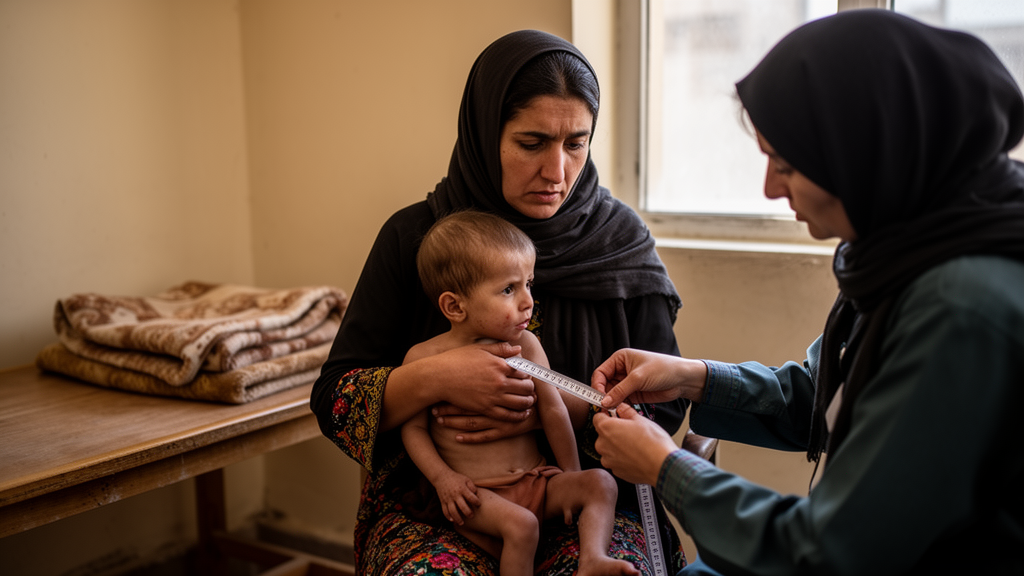
Most infants treated for acute malnutrition at Médecins Sans Frontières (MSF)-supported facilities in Herat, Afghanistan, are not being fed according to recommended practices, according to a mixed-methods study published in Conflict and Health. Among 236 children accompanied by their mothers, 67 percent were currently breastfed, but only 17.8 percent of infants aged 0–5 months received breast milk without any other foods or liquids, as reported by their mothers. Women frequently cited a perceived low milk supply and limited breastfeeding support as reasons for introducing other foods and fluids early.
The study, led by Giulia Scarpa and colleagues, analysed routine programme data from August to September 2022 covering all infants aged 0–11 months admitted with acute malnutrition, including severe acute malnutrition, at two MSF-supported facilities: Herat Regional Hospital and the Khadestan clinic. MSF had previously reported that in 2022, 45 percent of malnourished children admitted to Khadestan hospital were under 6 months old, a figure that motivated the investigation into feeding practices and access barriers for this youngest age group.
Food insecurity emerged as a central concern for mothers. Although 92.3 percent of mothers reported eating at least three times a day, 63.5 percent reported at least one day of insufficient food in the prior week. The most common coping strategies were reducing portion sizes and skipping meals. Among infants aged 6 months and older, the majority ate at least three times per day, but their diets consisted mainly of cereals with frequent sweets, suggesting limited dietary diversity alongside inadequate breastfeeding.
Access to care was also constrained. When children fell ill, 75.0 percent of families sought facility care first, yet 62.3 percent reported barriers to reaching services, including distance, transport costs, poor roads and seasonal constraints. These figures come from the quantitative phase of the study, which examined health-seeking behaviour alongside infant feeding practices, maternal and child food insufficiency, and reported obstacles to accessing health and nutrition services.
The qualitative phase, conducted between January and June 2023, comprised 38 in-depth interviews with caregivers of both malnourished and non-malnourished infants, as well as key informants. The researchers organised the findings using the demand-side domains of Levesque’s access-to-care framework. In the domain of perceiving, low female literacy and reliance on informal advice shaped caregivers’ understanding of infant nutrition. In the domain of seeking, restricted autonomy, gender norms and language-related stigma affected whether families pursued care.
Reaching services posed further difficulties, with long travel times and harsh climatic and road conditions reported by participants. In the domain of paying, poverty and the costs of transport and medicines limited access. The engagement domain captured reduced self-efficacy among caregivers, suboptimal feeding practices, and maternal stress and mental health challenges, which participants linked to difficulties in sustaining recommended feeding.
The authors note that the findings reflect the experiences of infants and caregivers attending MSF-supported services in Herat, and that the qualitative results represent the perspectives of study participants rather than measured outcomes of any intervention.
According to the study participants, programmes may pair facility-based nutrition care with community-led education, early counselling and peer support, targeted food assistance during antenatal and postnatal contacts, affordable transport solutions, and integrated maternal mental health support to improve access and outcomes for infants aged 0–11 months. The authors conclude that early infant feeding among infants accessing these facilities is shaped by socio-cultural, geographic and economic barriers, and that addressing these barriers will require action across multiple dimensions of access simultaneously.
Subject of Research: Infant feeding practices and access to food and nutrition services among malnourished children in Herat, Afghanistan
Article Title: Early nutrition practices and access to food and nutrition services for young malnourished children attending MSF-supported facilities in Herat, Afghanistan: a mixed-methods study
Article References: Scarpa, G., Mohammadi, J., Rasouli, A., Rahimi, A., Alayyan, A., Lissouba, P., Roederer, T., & Sayyad-Hilario, J. (2026). Early nutrition practices and access to food and nutrition services for young malnourished children attending MSF-supported facilities in Herat, Afghanistan: a mixed-methods study. Conflict and Health. https://doi.org/10.1186/s13031-026-00850-w
Image Credits: AI Generated
DOI: 10.1186/s13031-026-00850-w
Keywords: Afghanistan, Herat, child malnutrition, breastfeeding, infant feeding, food insecurity, MSF, access to healthcare, mixed-methods study, maternal health, humanitarian crisis, Early
News Source: Harold Sullivan. (October 29, 2026). Breastfeeding falls short among malnourished infants in Herat, MSF study finds. Scienmag.