


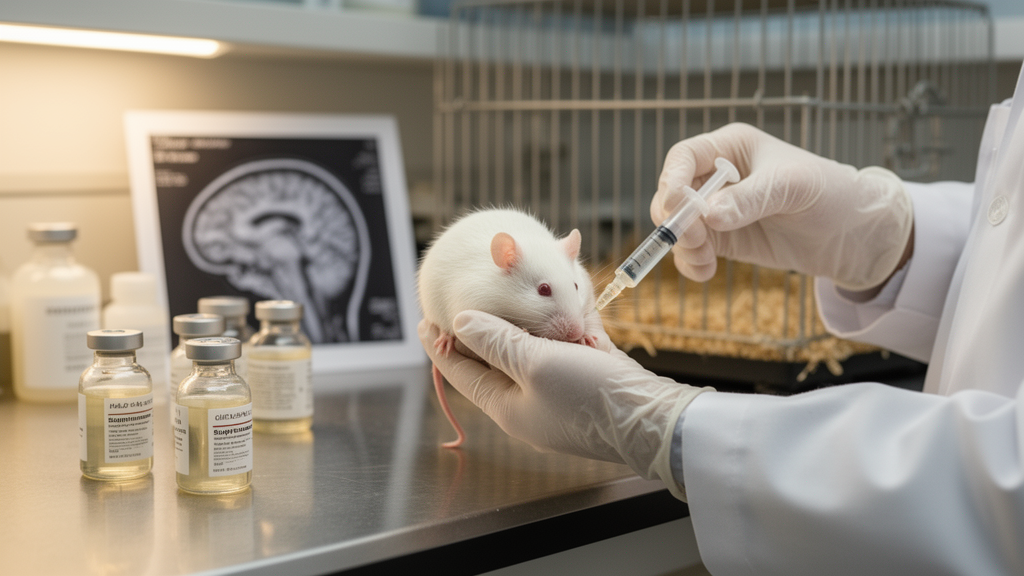
Branched-chain amino acid supplementation after traumatic brain injury partially restored thyroid hormones, vitamin D status, and calcium–phosphorus balance in rats, while also improving motor performance, according to an open-access study published in the journal Amino Acids on 10 August 2026. The findings, reported by Javad Cheraghi, Rahman Mohammadi, Marzieh Havasi, Farzaneh Aghasi, and Bita Khasi, suggest that this nutritional approach may support metabolic and functional adaptation after brain trauma, although the improvements were incomplete and the work remains at the animal-study stage.
Traumatic brain injury is frequently accompanied by neuroendocrine disturbances affecting the hypothalamic–pituitary–thyroid axis and vitamin D–calcium–phosphorus homeostasis. Despite growing interest in nutritional strategies after brain injury, the authors note that the effects of branched-chain amino acids on post-injury neuroendocrine homeostasis—including thyroid hormone levels, vitamin D status, and calcium–phosphorus balance—remain insufficiently characterized. The new study was designed to address that gap using a controlled rodent model.
In the experiment, twenty-eight male Wistar rats were randomly assigned to four groups: Control, Sham, TBI, and TBI plus BCAA supplementation. Moderate traumatic brain injury was induced using a closed-head weight-drop model, and the supplement, at a dose of 0.26 grams per kilogram, was administered orally after the injury. Motor function was assessed with balance beam testing and gait analysis, and the researchers measured serum levels of thyroid hormones, 25-hydroxyvitamin D, calcium, and phosphorus.
The injury itself produced a consistent pattern of disruption. Rats in the TBI group showed a negative body weight change, impaired balance and gait, reduced serum thyroid hormones, lowered 25-hydroxyvitamin D, calcium, and phosphorus levels, and decreased gross brain and hippocampal morphometric parameters compared with the control and sham animals. These measures collectively captured both the endocrine and the structural consequences of moderate brain trauma in the model.
Post-injury BCAA supplementation significantly attenuated the TBI-associated body weight loss and improved balance beam scores and gait parameters relative to the untreated TBI group. The treatment also partially restored serum thyroid hormones, 25-hydroxyvitamin D, calcium, and phosphorus levels, although values did not fully return to control levels. In addition, supplementation partially attenuated the TBI-induced changes in gross brain and hippocampal morphometric parameters.
The authors characterize the overall effect as modulatory rather than restorative. The partial improvement in neuroendocrine parameters and motor performance indicates a genuine biological signal, but the incomplete normalization led the researchers to conclude that BCAA supplementation supports metabolic and functional adaptation rather than full endocrine or structural recovery. They suggest that branched-chain amino acids may serve as a complementary nutritional strategy to mitigate post-TBI neuroendocrine dysfunction, rather than a standalone therapy.
Several limitations frame how far these results can be extended. The study was conducted in a small sample of male rats using a single weight-drop injury model and a single oral dose, with outcomes measured over the course of one experiment. Rodent closed-head injury models do not reproduce the full complexity of human traumatic brain injury, and neuroendocrine disturbances in patients can vary widely in timing and severity. The abstract also reports group-level outcomes without detailing effect sizes or statistical comparisons, so the magnitude of the supplement’s benefit relative to untreated injury cannot be judged from the available summary.
Within those constraints, the study adds to a growing body of work on nutrition after brain trauma. Because thyroid hormones, vitamin D, and calcium–phosphorus balance are all measurable in serum, the endocrine markers used here could, in principle, be translated into human observational or interventional research. Any clinical application, however, would require dose-ranging studies, longer follow-up, and confirmation in models and populations beyond the one reported. For now, the result stands as an early, cautiously framed indication that post-injury amino acid supplementation can partially blunt the endocrine and motor consequences of moderate brain injury in rats, without restoring full endocrine or structural recovery.
Subject of Research: Effects of branched-chain amino acid supplementation on neuroendocrine disturbances and motor function after traumatic brain injury in rats
Article Title: Modulatory effects of branched-chain amino acid supplementation on neuroendocrine disturbances following traumatic brain injury in rats
Article References: Cheraghi, J., Mohammadi, R., Havasi, M., Aghasi, F., & Khasi, B. (2026). Modulatory effects of branched-chain amino acid supplementation on neuroendocrine disturbances following traumatic brain injury in rats. Amino Acids. https://doi.org/10.1007/s00726-026-03551-z
Image Credits: AI Generated
DOI: 10.1007/s00726-026-03551-z
Keywords: traumatic brain injury, branched-chain amino acids, neuroendocrine dysfunction, thyroid hormones, vitamin D, calcium-phosphorus balance, rat model, hippocampus, motor function, nutritional supplementation, Modulatory, effects
News Source: Cassandra Pierce. (October 30, 2026). Branched-Chain Amino Acid Supplements Partially Ease Hormone Disruption After Brain Injury in Rats. Scienmag.



