• HOME
  • NEWS
  • EXPLORE
    • CAREER
      • Companies
      • Jobs
    • EVENTS
    • iGEM
      • News
      • Team
    • PHOTOS
    • VIDEO
    • WIKI
  • BLOG
  • COMMUNITY
    • FACEBOOK
    • INSTAGRAM
    • TWITTER
Friday, May 15, 2026
BIOENGINEER.ORG
No Result
View All Result
  • Login
  • HOME
  • NEWS
  • EXPLORE
    • CAREER
      • Companies
      • Jobs
        • Lecturer
        • PhD Studentship
        • Postdoc
        • Research Assistant
    • EVENTS
    • iGEM
      • News
      • Team
    • PHOTOS
    • VIDEO
    • WIKI
  • BLOG
  • COMMUNITY
    • FACEBOOK
    • INSTAGRAM
    • TWITTER
  • HOME
  • NEWS
  • EXPLORE
    • CAREER
      • Companies
      • Jobs
        • Lecturer
        • PhD Studentship
        • Postdoc
        • Research Assistant
    • EVENTS
    • iGEM
      • News
      • Team
    • PHOTOS
    • VIDEO
    • WIKI
  • BLOG
  • COMMUNITY
    • FACEBOOK
    • INSTAGRAM
    • TWITTER
No Result
View All Result
Bioengineer.org
No Result
View All Result
Home NEWS Science News Biology

Born to be a cannibal: Genes for feeding behavior in mandarin fish identified

Bioengineer by Bioengineer
July 9, 2020
in Biology
Reading Time: 2 mins read
0
IMAGE
Share on FacebookShare on TwitterShare on LinkedinShare on RedditShare on Telegram

IMAGE

Credit: HZAU

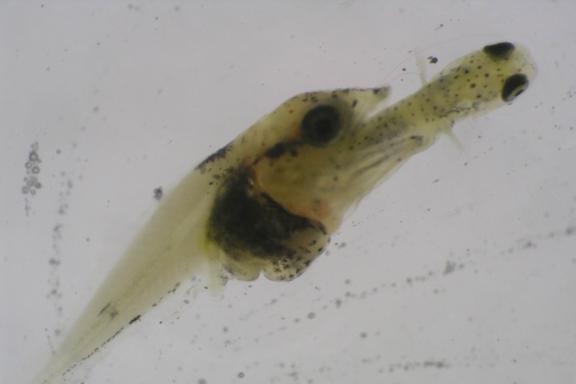
Some mandarin fish species (Sinipercidae) are pure fish-eaters, which feed exclusively on living juvenile fish – also of their own species. A research team led by the Chinese Huazhong Agricultural University (HZAU) and the Leibniz-Institute of Freshwater Ecology and Inland Fisheries (IGB) has described the genome of four mandarin fish species and thus also identified genes for cannibalistic eating behaviour. Knowledge of the connections between the genome and feeding behaviour is of interest for sustainable aquaculture.

Most fish larvae feed on easily digestible, small zooplankton. Not so some species of mandarin fish. These are pure “fish-eaters” already after hatching and feed on young fish of other fish species and on conspecifics. This cannibalism leads to a high mortality rate of juvenile fish and to economic losses in aquaculture.

32 genes make the difference to cannibals

The researchers compared the genome sequences of different species of mandarin fish and were thus able to trace the evolution of 20,000 genes over a period of 65 million years. They were able to link many genes with species-specific characteristics. “For 32 of these evolving genes, we were able to experimentally demonstrate different gene expression in mandarin fish species that are common to other food and in pure fish-eating species,” explains Ling Li, one of the first authors of the study and guest scientist from HZAU at the IGB.

Rapid evolutionary adaptation in predatory behaviour

Mandarin fish are aggressive predators. During the complex genome analysis, the researchers identified so-called candidate genes that are associated with particularly high aggression and affect behaviour. “Our genome analyses show the evolutionary development of mandarin fish. They have adapted rapidly to changing environmental conditions, especially with regard to their feeding behaviour. Today, some mandarin fish species are more aggressive predators than others due to their genetic predisposition,” says Prof. Xu-Fang Liang from HZAU.

“Research on the relationship between the genetic code and feeding behaviour is an important basis for the sustainable aquaculture of these fish. In future, fish farmers will be able to use marker based selection to choose fish for breeding where the genome indicates less predatory behavior – and thus reduce losses,” summarises Dr. Heiner Kuhl, leading bioinformatician of the project from the IGB.

High-throughput genome research at IGB

The reference genome for Siniperca chuatsi is one of the highest quality fish genomes to date. It was analysed using third-generation sequencing techniques and has very high sequence continuity and almost complete reconstruction of the 24 chromosomes. The high-quality reference genome enabled the cost-efficient sequencing of three other species from the Sinipercidae family by means of comparative genomics. This approach to create genome sequences for entire taxonomic families of organisms could serve as a blueprint for large-scale genomic projects.

###

Media Contact
Dr. Heiner Kuhl
[email protected]

Original Source

https://www.fv-berlin.de/en/info-for/the-media-and-public/news/zum-kannibalen-geboren-gene-fuer-fressverhalten-bei-chinesischen-barschen-identifiziert

Related Journal Article

http://dx.doi.org/10.1038/s42003-020-1094-y

Tags: AgricultureBioinformaticsBiologyFisheries/AquacultureGenesGeneticsMarine/Freshwater Biology
Share12Tweet8Share2ShareShareShare2

Related Posts

Single mother must adapt swiftly — the survival of her colony depends on it — Biology

Single mother must adapt swiftly — the survival of her colony depends on it

May 15, 2026
Why Are Nearly Everyone Right-Handed? It Might Be Linked to How We Learned to Walk — Biology

Why Are Nearly Everyone Right-Handed? It Might Be Linked to How We Learned to Walk

May 15, 2026

Excessive Neuronal Activity Initiates Severe Autoimmune Brain Disorder

May 15, 2026

Precision Anti-Aging Strategies Focus on Eliminating Harmful Senescent Cells While Preserving Beneficial Ones

May 15, 2026
Please login to join discussion

POPULAR NEWS

  • Research Indicates Potential Connection Between Prenatal Medication Exposure and Elevated Autism Risk

    843 shares
    Share 337 Tweet 211
  • New Study Reveals Plants Can Detect the Sound of Rain

    730 shares
    Share 291 Tweet 182
  • Salmonella Haem Blocks Macrophages, Boosts Infection

    62 shares
    Share 25 Tweet 16
  • Breastmilk Balances E. coli and Beneficial Bacteria in Infant Gut Microbiomes

    58 shares
    Share 23 Tweet 15

About

We bring you the latest biotechnology news from best research centers and universities around the world. Check our website.

Follow us

Recent News

New Study Connects Age-Related Gut Changes to Higher Disease Risk

Single mother must adapt swiftly — the survival of her colony depends on it

Cancer-Linked Protein Plays Key Role in Tumor DNA Repair

Subscribe to Blog via Email

Enter your email address to subscribe to this blog and receive notifications of new posts by email.

Join 82 other subscribers
  • Contact Us

Bioengineer.org © Copyright 2023 All Rights Reserved.

Welcome Back!

Login to your account below

Forgotten Password?

Retrieve your password

Please enter your username or email address to reset your password.

Log In
No Result
View All Result
  • Homepages
    • Home Page 1
    • Home Page 2
  • News
  • National
  • Business
  • Health
  • Lifestyle
  • Science

Bioengineer.org © Copyright 2023 All Rights Reserved.