


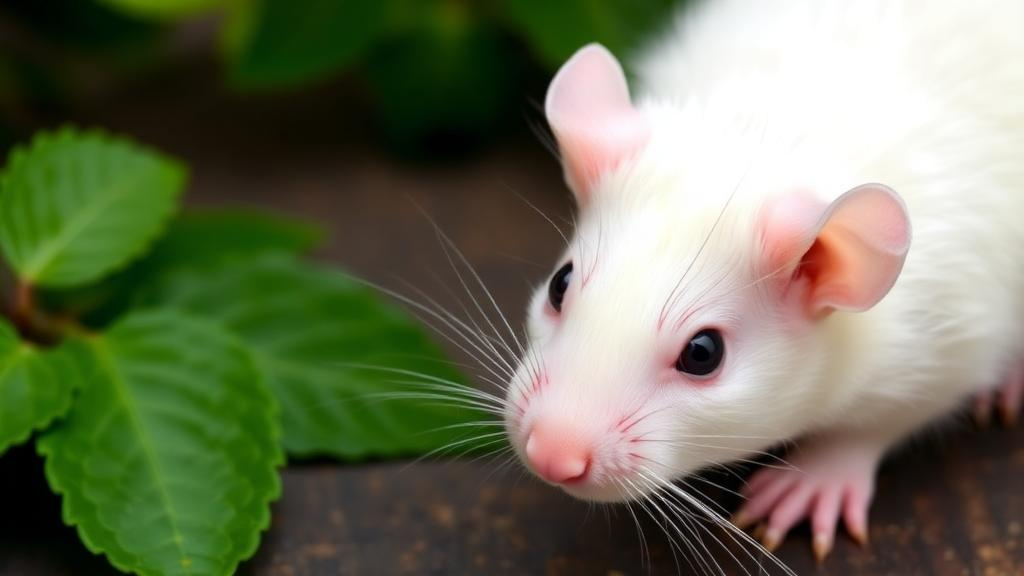
A leafy vegetable long eaten across tropical Africa and Asia has delivered striking results in a laboratory study of rats fed a high-fat diet. Researchers in Cameroon report that Momordica balsamina, the balsam apple, becomes measurably richer in extractable polyphenols, flavonoids, and condensed tannins when its leaves are boiled for ten minutes and then ground and sieved into fine particles. When hyperlipidemic Wistar rats received an aqueous suspension of the best-performing powder, the 50–125 micrometre fraction from cooked leaves, their total cholesterol fell by 53.3 percent, triglycerides by 48.7 percent, and LDL cholesterol by 86.4 percent, while HDL cholesterol rose by 194.2 percent over a 28-day treatment period. The effects were comparable to those of atorvastatin, the statin used as the reference treatment in the experiment.
The study, published in Clinical Phytoscience, was designed to answer a technological question rather than a purely nutritional one. The authors note that the biological value of a leafy vegetable depends not only on which bioactive compounds it contains but also on the processing it undergoes before consumption. Cooking can degrade heat-sensitive vitamins, yet it can also disrupt plant cell walls, releasing polyphenols bound to dietary fibres and increasing their solubility and bioaccessibility. Grinding and sieving work in a similar direction: reducing particle size increases the specific surface area exposed to solvents and digestive fluids, and sieving can concentrate certain secondary metabolites in finer fractions. Previous work cited by the team has shown that powder fractionation tends to enrich polyphenols in the smallest particles.
To test this systematically, the researchers harvested M. balsamina leaves in June 2025 at Mbé in the Adamaoua Region of Cameroon, with a botanist from the University of Ngaoundere confirming the species identity. The leaves were split into raw and cooked batches. Cooking followed traditional practice: 100 grams of leaves immersed in 1.5 litres of boiling water at about 95 degrees Celsius for ten minutes, then rapidly cooled and drained. Both batches were dried at 45 degrees Celsius for 24 hours, ground in an ultra-centrifugal mill, and passed through a vibrating sieve column with mesh sizes of 200, 125, and 50 micrometres. This produced four granulometric fractions for each batch, at or below 50 micrometres, 50 to 125 micrometres, 125 to 200 micrometres, and above 200 micrometres, plus an unsieved crude powder ground at 1 millimetre that served as the unprocessed control, designated PNT.
The chemical analysis confirmed the team’s hypothesis. Cooked leaf powders generally showed higher levels of extractable total polyphenols, flavonoids, and condensed tannins than their raw counterparts, and all four sieved fractions outperformed the unsieved control powder. The intermediate fraction from cooked leaves, D2, concentrated the highest levels: 62.33 milligrams of gallic acid equivalents per gram of dry matter for total polyphenols, 15.17 milligrams of rutin equivalents per gram for flavonoids, and 2.03 milligrams of tannic acid equivalents per gram for condensed tannins, representing increases of 1.92, 1.32, and 1.35 times respectively compared with the unsieved powder. The authors attribute this to heat breaking down cell wall structures, combined with the fact that sieving retains rigid fibrous material in coarse classes while smaller phenolic compounds concentrate in finer ones.
Antioxidant activity measured in vitro tracked this chemical enrichment. DPPH radical scavenging IC50 values across the powders ranged from 0.203 to 0.698 milligrams per millilitre, with the cooked fractions D2 and D1 and the raw fractions F2 and F1 showing the strongest radical scavenging. Reducing power, a separate assay measuring the ability to convert ferric to ferrous iron, ranged from 5.53 to 13.80 milligrams of ascorbic acid equivalents per gram, and here the ranking shifted: raw fraction F2 and cooked fraction D3 outperformed D2. The authors explain that the two assays probe different antioxidant mechanisms, hydrogen atom and electron transfer for DPPH scavenging versus redox potential and metal chelation for reducing power, so different phenolic profiles can favour one over the other. This is why they recommend using multiple assays rather than relying on any single measure of antioxidant capacity.
The in vivo experiment began with 65 normocholesterolemic male Wistar rats, aged three months and weighing 200 to 230 grams. Sixty were fed a high-fat diet based on egg yolk and pork lard for 28 days to induce hyperlipidemia, while five served as normal controls on a standard diet. Fifty-five rats met the inclusion criterion of total cholesterol above 200 milligrams per decilitre; five that failed to develop hyperlipidemia were excluded. The remaining hyperlipidemic animals were divided into nine treatment groups receiving powder suspensions at 250 milligrams per kilogram of body weight, alongside a hyperlipidemic control group receiving only distilled water and a reference group receiving atorvastatin at 10 milligrams per kilogram. Each group contained five animals, and the treatment lasted 28 days.
The lipid results were the study’s headline finding. Fraction D2, the 50 to 125 micrometre powder from cooked leaves, cut total cholesterol from 211.83 to 98.96 milligrams per decilitre, triglycerides from 156.66 to 80.33, and LDL cholesterol from 159.73 to 21.80, while raising HDL cholesterol from 20.76 to 61.10. The finest cooked fraction, D1, performed almost as well. Both also sharply reduced the LDL to HDL and total cholesterol to HDL ratios, markers of atherogenic risk, by more than 83 percent. Raw-leaf fractions F1 and F2 helped but to a lesser degree. Body weight told a similar story: untreated hyperlipidemic rats gained weight, whereas treated groups lost it, with D2 and F2 showing the largest reductions, comparable to the atorvastatin group.
Beyond lipids, the powders appeared to ease the oxidative and organ damage caused by the high-fat diet. Untreated hyperlipidemic rats showed significantly depressed superoxide dismutase and catalase activity and elevated malondialdehyde, a marker of lipid peroxidation, which rose roughly 152 percent in the liver and 293 percent in plasma relative to normal controls. D2 treatment restored antioxidant enzyme activity, increasing hepatic SOD by about 110 percent, and brought malondialdehyde back to levels not significantly different from the normal group, with reductions of roughly 53 percent in liver and 71 percent in plasma versus the hyperlipidemic control. D2 also lowered the AST to ALT ratio, creatinine, and urea toward normal-control values, which the authors interpret as suggesting hepatoprotective and renal protective effects. An exploratory principal component analysis found strong correlations between polyphenol, flavonoid, and tannin content and the improved lipid and antioxidant parameters, though the authors stress this was a visualization tool only.
The authors are explicit about the limits of their work. With five rats per group and an exploratory design, the findings should be interpreted cautiously and require validation in larger cohorts. The cooking water, which likely leached soluble phenolics, was retained but not analysed, so a full mass balance of bioactive compounds remains incomplete, and no advanced extraction technologies such as ultrasound-assisted extraction were compared. Because the data are entirely preclinical, further studies are needed to establish dose-response relationships, molecular mechanisms, safety and toxicity profiles, and bioavailability, and human clinical trials would be required before any health application of M. balsamina powder fractions could be considered. What the study does establish, within its scope, is that two simple kitchen-scale technologies, a ten-minute boil and a sieve, can substantially change how much of this leaf’s chemistry becomes biologically available.
Subject of Research: Effects of cooking and particle-size fractionation of Momordica balsamina leaf powder on lipids and oxidative stress in rats fed a high-fat diet
Article Title: Influence of cooking and fractionation of Momordica balsamina L. (Cucurbitaceae) leaves on hypolipidemic and antioxidant properties in rats fed a high-fat diet
Article References: Adoum Sali, A., Matsinkou Soh, R., Djakwardam, I., Jidibe, P., & Ngatchic Metsagang, T. J. (2026). Influence of cooking and fractionation of Momordica balsamina L. (Cucurbitaceae) leaves on hypolipidemic and antioxidant properties in rats fed a high-fat diet. Clinical Phytoscience, 12(1), Article 15. https://doi.org/10.1186/s40816-026-00431-7
Image Credits: AI Generated
DOI: 10.1186/s40816-026-00431-7
Keywords: Momordica balsamina, hypolipidemic, antioxidant, polyphenols, high-fat diet, Wistar rats, particle size fractionation, cooking, LDL cholesterol, oxidative stress, preclinical study, Clinical Phytoscience
News Source: Daisy Hatcher. (October 29, 2026). Boiled and Finely Ground Balsam Apple Leaf Powder Lowers Cholesterol in Rats. Scienmag.



