• HOME
  • NEWS
  • EXPLORE
    • CAREER
      • Companies
      • Jobs
    • EVENTS
    • iGEM
      • News
      • Team
    • PHOTOS
    • VIDEO
    • WIKI
  • BLOG
  • COMMUNITY
    • FACEBOOK
    • INSTAGRAM
    • TWITTER
Sunday, August 16, 2026
BIOENGINEER.ORG
No Result
View All Result
  • Login
  • HOME
  • NEWS
  • EXPLORE
    • CAREER
      • Companies
      • Jobs
        • Lecturer
        • PhD Studentship
        • Postdoc
        • Research Assistant
    • EVENTS
    • iGEM
      • News
      • Team
    • PHOTOS
    • VIDEO
    • WIKI
  • BLOG
  • COMMUNITY
    • FACEBOOK
    • INSTAGRAM
    • TWITTER
  • HOME
  • NEWS
  • EXPLORE
    • CAREER
      • Companies
      • Jobs
        • Lecturer
        • PhD Studentship
        • Postdoc
        • Research Assistant
    • EVENTS
    • iGEM
      • News
      • Team
    • PHOTOS
    • VIDEO
    • WIKI
  • BLOG
  • COMMUNITY
    • FACEBOOK
    • INSTAGRAM
    • TWITTER
No Result
View All Result
Bioengineer.org
No Result
View All Result
Home NEWS Science News Chemistry

Blueprint for fault-tolerant qubits

Bioengineer by Bioengineer
February 18, 2021
in Chemistry
Reading Time: 3 mins read
0
IMAGE
Share on FacebookShare on TwitterShare on LinkedinShare on RedditShare on Telegram

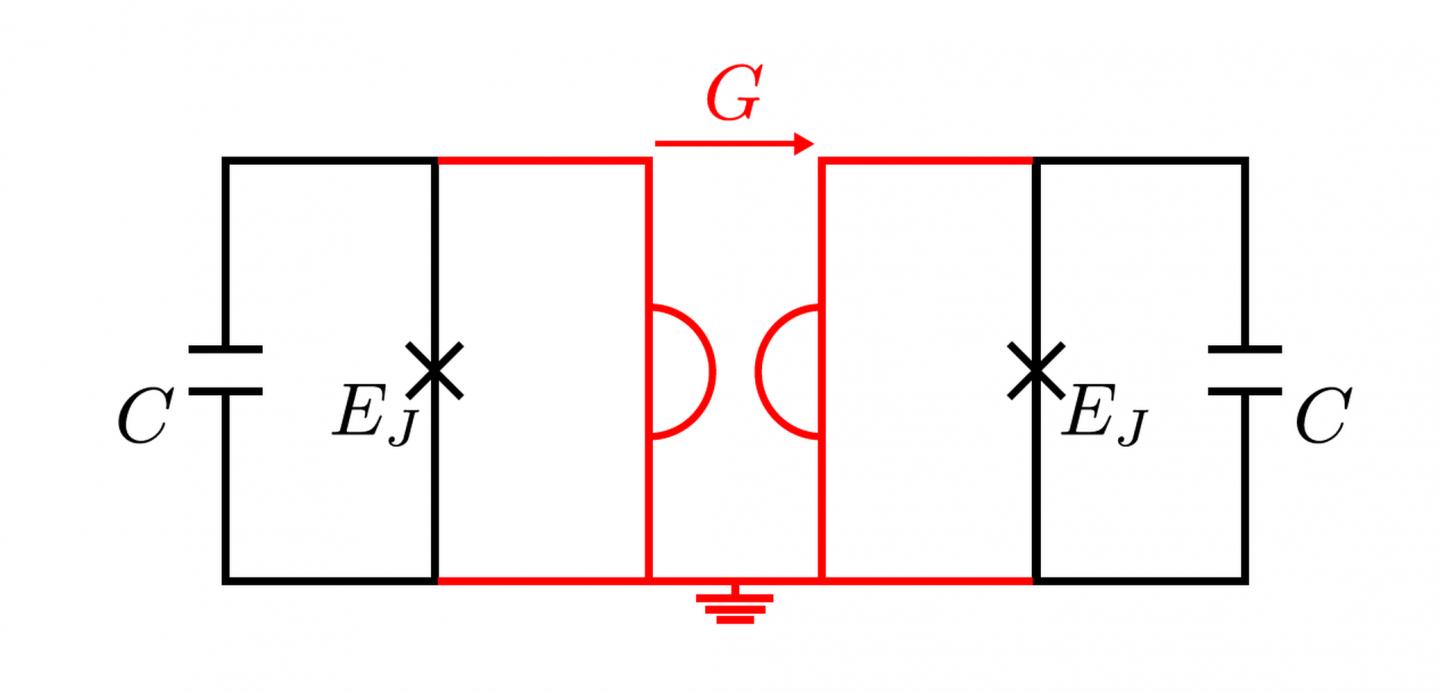
Scientists at Forschungszentrum Jülich and RWTH Aachen University have designed a circuit for quantum computers which is naturally protected against common errors
IMAGE

Credit: M. Rymarz et al., Phys Rev X (2021), https://doi.org/10.1103/PhysRevX.11.011032 (CC BY 4.0)

Building a universal quantum computer is a challenging task because of the fragility of quantum bits, or qubits for short. To deal with this problem, various types of error correction have been developed. Conventional methods do this by active correction techniques. In contrast, researchers led by Prof. David DiVincenzo from Forschungszentrum Jülich and RWTH Aachen University, together with partners from the University of Basel and QuTech Delft, have now proposed a design for a circuit with passive error correction. Such a circuit would already be inherently fault protected and could significantly accelerate the construction of a quantum computer with a large number of qubits.

In order to encode quantum information in a reliable way, usually, several imperfect qubits are combined to form a so-called logical qubit. Quantum error correction codes, or QEC codes for short, thus make it possible to detect errors and subsequently correct them, so that the quantum information is preserved over a longer period of time.

In principle, the techniques work in a similar way to active noise cancellation in headphones: In a first step, any fault is detected. Then, a corrective operation is performed to remove the error and restore the information to its original pure form.

However, the application of such active error correction in a quantum computer is very complex and comes with an extensive use of hardware. Typically, complex error-correcting electronics are required for each qubit, making it difficult to build circuits with many qubits, as required to build a universal quantum computer.

The proposed design for a superconducting circuit, on the other hand, has a kind of built-in error correction. The circuit is designed in such a way that it is already inherently protected against environmental noise while still controllable. The concept thus bypasses the need for active stabilization in a highly hardware-efficient manner, and would therefore be a promising candidate for a future large-scale quantum processor that has a large number of qubits.

“By implementing a gyrator – a two port device that couples current on one port to voltage on the other – in between two superconducting devices (so called Josephson junctions), we could waive the demand of active error detection and stabilization: when cooled down, the qubit is inherently protected against common types of noise,” said Martin Rymarz, a PhD student in the group of David DiVincenzo and first author of the paper, published in Physical Review X.

“I hope that our work will inspire efforts in the lab; I recognize that this, like many of our proposals, may be a bit ahead of its time”, said David DiVincenzo, Founding Director of the JARA-Institute for Quantum Information at RWTH Aachen University and Director of the Institute of Theoretical Nanoelectronics (PGI-2) at Forschungszentrum Jülich. “Nevertheless, given the professional expertise available, we recognize the possibility to test our proposal in the lab in the foreseeable future”.

David DiVincenzo is considered a pioneer in the development of quantum computers. Among other things, his name is associated with the criteria that a quantum computer must fulfil, the so-called “DiVincenzo criteria”.

###

Media Contact
Tobias Schloesser
[email protected]

Original Source

https://www.fz-juelich.de/SharedDocs/Pressemitteilungen/UK/EN/2021/notifications/2021-02-17-fault-tolerant-qubits.html

Related Journal Article

http://dx.doi.org/10.1103/PhysRevX.11.011032

Tags: Chemistry/Physics/Materials SciencesComputer ScienceElectromagneticsMaterialsResearch/DevelopmentSuperconductors/SemiconductorsTechnology/Engineering/Computer ScienceTheory/Design
Share12Tweet8Share2ShareShareShare2

Related Posts

Butterfly-Inspired Technology Could Transform Air Quality Monitoring

August 15, 2026
Artesunate Targets GBA, Triggering Apoptosis in Liver Cancer Cells

Artesunate Targets GBA, Triggering Apoptosis in Liver Cancer Cells

August 15, 2026

New molecule may enable cleaner, more efficient metal recovery

August 15, 2026

Controlled sulfidation enhances supercapacitor electrode performance

August 15, 2026
Please login to join discussion

POPULAR NEWS

  • KAIST develops semiconductor neuron that harnesses noise to selectively process signals

    29 shares
    Share 12 Tweet 7
  • Imagining natural and extra robotic thumbs together strengthens kinesthetic sensorimotor networks

    29 shares
    Share 12 Tweet 7
  • PARP1 Drives Neuropathic Pain Through GPX4-Dependent Ferroptosis in Injured Mice’s Sensory Neurons

    29 shares
    Share 12 Tweet 7
  • Strubbelig–NHL3 Receptor Complex Helps Arabidopsis Respond to Cellulose Deficiency

    29 shares
    Share 12 Tweet 7

About

We bring you the latest biotechnology news from best research centers and universities around the world. Check our website.

Follow us

Recent News

KAIST develops semiconductor neuron that harnesses noise to selectively process signals

Imagining natural and extra robotic thumbs together strengthens kinesthetic sensorimotor networks

PARP1 Drives Neuropathic Pain Through GPX4-Dependent Ferroptosis in Injured Mice’s Sensory Neurons

Subscribe to Blog via Email

Success! An email was just sent to confirm your subscription. Please find the email now and click 'Confirm' to start subscribing.

Join 85 other subscribers
  • Contact Us

Bioengineer.org © Copyright 2023 All Rights Reserved.

Welcome Back!

Login to your account below

Forgotten Password?

Retrieve your password

Please enter your username or email address to reset your password.

Log In
No Result
View All Result
  • Homepages
    • Home Page 1
    • Home Page 2
  • News
  • National
  • Business
  • Health
  • Lifestyle
  • Science

Bioengineer.org © Copyright 2023 All Rights Reserved.