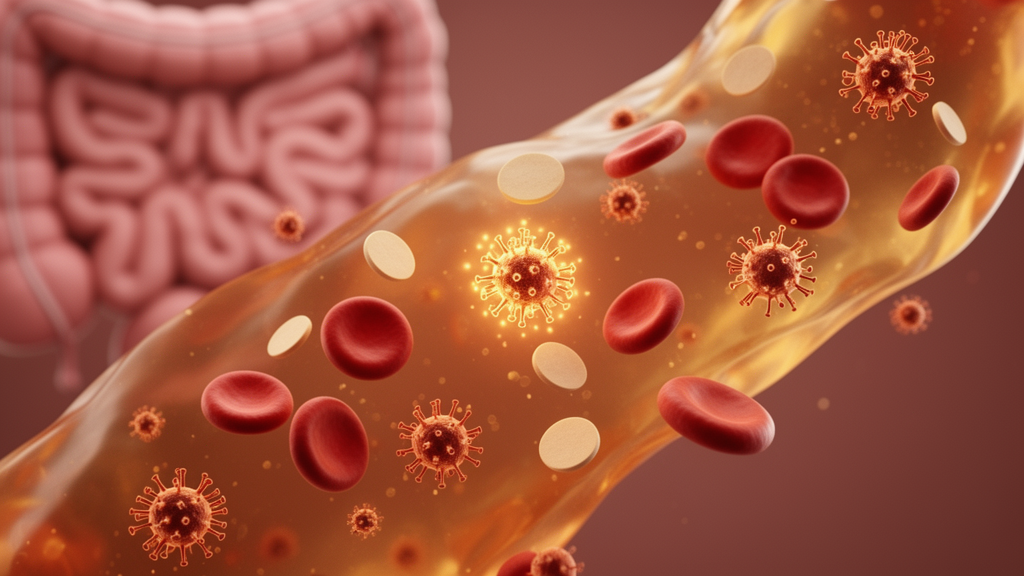
Gastric cancer appears to reshape the collection of viruses circulating in a patient’s blood in a striking and measurable way. A new study published in Virologica Sinica reports that in people with gastric cancer, more than 80 percent of viral sequences detected in blood belong to a single viral family, Anelloviridae, replacing the bacteriophage-dominated virome seen in healthy individuals. The work, led by corresponding author Dr. Wang Li of The Affiliated Taizhou People’s Hospital of Nanjing Medical University and co-corresponding author Dr. Shaokun Pan of Fudan University, offers the first comprehensive atlas of blood and gut virome remodeling associated with the disease.
Gastric cancer ranks fifth in global cancer incidence and causes more than 650,000 deaths each year. Its clinical management has long been constrained by a lack of effective early screening tools, and most patients are first diagnosed at advanced stages, when the therapeutic window is extremely narrow. Against that backdrop, the research team systematically profiled the virome—the full community of viruses present—in paired blood and fecal samples from gastric cancer patients and healthy controls, aiming to delineate the virological landscape of the disease.
In healthy individuals, the blood virome is dominated by bacteriophages, the viruses that infect bacteria. The gastric cancer samples told a very different story. “But in gastric cancer patients, over 80% of viral sequences belong to a single family, Anelloviridae—viruses that infect humans but rarely cause disease,” Dr. Li explained. “At the same time, viral diversity plummets, as if an entire ecosystem is being taken over by one species.” Anelloviruses are widespread in human populations and are generally considered low-pathogenicity, which makes their dramatic relative expansion in cancer patients particularly notable from an ecological standpoint.
The survey also expanded the known diversity of the human blood virome itself. Among the sequences recovered from the blood of gastric cancer patients, the researchers identified 67 provisional novel anellovirus species and one entirely new virus, assigned to the genus gemykibivirus. This discovery substantially enlarges the catalog of viruses known to circulate in human blood and underscores how much of the blood virome remains uncharacterized even with modern sequencing approaches.
The gut, however, responded differently. “While blood diversity declined, the gut virome of cancer patients showed increased diversity, with a mix of bacteriophages,” Li noted, suggesting that different body compartments respond to cancer in distinct ways. In fecal samples, the team compared the relative abundance of viral families between the healthy control group and two tumor-bearing subgroups, documenting a shift toward greater viral variety rather than the collapse in diversity observed in blood.
“This indicates that the virome is not a single entity but is compartment-specific, with each site following its own ecological rules,” said co-corresponding author Dr. Pan. The contrast between the two compartments is a central technical message of the study: any attempt to read the virome as a health signal must account for where the sample is taken, because blood and gut viromes appear to be governed by different dynamics in the same individuals.
The most clinically translatable result emerged from LEfSe analysis, a computational method used to identify biomarkers that distinguish between groups. That analysis flagged Betatorquevirus, a genus within the Anelloviridae family, as a key viral signature separating gastric cancer patients from healthy individuals. Network analyses added a further layer: anelloviruses negatively correlated with multiple bacteriophage families in blood, suggesting they may outcompete other viruses in the bloodstream and thereby drive the loss of viral diversity observed in patients.
The authors are careful about what these findings can and cannot support at this stage. “The expansion of blood anelloviruses holds promise as a non-invasive biomarker for gastric cancer,” Li said, while emphasizing that whether this virus can actually serve as a non-invasive biomarker requires larger prospective studies to validate its clinical utility. The current work is a data and statistical analysis of human tissue samples from patient and control cohorts, not a test of diagnostic performance in a screening population, so the biomarker question remains open.
Even so, the study establishes a foundation for future work on several fronts. It provides the first comprehensive atlas of blood and gut virome remodeling in gastric cancer, contributes dozens of newly recognized anellovirus species to the scientific record, and identifies a candidate viral signature that can now be tested in larger, prospective cohorts. The team has made all of its data publicly available to accelerate further research in this emerging field, and the authors disclosed no potential conflicts of interest associated with the research or its publication.
Subject of Research: Blood and gut virome remodeling in gastric cancer, including anellovirus expansion and novel virus discovery
Article Title: Gastric cancer triggers blood virus boom, reveals potential biomarkers
Article References: Gastric cancer triggers blood virus boom, reveals potential biomarkers. Original publication (Bibliographic details unavailable.)
Image Credits: AI Generated
DOI: Not provided
Keywords: gastric cancer, virome, Anelloviridae, Betatorquevirus, bacteriophages, blood biomarker, gemykibivirus, Virologica Sinica, viral diversity, non-invasive diagnostics, Gastric, cancer
News Source: Nathaniel Bowman. (October 26, 2026). Blood anelloviruses surge in gastric cancer, pointing to possible biomarkers. Scienmag.