

• HOME
  • NEWS
  • EXPLORE
    • CAREER
      • Companies
      • Jobs
    • EVENTS
    • iGEM
      • News
      • Team
    • PHOTOS
    • VIDEO
    • WIKI
  • BLOG
  • COMMUNITY
    • FACEBOOK
    • INSTAGRAM
    • TWITTER
Friday, April 17, 2026
BIOENGINEER.ORG
No Result
View All Result
  • Login
  • HOME
  • NEWS
  • EXPLORE
    • CAREER
      • Companies
      • Jobs
        • Lecturer
        • PhD Studentship
        • Postdoc
        • Research Assistant
    • EVENTS
    • iGEM
      • News
      • Team
    • PHOTOS
    • VIDEO
    • WIKI
  • BLOG
  • COMMUNITY
    • FACEBOOK
    • INSTAGRAM
    • TWITTER
  • HOME
  • NEWS
  • EXPLORE
    • CAREER
      • Companies
      • Jobs
        • Lecturer
        • PhD Studentship
        • Postdoc
        • Research Assistant
    • EVENTS
    • iGEM
      • News
      • Team
    • PHOTOS
    • VIDEO
    • WIKI
  • BLOG
  • COMMUNITY
    • FACEBOOK
    • INSTAGRAM
    • TWITTER
No Result
View All Result
Bioengineer.org
No Result
View All Result
Home NEWS Science News Cancer

Blocking known cancer driver unexpectedly reveals a new tumor-promoting pathway

Bioengineer by Bioengineer
May 17, 2016
in Cancer
Reading Time: 2 mins read
0
Share on FacebookShare on TwitterShare on LinkedinShare on RedditShare on Telegram
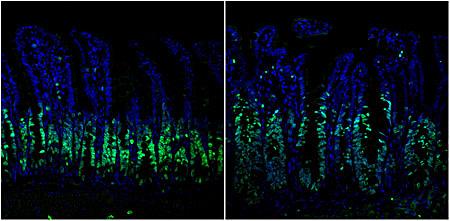
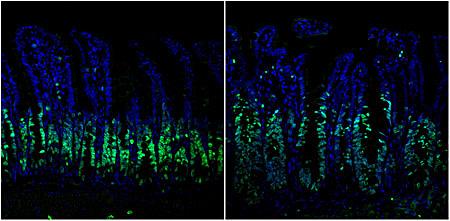
IMAGE

While investigating a potential therapeutic target for the ERK1 and 2 pathway, a widely expressed signaling molecule known to drive cancer growth in one third of patients with colorectal cancer, University of California San Diego School of Medicine researchers found that an alternative pathway immediately emerges when ERK1/2 is halted, thus allowing tumor cell proliferation to continue.

“Since we were genetically deleting the ERK1/2 pathway, we expected to see less cell proliferation,” said Petrus R. de Jong, MD, PhD, a co-first author on the paper. “Instead, the opposite occurred. There was more cell growth and loss of organization within the cells.”

In a paper published online May 17, 2016 in the journal Nature Communications, de Jong and co-first author Koji Taniguchi, MD, PhD, and colleagues, report that treating both ERK1/2 and the compensatory pathway, ERK5, concurrently with a combination of drug inhibitors halted colorectal cancer growth more effectively in both mouse models and human colorectal cancer cell lines.

The ERK pathway plays a critical role in embryonic development and tissue repair because it instructs cells to multiply and start dividing, but when over activated cancer growth occurs.

“Therapies aimed at targeting ERK1/2 likely fail because this mechanism is allowing proliferation through a different pathway,” said Eyal Raz, MD, senior author and UC San Diego School of Medicine professor of medicine. “Previously, ERK5 didn’t seem important in colorectal cancer. This is an underappreciated escape pathway for tumor cells. Hence, the combination of ERK1/2 and ERK5 inhibitors may lead to more effective treatments for colorectal cancer patients.”

There are 1.2 million people living with this disease in the United States, making it the third most common cancer among men and women. In 2016, an estimated 134,490 new cases are expected to be diagnosed.

“If you block one pathway, cancer cells usually mutate and find another pathway that ultimately allows for a recurrence of cancer growth,” said Taniguchi. “Usually, mutations occur over weeks or months. But other times, as in this case, the tumor does not need to develop mutations to find an escape route from targeted therapy. When you find the compensatory pathway and block both, there is no more escape.”

Researchers suggested that other classes of inhibitors be tested in combination with ERK5 inhibitors in human colorectal cancer cells in preclinical mouse models before any patient trial can begin.

###

Additional study co-authors include: Alexandra Harris, Samuel Bertin, Naoki Takahashi, Jen Duong, Maripat Corr, Michael Karin, UC San Diego; and Alejandro Campos and Garth Powis, Sanford Burnham Prebys Medical Discovery Institute.

Media Contact

Yadira Galindo
[email protected]
619-543-6163
@UCSanDiego

http://www.ucsd.edu

The post Blocking known cancer driver unexpectedly reveals a new tumor-promoting pathway appeared first on Scienmag.


Share12Tweet8Share2ShareShareShare2

Related Posts

New Study Identifies Key Obstacles to Timely Head and Neck Cancer Care in Rural Communities

April 16, 2026

Sleep Deprivation Alters Gut Microbiota, Aggravating Colorectal Cancer Progression

April 16, 2026

Breakthrough Surgical Technique Alleviates Chronic Swelling in Legs and Arms

April 16, 2026

Rare Scalp Reaction Discovered in Lung Cancer Patient Treated with Amivantamab Following Radiotherapy

April 16, 2026
Please login to join discussion

POPULAR NEWS

  • Scientists Investigate Possible Connection Between COVID-19 and Increased Lung Cancer Risk

    62 shares
    Share 25 Tweet 16
  • NSF funds machine-learning research at UNO and UNL to study energy requirements of walking in older adults

    100 shares
    Share 40 Tweet 25
  • Boosting Breast Cancer Risk Prediction with Genetics

    47 shares
    Share 19 Tweet 12
  • Popular Anti-Aging Compound Linked to Damage in Corpus Callosum, Study Finds

    46 shares
    Share 18 Tweet 12

About

We bring you the latest biotechnology news from best research centers and universities around the world. Check our website.

Follow us

Recent News

Paired Enzymes Drive Moldable Ring Cyclization Cascades

Student-Led Experiment Establishes New Limits in the Search for Axions

Geriatric Tuberculosis: Five-Year Study Insights India

Subscribe to Blog via Email

Enter your email address to subscribe to this blog and receive notifications of new posts by email.

Join 79 other subscribers
  • Contact Us

Bioengineer.org © Copyright 2023 All Rights Reserved.

Welcome Back!

Login to your account below

Forgotten Password?

Retrieve your password

Please enter your username or email address to reset your password.

Log In
No Result
View All Result
  • Homepages
    • Home Page 1
    • Home Page 2
  • News
  • National
  • Business
  • Health
  • Lifestyle
  • Science

Bioengineer.org © Copyright 2023 All Rights Reserved.
