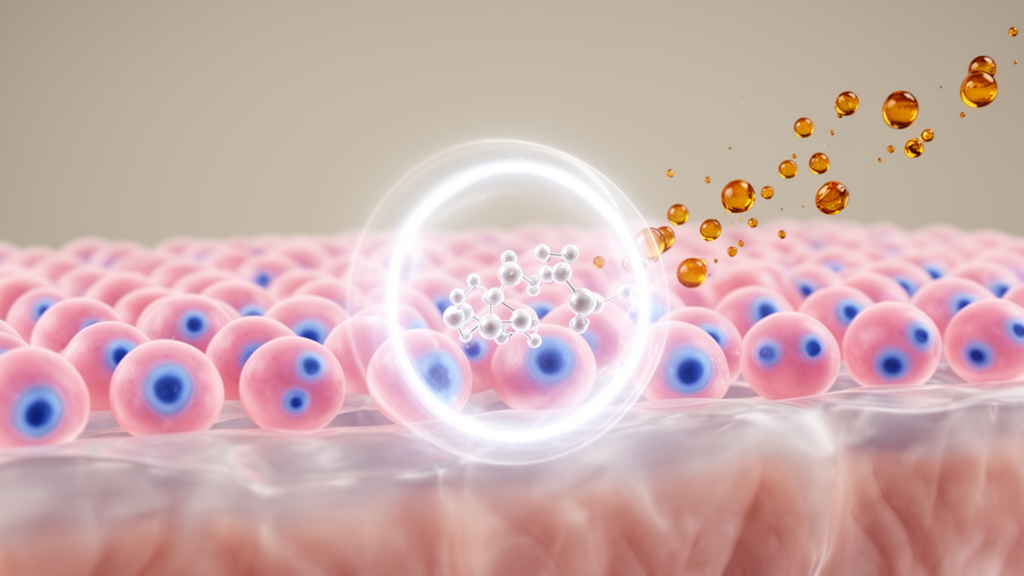
Benzalkonium chloride, one of the most widely used preservatives in ophthalmic formulations, has long been known to injure the corneal epithelium, but the signaling pathways that translate that injury into inflammation and barrier failure have remained poorly defined. A new laboratory study published in the journal Eye and Vision points to one such pathway: interleukin-6 trans-signaling. Researchers report that selectively blocking this pro-inflammatory signaling route with a fusion protein called sgp130Fc reduced a cascade of damaging responses in human corneal epithelial cells exposed to the preservative, including inflammatory activation, oxidative imbalance, endoplasmic reticulum stress, calcium dysregulation, and loss of epithelial barrier integrity.
The work was conducted in human telomerase-immortalized corneal epithelial cells, a widely used in vitro model of the ocular surface, and the authors are careful to frame it as mechanistic cell culture research rather than a clinical demonstration. Benzalkonium chloride, often abbreviated BAC, is a cationic surfactant valued by formulators for its broad-spectrum antimicrobial activity, yet prolonged exposure to it is associated with ocular surface toxicity, epithelial damage, inflammatory activation, oxidative injury, and impaired barrier function. Clinical studies have shown that discontinuing BAC-preserved medications significantly improves dry eye symptoms and ocular surface staining, and the prevalence and severity of dry eye are associated with chronic use of topical eye drops.
Interleukin-6 is a pro-inflammatory cytokine with a complicated dual identity. It can signal through membrane-bound IL-6 receptors in a mode generally associated with homeostatic, anti-inflammatory, and cytoprotective functions, or it can drive inflammation through trans-signaling, in which a soluble IL-6 receptor formed by alternative splicing or proteolysis recruits cells that express only the shared co-receptor glycoprotein 130. A third mode, cluster signaling, occurs when a transmitting cell presents IL-6/receptor complexes to gp130 on adjacent cells. Elevated IL-6 has been detected in the tears of patients with dry eye disease, BAC exposure can stimulate IL-6 production in corneal epithelial cells, and tears from these patients contain elevated levels of IL-6 signaling receptors including the soluble receptor, making the pathway a candidate therapeutic target.
To test whether trans-signaling matters in preservative injury, the team exposed the corneal epithelial cells to 0.001 percent BAC for 30 minutes, a concentration and duration the authors describe as sub-cytotoxic but biologically relevant, supported by their own MTT viability assay and by previous studies showing that short-term exposure at this level induces cytoskeletal alterations and membrane disruption while maintaining adequate cell viability. Some cultures were pretreated for two hours with 10 micrograms per milliliter of sgp130Fc, a fusion protein consisting of soluble gp130 linked to the Fc portion of human immunoglobulin G1. At low concentrations, sgp130Fc preferentially inhibits trans-signaling without affecting cis-signaling, because it binds IL-6/soluble receptor complexes rather than IL-6 alone.
The results showed that BAC exposure activated the trans-signaling axis. In conditioned media, the ratio of soluble IL-6 receptor to soluble gp130, the endogenous inhibitor, increased, secreted IL-6 protein rose modestly from 1.83 to 2.37 picograms per milliliter, and intracellular membrane-bound IL-6 receptor protein fell to 0.67-fold of control levels while gp130 levels remained unchanged. Gene expression of IL6 rose 2.85-fold and of IL6RA, the receptor subunit, 1.67-fold, and both increases were attenuated by sgp130Fc pretreatment. Downstream inflammatory mediators followed the same pattern: monocyte chemoattractant protein 1 mRNA increased 2.33-fold and intercellular adhesion molecule 1 mRNA 1.55-fold after BAC exposure, with sgp130Fc significantly blunting these responses.
Oxidative measurements told a subtler story. BAC exposure increased total reactive oxygen species by 1.18-fold and hydrogen peroxide by 1.13-fold, changes the authors describe as modest, while sgp130Fc partially reduced the ROS rise and returned hydrogen peroxide to baseline. More striking were the losses on the antioxidant side of the ledger. BAC downregulated the genes encoding superoxide dismutase 1, peroxiredoxin 1, and peroxiredoxin 2 to 0.44-fold, 0.61-fold, and 0.81-fold of control values respectively, with a corresponding 0.81-fold drop in total peroxiredoxin protein. Glutathione peroxidase 1, glutathione peroxidase 4, and thioredoxin gene expression fell to 0.84-fold, 0.86-fold, and 0.78-fold, catalase protein declined to 0.83-fold, and total antioxidant capacity, measured in Trolox equivalents, was impaired by 64 percent. sgp130Fc pretreatment attenuated these reductions and maintained antioxidant capacity at control levels. The authors conclude that BAC-induced oxidative imbalance primarily reflects compromised antioxidant defenses rather than marked ROS accumulation.
The study also traced the injury into cellular stress machinery. Intracellular calcium levels rose 1.86-fold after BAC exposure, and sgp130Fc pretreatment prevented this flux. Protein levels of the cytosolic stress chaperone heat shock protein 72 rose 1.97-fold and were partially reduced by the blocker, while the endoplasmic reticulum chaperone BiP, elevated 1.61-fold, returned to baseline with sgp130Fc. The ER stress sensor PERK increased 1.66-fold and Ero1α, a downstream regulator of oxidative protein folding that generates hydrogen peroxide as a byproduct, increased 1.38-fold; both were attenuated by sgp130Fc. Because total peroxiredoxin levels fell while Ero1α rose, the authors suggest impaired ER redox homeostasis, and they note that the relative contributions of extracellular calcium influx versus release from intracellular stores remain unclear.
Barrier function, the property that lets the corneal epithelium protect the ocular surface and regulate drug penetration, was assessed by electric cell-substrate impedance sensing, with trans-epithelial electrical resistance recorded every four minutes for an hour. BAC exposure caused a 29 percent reduction in resistance after 60 minutes, and sgp130Fc pretreatment partially restored it. Junctional proteins told a consistent story: BAC reduced the adherens junction protein β-catenin to 0.31-fold of control levels, the tight junction protein occludin to 0.43-fold, and claudin-1 to 0.59-fold, and sgp130Fc partially prevented these losses. The authors emphasize that this rescue was only partial, indicating that IL-6-independent mechanisms, including direct surfactant effects of BAC on membranes and other stress pathways, also contribute to the injury.
Several limitations frame the findings. IL-6 secretion in these cells under the treatment conditions was modest, consistent with previous reports that they exhibit a limited secretory response compared with other cell types. The kinetics of BAC-induced IL-6 secretion and the reproducibility of the effects under chronic or additional inflammatory stress require further investigation, and because corneal epithelial cells have been reported to express Fc receptors, future studies should include sgp130Fc-only and Fc-control groups to exclude Fc-mediated effects. The authors also note that testing sgp130Fc during or after BAC exposure, rather than only as a pretreatment, would strengthen therapeutic relevance. Most fundamentally, BAC exposure reproduces several features of dry eye disease, including inflammatory signaling and barrier disruption, but does not fully recapitulate its complex pathophysiology, so the findings apply to preservative-induced epithelial injury rather than the disease as a whole.
Within those bounds, the study supports a contributory role for IL-6 trans-signaling in BAC-induced corneal epithelial injury and highlights sgp130Fc as a potentially promising approach for modulating ocular surface inflammation. The same laboratory had previously shown that selective inhibition of trans-signaling protects human retinal endothelial cells against inflammation, oxidative stress, mitochondrial dysfunction, barrier disruption, and apoptosis, and the present results extend that logic to the corneal surface. Whether blocking the pathway in patients, or simply reducing preservative exposure, translates into meaningful clinical benefit for dry eye disease and related ocular surface inflammatory disorders remains a question for future work in more complex models and, ultimately, clinical settings.
Subject of Research: IL-6 trans-signaling in benzalkonium chloride-induced corneal epithelial cell injury
Article Title: Blocking IL-6 trans-signaling mitigates benzalkonium chloride-induced inflammation, oxidative imbalance, ER stress, and barrier disruption in human corneal epithelial cells
Article References: Lax, K., Glass, J., Aliste, A., Sharma, A., & Sharma, S. (2026). Blocking IL-6 trans-signaling mitigates benzalkonium chloride-induced inflammation, oxidative imbalance, ER stress, and barrier disruption in human corneal epithelial cells. Eye and Vision, 13(1), Article 46. https://doi.org/10.1186/s40662-026-00513-0
Image Credits: AI Generated
DOI: 10.1186/s40662-026-00513-0
Keywords: dry eye disease, benzalkonium chloride, IL-6 trans-signaling, sgp130Fc, corneal epithelium, oxidative stress, ER stress, tight junctions, ocular surface inflammation, in vitro study, hTCEpi cells, preservative toxicity
News Source: Ophelia Keating. (October 27, 2026). Blocking an Inflammatory Signal Protects Corneal Cells from Preservative Damage. Scienmag.