• HOME
  • NEWS
  • EXPLORE
    • CAREER
      • Companies
      • Jobs
    • EVENTS
    • iGEM
      • News
      • Team
    • PHOTOS
    • VIDEO
    • WIKI
  • BLOG
  • COMMUNITY
    • FACEBOOK
    • INSTAGRAM
    • TWITTER
Friday, July 3, 2026
BIOENGINEER.ORG
No Result
View All Result
  • Login
  • HOME
  • NEWS
  • EXPLORE
    • CAREER
      • Companies
      • Jobs
        • Lecturer
        • PhD Studentship
        • Postdoc
        • Research Assistant
    • EVENTS
    • iGEM
      • News
      • Team
    • PHOTOS
    • VIDEO
    • WIKI
  • BLOG
  • COMMUNITY
    • FACEBOOK
    • INSTAGRAM
    • TWITTER
  • HOME
  • NEWS
  • EXPLORE
    • CAREER
      • Companies
      • Jobs
        • Lecturer
        • PhD Studentship
        • Postdoc
        • Research Assistant
    • EVENTS
    • iGEM
      • News
      • Team
    • PHOTOS
    • VIDEO
    • WIKI
  • BLOG
  • COMMUNITY
    • FACEBOOK
    • INSTAGRAM
    • TWITTER
No Result
View All Result
Bioengineer.org
No Result
View All Result
Home NEWS Science News Biology

Bleaching affects aquarium corals, too

Bioengineer by Bioengineer
June 29, 2020
in Biology
Reading Time: 3 mins read
0
IMAGE
Share on FacebookShare on TwitterShare on LinkedinShare on RedditShare on Telegram

IMAGE

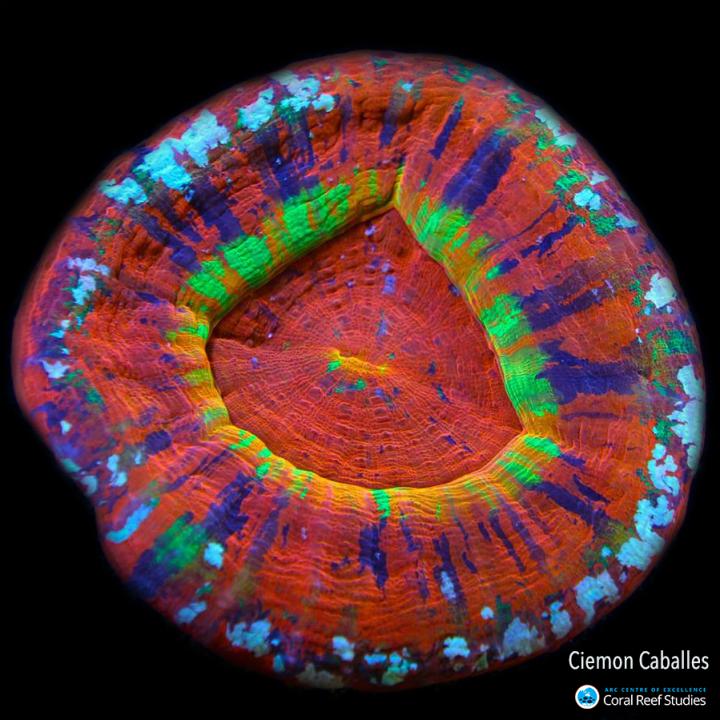
Credit: Ciemon Caballes.

A new study illustrates the potential impact of recurrent heatwaves on coral species collected by the Australian aquarium coral industry.

The study’s lead author, Professor Morgan Pratchett from the ARC Centre of Excellence for Coral Reef Studies at James Cook University (Coral CoE at JCU), says there are active and expanding aquarium coral fisheries operating across the country in Western Australia, the Northern Territory and Queensland.

“With widespread coral bleaching again affecting the Great Barrier Reef, and also occurring on coral reefs in Western Australia, there is inevitable concern regarding the sustainability and defensibility of ongoing coral harvesting,” Prof Pratchett said.

Prior to the study, scientists didn’t know much about the temperature sensitivity and bleaching susceptibility of Australian aquarium corals.

The researchers tested these parameters on six of the most important exported coral species from Australia.

“We found two of the most striking species were particularly susceptible and died at the temperatures you would expect when bleaching occurs,” Prof Pratchett said.

“These corals are most abundant within the nearshore habitats of the southern Great Barrier Reef–an area that bleached earlier this year.”

One of these species is the Australian saucer coral (Homophyllia australis), found just off the coast of Mackay.

With the worldwide demand for Australian aquarium corals increasing, a single aquarium specimen of Homophyllia australis fetched more than $8,000 AUD in Japan in 2017.

The study found the other, more widespread, aquarium corals were able to cope with higher temperatures. They bleached but didn’t die–the corals are already regularly exposed to extreme temperatures in a wide variety of different environments, including shallow tidal pools in north Western Australia.

“Understanding the differential susceptibilities of different coral species to environmental change is a very important aspect of managing coral fisheries,” Prof Pratchett said.

Australian coral fisheries are often the first to provide reports of coral bleaching across diverse reef environments, as they need to respond to changes in coral health.

“Those in the industry don’t collect bleached corals and actively avoid areas where there has been recent and severe mass bleaching,” Prof Pratchett said.

He said the study, which was supported by the Fisheries Research and Development Corporation, highlights the need for more specific and targeted in-situ monitoring for these popular aquarium corals.

This is especially crucial with the increasing threat posed by ongoing environmental change.

###

PAPER

Pratchett M, Caballes C, Newman S, Wilson S, Messmer V, Pratchett D. (2020). ‘Bleaching susceptibility of aquarium corals collected across northern Australia’. Coral Reefs. DOI: 10.1007/s00338-020-01939-1

CONTACT

Prof Morgan Pratchett

Phone: + 61 (0)7 4781 5747

Mobile: +61 (0)488 112 295

Email: [email protected]

Melissa Lyne

Media Manager, Coral CoE at JCU

Phone: +61 (0) 415 514 328

Email: [email protected]

Media Contact
Melissa Lyne
[email protected]

Original Source

http://www.coralcoe.org.au/media-releases/bleaching-affects-aquarium-corals-too

Related Journal Article

http://dx.doi.org/10.1007/s00338-020-01939-1

Tags: BiologyClimate ChangeEcology/EnvironmentMarine/Freshwater Biology
Share12Tweet8Share2ShareShareShare2

Related Posts

Evolution-Inspired Biosensors Revolutionize Lipid Tracking in Real Time — Biology

Evolution-Inspired Biosensors Revolutionize Lipid Tracking in Real Time

July 2, 2026
New Study Reveals How to Reduce Risk of Dangerous Wildlife Encounters This Summer — Biology

New Study Reveals How to Reduce Risk of Dangerous Wildlife Encounters This Summer

July 2, 2026

Hepatic IFRD1 Alleviates Metabolic Dysfunction-Linked Steatohepatitis Through the GLUD1/α-KG Pathway

July 2, 2026

Intricate Food Webs Support Ecosystem Health and Stability

July 2, 2026
Please login to join discussion

POPULAR NEWS

  • Detection of EDCs in Breast Milk and Infant Urine Up to Six Months Highlights Early Exposure Risks

    77 shares
    Share 31 Tweet 19
  • Saying Goodbye to PGY-6: Pediatric Fellowship Realities

    103 shares
    Share 41 Tweet 26
  • New Drug Candidate Developed at McMaster Shows Potential for Treating Brain Cancer

    58 shares
    Share 23 Tweet 15
  • KTU Researchers Explore Ultrasound’s Role in Enhancing Blood Flow Beyond Diagnostics

    53 shares
    Share 21 Tweet 13

About

BIOENGINEER.ORG

We bring you the latest biotechnology news from best research centers and universities around the world. Check our website.

Follow us

Recent News

Steatosis Drives Liver Metastasis Diversity in CRC

Unlocking the Mysteries of Alzheimer’s Disease

Pensoft Introduces New Peer-Reviewed Journal of Regeneration to Advance Restorative Biology Across Species

Subscribe to Blog via Email

Enter your email address to subscribe to this blog and receive notifications of new posts by email.

Join 83 other subscribers
  • Contact Us

Bioengineer.org © Copyright 2023 All Rights Reserved.

Welcome Back!

Login to your account below

Forgotten Password?

Retrieve your password

Please enter your username or email address to reset your password.

Log In
No Result
View All Result
  • Homepages
    • Home Page 1
    • Home Page 2
  • News
  • National
  • Business
  • Health
  • Lifestyle
  • Science

Bioengineer.org © Copyright 2023 All Rights Reserved.