


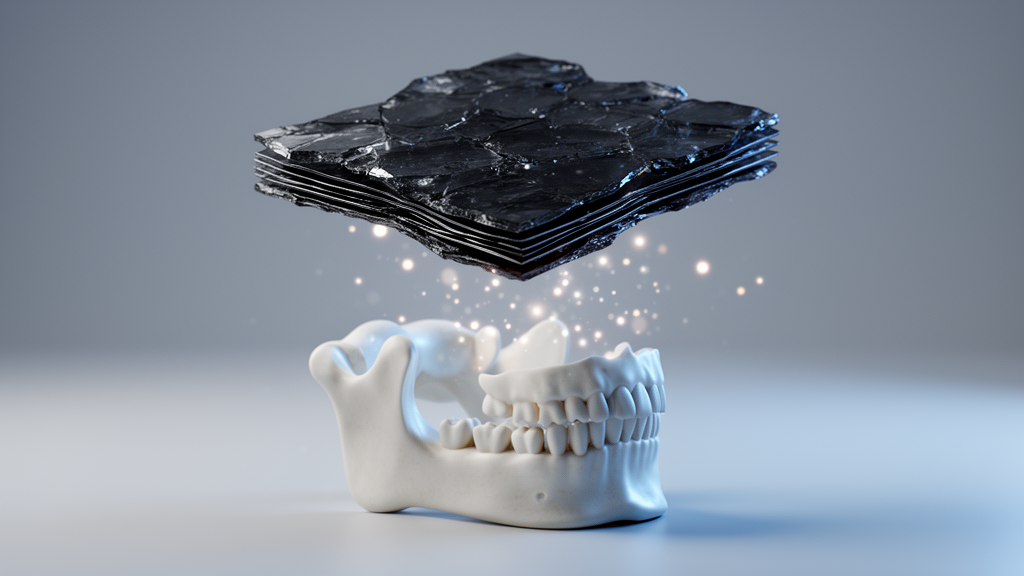
Black phosphorus, a layered form of phosphorus that can be shaved down to atomically thin nanosheets, is emerging as an intriguing candidate material for treating temporomandibular joint osteoarthritis, a painful degenerative disorder of the jaw joint. A new review published in Frontiers in Cell and Developmental Biology synthesizes the mechanistic rationale for using this material against the disease, while candidly acknowledging that nearly all of the supporting evidence comes from studies of knee osteoarthritis, cartilage defects, and bone regeneration rather than the jaw joint itself.
Temporomandibular joint osteoarthritis, or TMJOA, affects the joint that connects the lower jaw to the skull, causing joint pain, restricted mandibular movement, and progressive structural deterioration of the condyle, the rounded end of the jawbone. Unlike most joints covered by conventional hyaline cartilage, the mandibular condyle is predominantly fibrocartilaginous, and the disease involves coordinated pathological changes across three compartments: the synovium, the condylar fibrocartilage, and the subchondral bone beneath it. Current treatments, which range from conservative care to intra-articular interventions and surgery, primarily relieve symptoms and have limited capacity to modify progressive tissue degeneration once substantial cartilage destruction has developed.
The review, authored by researchers at Zhejiang Chinese Medical University, lays out the cellular and molecular pathology of TMJOA in detail. Synovial macrophages and fibroblast-like synoviocytes release inflammatory mediators including interleukin-1β, tumor necrosis factor-α, and interleukin-6, driving matrix degradation through enzymes such as matrix metalloproteinases and ADAMTS. Excessive reactive oxygen species activate inflammatory and catabolic pathways, including NF-κB and MAPK signaling, promoting chondrocyte apoptosis and extracellular matrix breakdown. Abnormal mechanical loading further perturbs chondrocyte mechanotransduction and calcium homeostasis, with the mechanosensitive channel Piezo1 identified as one route by which abnormal stress translates into catabolic activity.
A distinctive feature of the jaw joint is the presence of fibrocartilage stem cells, or FCSCs, resident progenitors in the superficial zone of the condylar cartilage that contribute to tissue maintenance and repair. The review highlights evidence that TMJOA disrupts these cells in model-dependent ways: in disc displacement models, chondrogenic differentiation of Gli1-positive FCSCs is impaired, while in discectomy-induced disease, excessive activation of the same cells drives hypertrophic differentiation and progressive depletion of the stem cell pool. Inflammation itself compromises repair, with tumor necrosis factor-α shown to inhibit FCSC proliferation and interfere with both chondrogenic and osteogenic differentiation. Subchondral bone remodeling adds another layer of complexity, because it is stage-dependent rather than unidirectional: early disease features increased osteoclastic activity and bone loss, while later stages may show reparative bone formation and subchondral sclerosis.
Against this backdrop, black phosphorus offers an unusual combination of properties. Its puckered two-dimensional architecture provides a large surface area for loading small-molecule drugs, proteins, and nucleic acids. It absorbs near-infrared light efficiently and converts it to heat, enabling photothermal modulation and stimulus-responsive cargo release. It gradually degrades under physiological conditions into phosphorus-containing products, contributing to biodegradability, and it exhibits redox activity that allows it to scavenge reactive species directly.
The experimental evidence reviewed spans several disease contexts. Few-layer phosphorene catalytically removes reactive oxygen species, hydrogen peroxide, and nitric oxide in osteoarthritis chondrocyte models, and in vivo intra-articular administration preserved glycosaminoglycans and type II collagen while attenuating cartilage matrix damage in predominantly knee osteoarthritis animal models. Black phosphorus nanosheet treatment similarly reduced intracellular reactive oxygen species, restored chondrocyte function, and in vivo attenuated cartilage degeneration and subchondral bone lesions. Engineered systems have extended these effects: BPNS-zinc oxide composite microspheres suppressed NF-κB-associated inflammatory signaling and reduced synovitis in experimental osteoarthritis, while biomimetic nanosystems coated with macrophage membranes shifted synovial macrophages away from pro-inflammatory states, decreasing CD86-positive cells and increasing CD206-positive cells alongside reduced synovial hyperplasia and cartilage degeneration.
The photothermal dimension adds a distinctive biophysical mechanism. In engineered BP-based systems, mild heating maintained at approximately 42 degrees Celsius reduced transient receptor potential vanilloid 4 activity in macrophages, lowering calcium influx and mitochondrial calcium overload while improving mitochondrial membrane potential, respiration, and ATP production. Conditioned medium from these treated macrophages promoted extracellular matrix synthesis in chondrocytes and reduced fibrosis-related expression in synoviocytes. In osteogenic contexts, periodic near-infrared stimulation of BP-containing polymer composites induced heat shock proteins and enhanced bone formation. However, the review stresses that the commonly used 40 to 42 degree Celsius range derives mainly from in vitro and non-TMJ animal experiments and should be regarded as an experimental reference rather than an established treatment window for the jaw joint, where data on repeated heating of condylar cartilage, synovium, and the articular disc remain limited.
On the bone side, oxidized black phosphorus nanosheets inhibited RANKL-induced osteoclast differentiation, reducing multinucleated osteoclast formation and bone-resorptive activity without marked cytotoxicity, while multiple BP formulations promoted osteogenic differentiation, mineral deposition, and new bone formation in cell and animal models. BP-derived phosphate released during degradation can participate in calcium phosphate mineralization, which may support subchondral bone regeneration. Yet the review flags a caution specific to the jaw: pathological calcification is a recognized feature of TMJOA, and phosphate that helps bone repair could pose a different risk within condylar fibrocartilage, where abnormal mineral deposition may be undesirable.
The translational challenges are substantial. The confined temporomandibular joint space demands local delivery systems that provide sustained exposure, and hydrogel or microsphere encapsulation has shown proof of concept for extending retention, including one BP-based chitosan system that released platelet-derived growth factor for more than five months in a mouse osteoarthritis model. Cartilage-targeting has been demonstrated with WYRGRL peptide-functionalized nanosheets that bind type II collagen, but type II collagen is concentrated more deeply in condylar cartilage than in knee hyaline cartilage, so whether the same strategy reaches the relevant jaw joint zones is unknown. Material stability presents further constraints, since black phosphorus oxidizes in aqueous, oxygen-containing environments, with thinner nanosheets degrading more rapidly, requiring surface passivation or carrier encapsulation to prolong functional lifetime.
The review’s overall conclusion is measured: black phosphorus provides a multifunctional material platform integrating microenvironmental regulation, local delivery, near-infrared-responsive control, and osteochondral repair, and the current evidence offers a mechanistic rationale for further investigation in TMJOA. But a disease-modifying effect in the jaw joint has not been established. No study has yet evaluated BP effects on bone formation and resorption simultaneously in a TMJOA model, effects on fibrocartilage stem cells have not been directly demonstrated, and whether BP can normalize osteoblast-osteoclast coupling in the mandibular condyle remains unresolved. Future studies, the authors argue, must define material state, local dose, degradation behavior, and near-infrared exposure in TMJOA-specific models, and determine whether BP-based systems can support FCSC-mediated chondrogenic repair without accelerating hypertrophic or osteogenic differentiation under the inflammatory and mechanically abnormal conditions that define this disease.
Subject of Research: Potential use of black phosphorus-based biomaterials for temporomandibular joint osteoarthritis
Article Title: Black phosphorus-based biomaterials for temporomandibular joint osteoarthritis: mechanistic rationale, therapeutic potential, and translational considerations
Article References: Fang, C., Wang, L., Pan, Z., & Xu, G. (2026). Black phosphorus-based biomaterials for temporomandibular joint osteoarthritis: mechanistic rationale, therapeutic potential, and translational considerations. Frontiers in Cell and Developmental Biology, 14, Article 1992416. https://doi.org/10.3389/fcell.2026.1992416
Image Credits: AI Generated
DOI: 10.3389/fcell.2026.1992416
Keywords: black phosphorus, temporomandibular joint osteoarthritis, biomaterials, fibrocartilage stem cells, subchondral bone, photothermal therapy, oxidative stress, synovial inflammation, cartilage repair, near-infrared, osteoarthritis, drug delivery
News Source: Drew Townsend. (October 30, 2026). Black Phosphorus Shows Promise for Jaw Joint Arthritis, but Evidence Remains Early. Scienmag.



