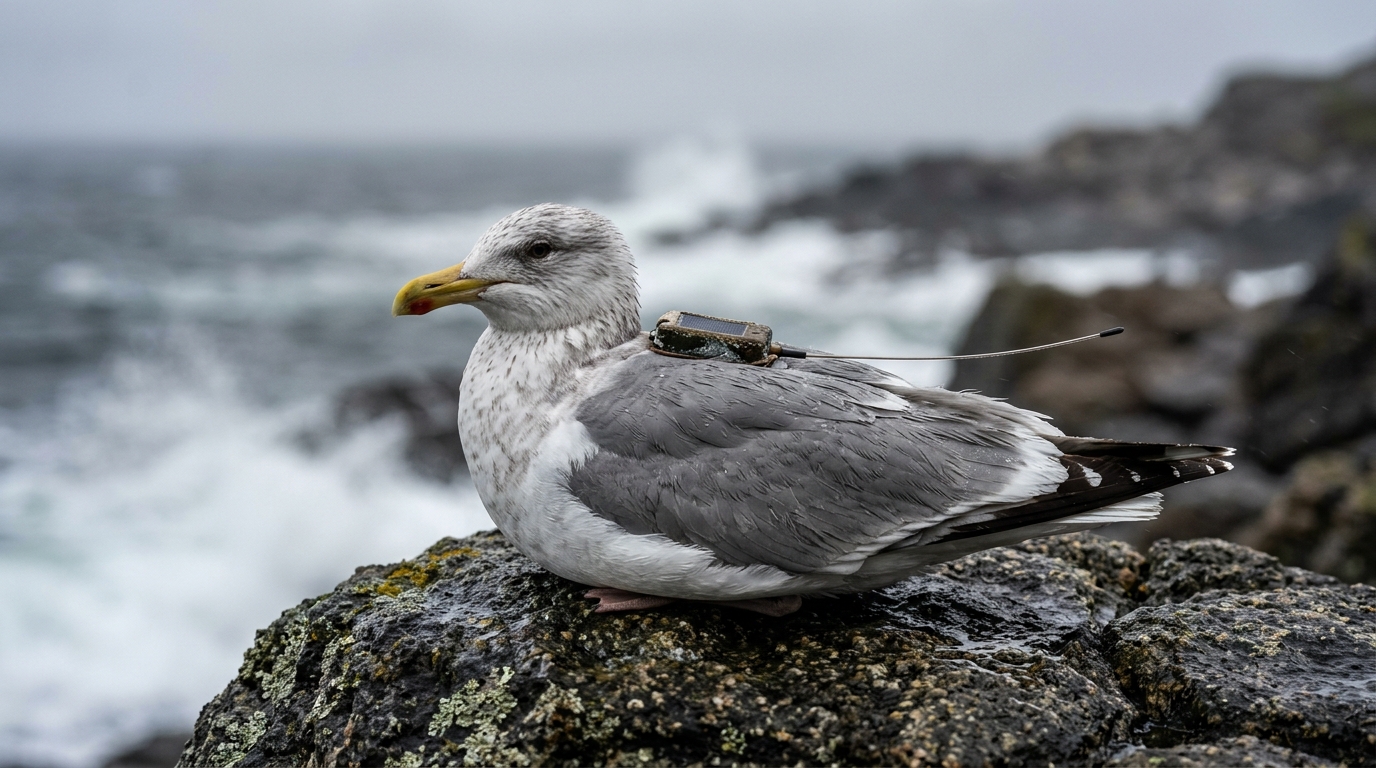
Animal-borne biologging devices have transformed avian ecology, giving researchers fine-scale insight into bird movement, behaviour and environmental interactions that inform conservation, physiology and wildlife management. Yet a new review argues that the technology’s Achilles heel — device failure — is so inconsistently reported in the scientific literature that researchers cannot reliably judge how well tracking equipment actually performs in the field. The study, published in the journal Animal Biotelemetry, combines a structured literature review with a survey of practitioners to evaluate the prevalence, reporting and implications of device failure in contemporary avian biologging research.
The numbers reveal a striking gap between what researchers experience and what they publish. Across 791 studies published between 2021 and 2025 that reported deployments since 2015, only 36% reported at least one device failure. In contrast, when the authors surveyed practitioners directly about their project experiences, 53% of projects had encountered device failures, and 27% of projects reported complete failure. The discrepancy suggests that device failure is both common and systematically underreported, leaving the broader research community with an overly optimistic picture of technological reliability.
When devices do fail, the reasons often remain a mystery. Transmission issues and battery depletion emerged as the most common identifiable causes of failure in both the literature and practitioner reports. However, the cause of failure was unknown in 61% of cases documented in published studies, compared with just 16% in practitioner accounts. That gap suggests that published studies less often document the causes of failure, limiting the information available to help colleagues anticipate and troubleshoot similar problems in their own deployments.
The consequences of this underreporting ripple through every stage of study design. The authors note that if researchers cannot anticipate realistic device performance, they cannot design appropriately powered studies. The authors also discuss the ethical implications of device failure, given the welfare considerations of attaching devices to wild birds. The authors also discuss the financial implications of device failure.
To address these issues, the review proposes a set of best-practice recommendations spanning study design, implementation and reporting. Central among them is incorporating expected failure rates into sample size determination from the outset, so that researchers deploy enough devices to achieve their target sample of usable data even after anticipated losses. The authors also recommend implementing pre-deployment testing and structured performance monitoring.
A third recommendation targets the feedback loop between researchers and manufacturers. The authors emphasize the importance of closing feedback loops with manufacturers through routine reporting of device performance and failures. Together with transparent, standardized reporting in the literature, these practices can support more realistic expectations of device reliability and drive continuous improvement of biologging technologies.
The review’s framing is deliberate: device failure should be treated as an expected and reportable component of biologging research, not an embarrassing anomaly. The authors argue that normalizing failure reporting will improve the reproducibility, interpretability and ethical grounding of future avian tracking studies. Because the findings draw on both a structured literature review and a practitioner survey, they offer a quantitative picture of a problem the authors describe as poorly characterized in the literature.
For a field in which 791 avian biologging studies were published between 2021 and 2025, the authors' message is that treating device failure as an expected and reportable component of research can support more realistic expectations of device reliability. The authors argue that transparent, standardized reporting of device performance and failures can support more realistic expectations of device reliability and continuous improvement of biologging technologies. The authors’ recommendations, spanning sample-size planning, pre-deployment testing, structured monitoring and manufacturer feedback, aim to make device reliability a measurable and improvable property of the biologging enterprise rather than an unexamined assumption baked into every new tracking project.
Subject of Research: Device failure in bird biologging research
Article Title: Planning for device failure in bird biologging: evidence-based recommendations from literature and practice
Article References: Gutowsky, S. E., Arnyek, A., Atkinson, M., Baak, J. E., Duchene, M., Geraci, E., Gjerdrum, C., van Haaften, L. K., Maddox, M. L., McGovern, K., Pollet, I. L., Ryder, K., & Mallory, M. L. (2026). Planning for device failure in bird biologging: evidence-based recommendations from literature and practice. Animal Biotelemetry. https://doi.org/10.1186/s40317-026-00507-8
Image Credits: AI Generated
DOI: 10.1186/s40317-026-00507-8
Keywords: biologging, bird tracking, device failure, avian ecology, telemetry, research reporting, study design, animal welfare, battery depletion, transmission issues, data reliability, scientific publishing
News Source: Drew Townsend. (November 6, 2026). Bird tracking devices fail far more often than studies report, review finds. Scienmag.