• HOME
  • NEWS
  • EXPLORE
    • CAREER
      • Companies
      • Jobs
    • EVENTS
    • iGEM
      • News
      • Team
    • PHOTOS
    • VIDEO
    • WIKI
  • BLOG
  • COMMUNITY
    • FACEBOOK
    • INSTAGRAM
    • TWITTER
Friday, June 26, 2026
BIOENGINEER.ORG
No Result
View All Result
  • Login
  • HOME
  • NEWS
  • EXPLORE
    • CAREER
      • Companies
      • Jobs
        • Lecturer
        • PhD Studentship
        • Postdoc
        • Research Assistant
    • EVENTS
    • iGEM
      • News
      • Team
    • PHOTOS
    • VIDEO
    • WIKI
  • BLOG
  • COMMUNITY
    • FACEBOOK
    • INSTAGRAM
    • TWITTER
  • HOME
  • NEWS
  • EXPLORE
    • CAREER
      • Companies
      • Jobs
        • Lecturer
        • PhD Studentship
        • Postdoc
        • Research Assistant
    • EVENTS
    • iGEM
      • News
      • Team
    • PHOTOS
    • VIDEO
    • WIKI
  • BLOG
  • COMMUNITY
    • FACEBOOK
    • INSTAGRAM
    • TWITTER
No Result
View All Result
Bioengineer.org
No Result
View All Result
Home NEWS Science News Biology

Biologists developing global citizen network to monitor insect abundance

Bioengineer by Bioengineer
September 16, 2020
in Biology
Reading Time: 2 mins read
0
IMAGE
Share on FacebookShare on TwitterShare on LinkedinShare on RedditShare on Telegram

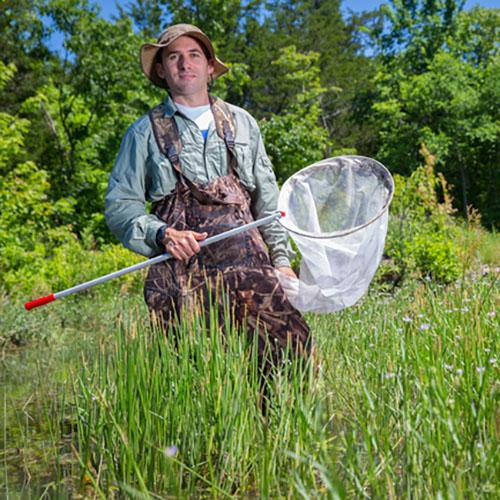
A University of Arkansas scientist is part of an international team working to establish a network to track dragonflies and damselflies
IMAGE

Credit: Simon Tye

A U of A biologist is part of an international team of researchers building a volunteer network of citizen scientists to help monitor the abundance of dragonflies and damselflies.

Recent studies have indicated that insect species in general are declining throughout the world and could be headed toward collapse due to intensive agricultural practices, climate change and habitat loss. For many species, however, there isn’t enough baseline data to determine trends in insect abundance.

Adam Siepielski, associate professor of biology, is part of a team working on a solution — establishing a volunteer network that will collect data on odonata, the scientific name for dragonflies and damselflies. Odonata are easy to spot, often vividly colored and an important indicator group of species reflecting environmental changes in freshwater biodiversity.

“Volunteer nature enthusiasts can greatly help to monitor the abundance of dragonflies and damselflies, iconic freshwater sentinels and one of the few nonpollinator insect groups appreciated by the public and amenable to citizen science,” the scientists wrote in a paper published in the journal BioScience.

Researchers propose modeling the volunteer network on a similar collection of projects, organizations and individuals dedicated to butterflies. “The network has improved knowledge of not only butterfly geographical distributions but also their relative population sizes across years and the effects of large-scale environmental change,” researchers wrote.

“We are hopeful that with similar efforts dedicated to odonata, great strides can be made in our understanding of changes in their abundances and distributions too. They really are amazing animals and fascinating to observe,” said Siepielski.

An odonata network would fill in gaps from areas of the world with little information, and incorporate existing data-collection efforts. Ideally, volunteers would collect data at a fixed location for 10 to 15 years, and have a standardized portal to report their findings.

“An army of amateur naturalists may contribute far more data than a small cadre of professional observers,” the researchers wrote. “Citizen science promotes biophilia while contributing enormously to understanding large-scale biodiversity loss and environmental change, especially in developing or transitioning regions.”

###

Media Contact
Bob Whitby
[email protected]

Original Source

https://researchfrontiers.uark.edu/biologists-developing-global-citizen-network-to-monitor-insect-abundance/

Related Journal Article

http://dx.doi.org/10.1093/biosci/biaa092

Tags: BiodiversityBiologyClimate ChangeEcology/EnvironmentEntomologyMarine/Freshwater Biology
Share12Tweet8Share2ShareShareShare2

Related Posts

Natural Hallucinogens: Evolution’s Ecological Tools, Not Mere Chemical Byproducts

June 25, 2026

This Famous Butterfly Revealed: Three Distinct Species Hidden in One

June 25, 2026

Scientists Attack Soybean Cyst Nematode by Starving Its Food Source

June 25, 2026

Decoding the Secret Code of a Crucial Immune Sensor

June 24, 2026
Please login to join discussion

POPULAR NEWS

  • Saying Goodbye to PGY-6: Pediatric Fellowship Realities

    103 shares
    Share 41 Tweet 26
  • Multi-Hospital Study Reveals Long Covid Burden Is Twice as High as Current Estimates

    92 shares
    Share 36 Tweet 23
  • Detection of EDCs in Breast Milk and Infant Urine Up to Six Months Highlights Early Exposure Risks

    77 shares
    Share 31 Tweet 19
  • New Drug Candidate Developed at McMaster Shows Potential for Treating Brain Cancer

    58 shares
    Share 23 Tweet 15

About

We bring you the latest biotechnology news from best research centers and universities around the world. Check our website.

Follow us

Recent News

Tracking Lanthanide-Labeled Microplastics in Plants

POSTECH Researchers Slash Cost of Reconstituted Cell-Free Systems by 95%

AI and Physics Collaborate to Design Advanced Hydrogen Storage Materials

Subscribe to Blog via Email

Success! An email was just sent to confirm your subscription. Please find the email now and click 'Confirm' to start subscribing.

Join 82 other subscribers
  • Contact Us

Bioengineer.org © Copyright 2023 All Rights Reserved.

Welcome Back!

Login to your account below

Forgotten Password?

Retrieve your password

Please enter your username or email address to reset your password.

Log In
No Result
View All Result
  • Homepages
    • Home Page 1
    • Home Page 2
  • News
  • National
  • Business
  • Health
  • Lifestyle
  • Science

Bioengineer.org © Copyright 2023 All Rights Reserved.