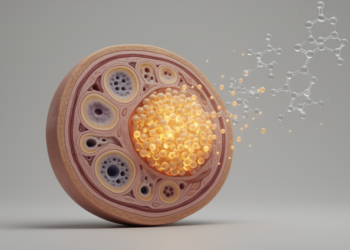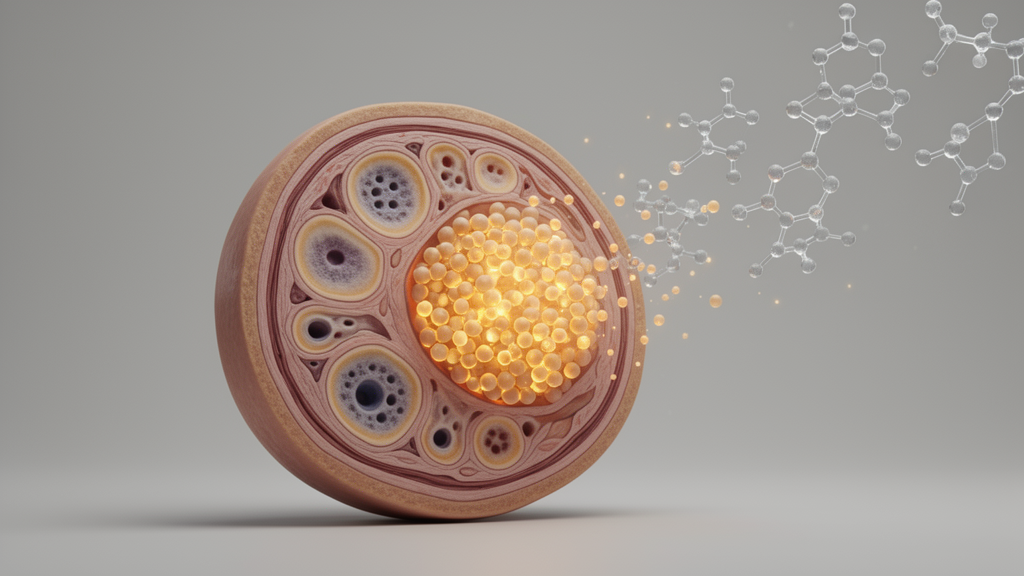
Benzo(a)pyrene (BaP), a potent carcinogen in the polycyclic aromatic hydrocarbon family, disrupts the female reproductive tract and generates ovarian cancer stem-like progenitors in mice, according to a study published in Molecular Biology Reports. Female Swiss mice received a standardised dose of 50 mg/kg body weight twice a week for one month, and the researchers assessed the reproductive tract after four months.
The treated animals showed marked ovarian damage. BaP administration reduced the numbers of primordial and primary ovarian follicles and induced stromal cell hyperplasia and inflammation inside the ovary. In the uterus, the thickness of the uterine layers decreased while the diameter of the uterine lumen and the number of uterine glands increased. The researchers observed atrophied uterine linings as well as endometrial hyperplasia with abnormal glandular development, indicating that the compound disrupts both ovarian folliculogenesis and uterine architecture in this mouse model.
The most striking finding concerned cancer stem-like progenitors. Using flow cytometry based on the expression of the CD44 and CD133 cell-surface receptors, the team identified three distinct ovarian progenitor populations: CD44⁺CD133⁻, CD44⁺CD133⁺, and CD44⁻CD133⁺. After BaP treatment, the CD44⁺CD133⁻ population increased 7.3-fold (p < 0.005) and the CD44⁺CD133⁺ population increased 2.53-fold (p < 0.0005), while the CD44⁻CD133⁺ population fell by 52 percent (p < 0.0005). Overall, BaP raised CD44 surface expression four-fold (p < 0.0005) and CD133 surface expression by 47 percent (p < 0.005) in ovarian cells, indicating a shift in the composition of ovarian cell populations toward a CD44- and CD133-expressing phenotype.
The study also points to oxidative stress as a mechanism accompanying these cellular changes. BaP treatment increased reactive oxygen species production two-fold in ovarian cells (p < 0.005), while RT-qPCR analysis revealed marked reductions in the relative expression of the antioxidant genes SOD1, SOD2, catalase, GPX1, and FOXO3. This combination of elevated ROS and weakened antioxidant gene expression is consistent with the systemic oxidative stress the dosing regimen was designed to induce, and it provides a framework linking exposure to the tissue damage and progenitor shifts observed.
The authors conclude that BaP administration disrupts folliculogenesis, reduces ovarian follicle size, and causes epithelial hyperplasia, lymphocytic infiltration, increased vascularisation, atrophied uterine lining, and abnormal glandular growth in the uterus, in addition to inducing cancer stem-like progenitors and CD44 and CD133 expression in the ovaries.
Several caveats frame these results. The findings come from a mouse model exposed to a high, standardised dose regimen, and the study measured cellular and molecular changes rather than tumour development, so the generation of cancer stem-like progenitors should not be read as evidence of cancer formation in the treated animals. The flow cytometry populations were defined by two surface markers, and the findings are specific to this dosing schedule and mouse strain. Nevertheless, by connecting BaP exposure to follicle depletion, uterine remodelling, oxidative stress, suppressed antioxidant gene expression, and an expanded stem-like cell compartment in the same animal model, the study offers an integrated picture of how this polycyclic aromatic hydrocarbon acted on the female reproductive tract in this experiment.
Subject of Research: Ovotoxicity and ovarian cancer stem-like progenitor generation in benzo(a)pyrene-treated mice
Article Title: Analysis the ovotoxicity and ovarian cancer stem-like progenitors generation in benzo[a]pyrene-treated Mice
Article References: Bhardwaj, N., Singh, A., & Babu, R. (2026). Analysis the ovotoxicity and ovarian cancer stem-like progenitors generation in benzo[a]pyrene-treated Mice. Molecular Biology Reports, 53(1), Article 1803. https://doi.org/10.1007/s11033-026-13006-z
Image Credits: AI Generated
DOI: 10.1007/s11033-026-13006-z
Keywords: benzo(a)pyrene, ovotoxicity, ovarian follicles, cancer stem-like progenitors, CD44, CD133, oxidative stress, reactive oxygen species, endometrial hyperplasia, polycyclic aromatic hydrocarbons, mouse model, antioxidant genes
News Source: Nathaniel Bowman. (October 26, 2026). Benzo[a]pyrene Damages Mouse Ovaries and Expands Cancer Stem-Like Progenitor Populations. Scienmag.