• HOME
  • NEWS
  • EXPLORE
    • CAREER
      • Companies
      • Jobs
    • EVENTS
    • iGEM
      • News
      • Team
    • PHOTOS
    • VIDEO
    • WIKI
  • BLOG
  • COMMUNITY
    • FACEBOOK
    • INSTAGRAM
    • TWITTER
Wednesday, October 7, 2026
BIOENGINEER.ORG
No Result
View All Result
  • Login
  • HOME
  • NEWS
  • EXPLORE
    • CAREER
      • Companies
      • Jobs
        • Lecturer
        • PhD Studentship
        • Postdoc
        • Research Assistant
    • EVENTS
    • iGEM
      • News
      • Team
    • PHOTOS
    • VIDEO
    • WIKI
  • BLOG
  • COMMUNITY
    • FACEBOOK
    • INSTAGRAM
    • TWITTER
  • HOME
  • NEWS
  • EXPLORE
    • CAREER
      • Companies
      • Jobs
        • Lecturer
        • PhD Studentship
        • Postdoc
        • Research Assistant
    • EVENTS
    • iGEM
      • News
      • Team
    • PHOTOS
    • VIDEO
    • WIKI
  • BLOG
  • COMMUNITY
    • FACEBOOK
    • INSTAGRAM
    • TWITTER
No Result
View All Result
Bioengineer.org
No Result
View All Result
Home NEWS Science News Biology

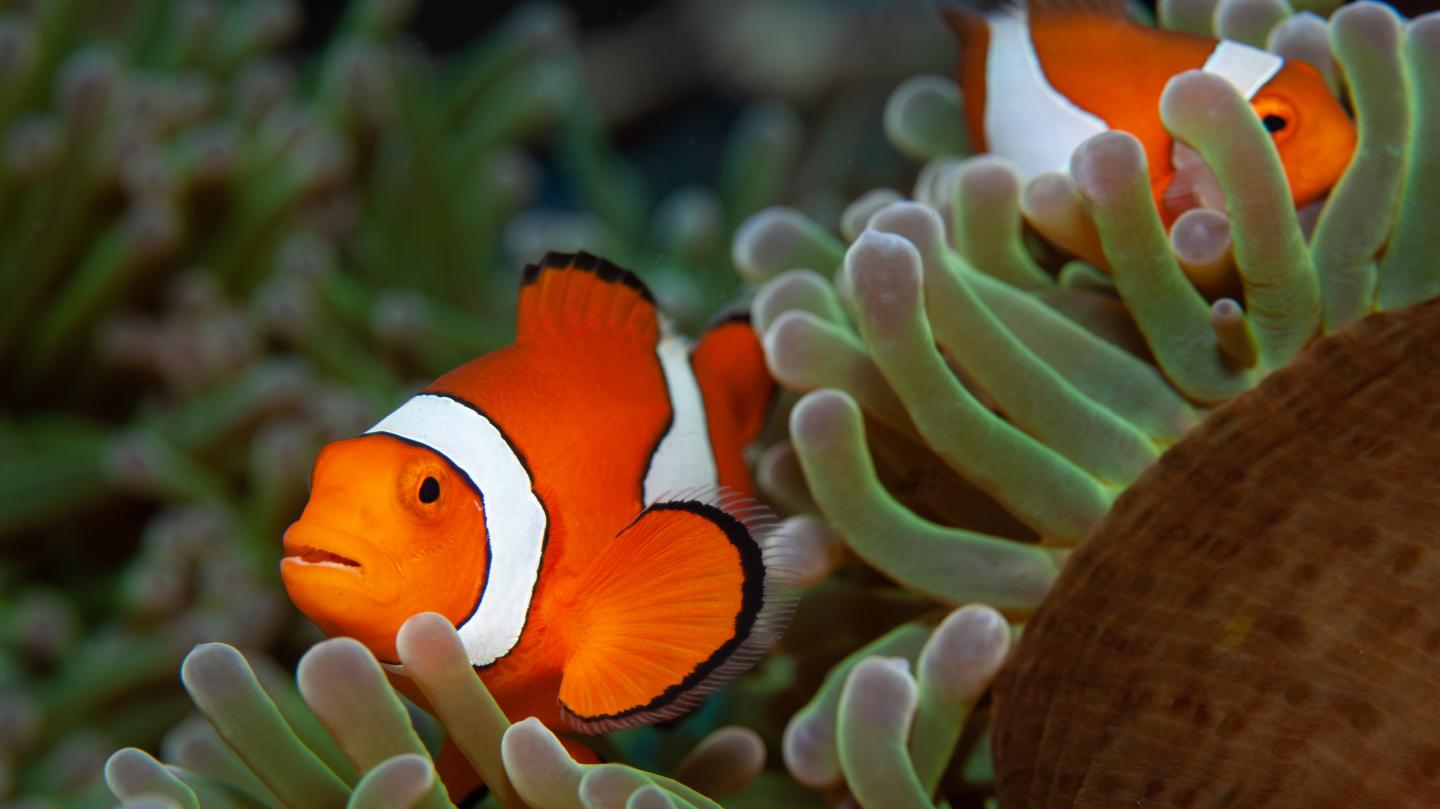
Bad news for Nemo

Bioengineer by Bioengineer
November 27, 2019
in Biology
Reading Time: 2 mins read
0
IMAGE
Share on FacebookShare on TwitterShare on LinkedinShare on RedditShare on Telegram

Species can’t adapt to rapid environmental changes
IMAGE

Credit: (Photo by Simon Thorrold, Woods Hole Oceanographic Institution)

The beloved anemone fish popularized by the movies “Finding Nemo” and “Finding Dory” don’t have the genetic capacity to adapt to rapid changes in their environment, according to a new study by France’s National Centre for Scientific Research (CNRS), Woods Hole Oceanographic Institution (WHOI) and colleagues. Their findings published Nov. 27, 2019, in the journal Ecology Letters.

An international team of researchers monitored clownfish in the lagoons of Kimbe Bay–a biodiversity hot spot in Papua New Guinea–for more than a decade. Using genetic analysis of the population’s DNA, the researchers were able to calculate their potential to adapt to habitat changes and renew their population. They found that big families of clownfish that extended over many generations were linked to high-quality habitats, rather than to shared genes.

“The findings reported here were made possible by a huge sampling and DNA sequencing effort that had not been attempted for any marine species before,” says WHOI biologist Simon Thorrold, a coauthor of the paper. “The biggest surprise to us was also the most troubling: conservation efforts cannot rely on genetic adaptation to protect clownfish from the effects of climate change. It seems that Nemo won’t be able to save himself.”

The quality of the anemone that provides a home to clownfish contributes significantly–on average 50 percent–to its ability to survive and renew its population. If high-quality anemones remain healthy, the clownfish population will persist. However, if the anemones and coral reefs they call home are impacted by climate warming, the clownfish are in trouble.

“Nemo is thus at the mercy of a habitat that is degrading more and more every year,” says Benoit Pujol, an evolutionary geneticist at CNRS. To expect a clownfish to genetically adapt at pace which would allow it to persist in the lagoons would be unreasonable, and thus the ability of these fish to remain in the lagoons over time will depend on our ability to maintain the quality of its habitat.”

###

Additional coauthors of the paper include colleagues from: James Cook University/ Australian Research Council Centre of Excellence for Coral Reef Studies; King Abdullah University of Science and Technology; The Universidad Austral de Chile; and the Université de Perpignan.

This research was supported by: Laboratoire d’Excellence CORAIL; Coral Reef Initiatives for the Pacific; the Global Environment Facility Coral Reef Targeted Research Connectivity Working Group; the U.S. National Science Foundation; the Australian Research Council Centre of Excellence Coral Reef Studies; The Nature Conservancy; Total Foundation; James Cook University; King Abdullah University of Science and Technology; and Woods Hole Oceanographic Institution.

Media Contact
WHOI Media Office
[email protected]
508-289-3340

Related Journal Article

http://dx.doi.org/10.1111/ele.13428

Tags: BiologyClimate ChangeEarth ScienceGeneticsMarine/Freshwater BiologyOceanography
Share12Tweet8Share2ShareShareShare2

Related Posts

Gut bacteria team up: how fiber's effects depend on microbial neighbors

Gut bacteria team up: how fiber’s effects depend on microbial neighbors

October 7, 2026
Lockdowns Weren't the Real Job Killer: Türkiye's Pandemic Labor Market Reexamined

Lockdowns Weren’t the Real Job Killer: Türkiye’s Pandemic Labor Market Reexamined

October 7, 2026

Sow’s Milk Shields the Newborn Uterus From Chemical Disruption, Gene Study Reveals

October 7, 2026

Nature’s Immune Boosters: How Natural Adjuvants Could Transform Cancer Therapy

October 7, 2026
Please login to join discussion

POPULAR NEWS

  • Alloys That Shrink Their Own Grains: New PIX Mechanism Refines Metals With Heat Alone

    Alloys That Shrink Their Own Grains: New PIX Mechanism Refines Metals With Heat Alone

    29 shares
    Share 12 Tweet 7
  • Endurance Exercise Reshapes the Liver in Males and Females Through Distinct Molecular Routes

    29 shares
    Share 12 Tweet 7
  • Single Transcription Factor PU.1 Rapidly Converts Fibroblasts into Macrophage-Lineage Cells

    29 shares
    Share 12 Tweet 7
  • New Scale Measures How Ready Nurse Educators Really Are for the AI Era

    29 shares
    Share 12 Tweet 7

About

We bring you the latest biotechnology news from best research centers and universities around the world. Check our website.

Follow us

Recent News

Alloys That Shrink Their Own Grains: New PIX Mechanism Refines Metals With Heat Alone

Endurance Exercise Reshapes the Liver in Males and Females Through Distinct Molecular Routes

Single Transcription Factor PU.1 Rapidly Converts Fibroblasts into Macrophage-Lineage Cells

Subscribe to Blog via Email

Success! An email was just sent to confirm your subscription. Please find the email now and click 'Confirm' to start subscribing.

Join 85 other subscribers
  • Contact Us

Bioengineer.org © Copyright 2023 All Rights Reserved.

Welcome Back!

Login to your account below

Forgotten Password?

Retrieve your password

Please enter your username or email address to reset your password.

Log In
No Result
View All Result
  • Homepages
    • Home Page 1
    • Home Page 2
  • News
  • National
  • Business
  • Health
  • Lifestyle
  • Science

Bioengineer.org © Copyright 2023 All Rights Reserved.