Oxygen is a vital medical resource in hospitals, yet the way institutions track its use may be seriously flawed. A new study from a Brazilian hospital suggests that manual documentation in electronic medical records (EMRs) dramatically underestimates how much oxygen patients actually receive, with automated monitoring detecting roughly sixteen times more oxygen volume than the figures recorded by staff. The findings, published as a Brief Report in Discover Health Systems, raise concerns that reach far beyond record-keeping, touching on patient safety, supply planning and hospital finances.
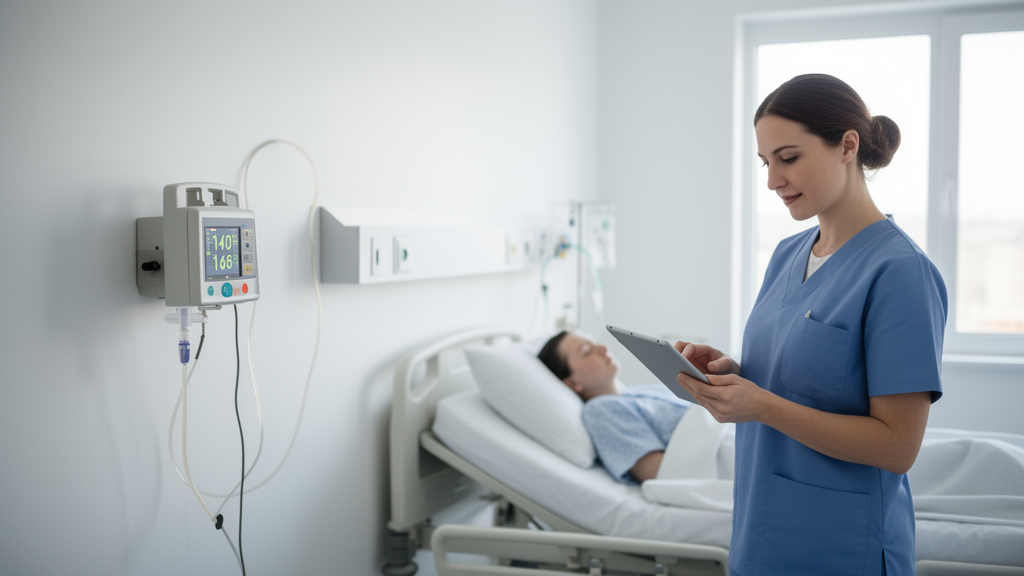
Researchers at Einstein Hospital Israelita in São Paulo compared two ways of measuring oxygen consumption across 21 beds in the hospital’s Coronary Step-Down Unit between September 2021 and January 2022. One method relied on the hospital’s existing practice: healthcare professionals retrospectively entering oxygen therapy details into the EMR, typically after clinical care activities, based on recall or auxiliary notes. The other used ATAS O₂, an Internet of Things–based monitoring system made by Salvus in Pernambuco, Brazil, in which each bed was fitted with an electronic flowmeter connected to the oxygen outlet.
The technical contrast between the two approaches is central to the study. With manual EMR documentation, staff recorded the initiation, flow adjustment and discontinuation of oxygen therapy, with initiation and adjustment events including the prescribed flow rate. The intervals between recorded events, combined with the documented flow rates, were then used to derive consumption parameters such as total duration, total volume and number of cycles. The ATAS O₂ device, by contrast, uses an electronic flow sensor that detects oxygen flow in real time. Changes in flow automatically triggered event generation, which was transmitted to a cloud-based server, and the same derivation method was applied to those event intervals and flow rates.
The analysis relied exclusively on administrative datasets generated weekly for internal billing verification, composed solely of anonymized medical record numbers and oxygen-therapy documentation status. Statistical comparisons used the paired Student’s t-test or the Wilcoxon signed-rank test as appropriate, with continuous variables presented as mean ± standard deviation, and a two-sided p-value below 0.05 considered statistically significant.
The results were striking. The automated system recorded a mean total duration of oxygen use of 566.90 ± 372.56 hours per bed, compared with 163.61 ± 209.85 hours in the EMR, a difference that was highly significant (p < 0.001). The number of recorded cycles, representing changes in oxygen flow, was more than ten times higher with automated monitoring: 138.14 ± 118.65 versus 12.24 ± 10.00 cycles (p < 0.001). Mean flow was 2.70 ± 1.96 L/min with ATAS O₂ against 0.82 ± 0.77 L/min in the EMR (p < 0.001), and total volume per bed reached 78.41 ± 44.84 m³ with the automated system compared with just 4.72 ± 5.33 m³ in the records (p < 0.001). Volume per cycle was also higher with automated monitoring, at 1,275.56 ± 2,052.22 L versus 385.78 ± 357.89 L (p = 0.010).
Perhaps the most surprising finding concerned the number of beds. Because both systems monitored the same 21 beds, the automated device should not have detected oxygen use in any bed that the EMR missed. Yet ATAS O₂ identified a greater number of beds receiving oxygen than were documented in the records, suggesting that oxygen use in some patients was not captured manually at all. The authors note that this underreporting of beds in the EMR could partially explain the larger number of cycles recorded by the automated system, although ATAS O₂ also showed consistently greater cycle frequency per bed, indicating that it captured more frequent changes in oxygen flow.
Temporal patterns added further detail. Cycle duration recorded in the EMR started above 30 hours in September and progressively decreased over the study period, whereas the automated system reported consistently shorter and more stable cycle durations of approximately 5 hours per cycle. Across the full period, mean cycle duration was 7.14 ± 8.54 hours with ATAS O₂ compared with 11.17 ± 12.07 hours in the EMR, a difference that did not reach statistical significance (p = 0.209).
The study’s authors attribute the systematic discrepancies to the inherent limitations of manual recording in high-demand clinical environments. Because competing clinical responsibilities make real-time recording of oxygen flow adjustments impractical, documentation is typically completed retrospectively after manual tasks are finished, which may contribute to omissions and mismatches between recorded and continuously measured data. The findings align with previous research showing significant gaps in oxygen documentation, including a report in which only 45% of prescribed oxygen values were accurately recorded in EMRs. Earlier comparisons of automated and manual vital-sign documentation have likewise found that manual methods are prone to transcription errors, delayed entries and data omissions.
The implications extend well into hospital economics. Because EMR-derived oxygen consumption data often serve as the basis for billing health insurance providers, underreporting can mean hospitals are reimbursed for only a portion of their actual oxygen usage. In an exploratory economic analysis based on institutional reimbursement practices, the authors note that in the Brazilian private healthcare system oxygen therapy is typically reimbursed according to duration of use, with a mean rate of R$ 122.70 per hour across 39 health insurance providers in 2024. Based on the observed 403.29-hour difference in recorded therapy duration between the two methods, this corresponds to an estimated R$ 49,484 per bed over the five-month study period, or approximately R$ 1.04 million when extrapolated to the 21 monitored beds. The authors caution that these estimates are institution-specific and assume stable usage patterns over time.
Clinical and operational risks also loom. The authors argue that the absence of reliable data on therapy duration and intensity may compromise clinical decision-making, limiting the ability to optimize weaning protocols or assess treatment efficacy. Systematic underestimation of oxygen demand can undermine supply planning, a vulnerability that the COVID-19 pandemic exposed when unprecedented demand led to global shortages of medical oxygen. Oxygen misuse carries financial and environmental burdens as well: standard flowmeters opened beyond their calibrated range can deliver 65–75 L/min, far exceeding therapeutic requirements, and one prior study estimated that excess flow in only two patients could waste nearly 172,800 L of oxygen per day, roughly 63 million liters annually.
The study does have an important limitation, which the authors acknowledge directly: there was no gold standard for quantifying real oxygen consumption. Because medical oxygen is distributed through a centralized hospital pipeline rather than isolated delivery units, it is technically unfeasible to directly determine oxygen expenditure at the ward or bedside level. The reliability of the ATAS O₂ measurements is instead supported by its regulatory compliance with Brazil’s health surveillance agency, ANVISA, under register number 10349590139, an approval granted following a technical report that included tests comparing the device’s pressure and flow values against actual pressures and a gold-standard reference sensor.
The authors conclude that oxygen consumption estimates show systematic discrepancies between manual EMR documentation and automated monitoring, with EMR-based values likely underestimating oxygen use. They argue that the findings highlight the potential value of integrating automated monitoring technologies into hospital infrastructures, while stressing the need for further validation in diverse clinical settings. As a retrospective, single-center observational study covering 21 beds over five months, the work cannot by itself establish how widespread such documentation gaps are, but it offers a concrete, quantified warning that what hospitals write down about their oxygen use may diverge sharply from what their patients actually receive.
Subject of Research: Discrepancies between automated oxygen monitoring and manual electronic medical record documentation of oxygen therapy in hospital beds
Article Title: Discrepancies in oxygen consumption between automated monitoring and electronic medical records
Article References: Monnaka, V. U., Silva, A. L. M., Moura Junior, D. F., Gomes, N. D. P. C. P., de Freitas Rudrigues, R. C., Andrade-Silva, J., & Laselva, C. R. (2026). Discrepancies in oxygen consumption between automated monitoring and electronic medical records. Discover Health Systems, 5(1), Article 70. https://doi.org/10.1007/s44250-026-00409-9
Image Credits: AI Generated
DOI: 10.1007/s44250-026-00409-9
Keywords: oxygen therapy, electronic medical records, automated monitoring, hospital resource management, medical oxygen, IoT flow sensors, documentation errors, healthcare billing, patient safety, Brazil, observational study, oxygen stewardship
News Source: Ophelia Keating. (October 30, 2026). Automated oxygen monitors reveal hospitals may be undercounting oxygen use. Scienmag.