• HOME
  • NEWS
  • EXPLORE
    • CAREER
      • Companies
      • Jobs
    • EVENTS
    • iGEM
      • News
      • Team
    • PHOTOS
    • VIDEO
    • WIKI
  • BLOG
  • COMMUNITY
    • FACEBOOK
    • INSTAGRAM
    • TWITTER
Sunday, October 25, 2026
BIOENGINEER.ORG
No Result
View All Result
  • Login
  • HOME
  • NEWS
  • EXPLORE
    • CAREER
      • Companies
      • Jobs
        • Lecturer
        • PhD Studentship
        • Postdoc
        • Research Assistant
    • EVENTS
    • iGEM
      • News
      • Team
    • PHOTOS
    • VIDEO
    • WIKI
  • BLOG
  • COMMUNITY
    • FACEBOOK
    • INSTAGRAM
    • TWITTER
No Result
View All Result
Bioengineer.org
No Result
View All Result
Home NEWS Science News Health

Australian women report delayed and dismissive care for postpartum psychosis

by
October 25, 2026
in Health
Reading Time: 2 mins read
0
Australian women report delayed and dismissive care for postpartum psychosis

Australian women report delayed and dismissive care for postpartum psychosis

Share on FacebookShare on TwitterShare on LinkedinShare on RedditShare on Telegram

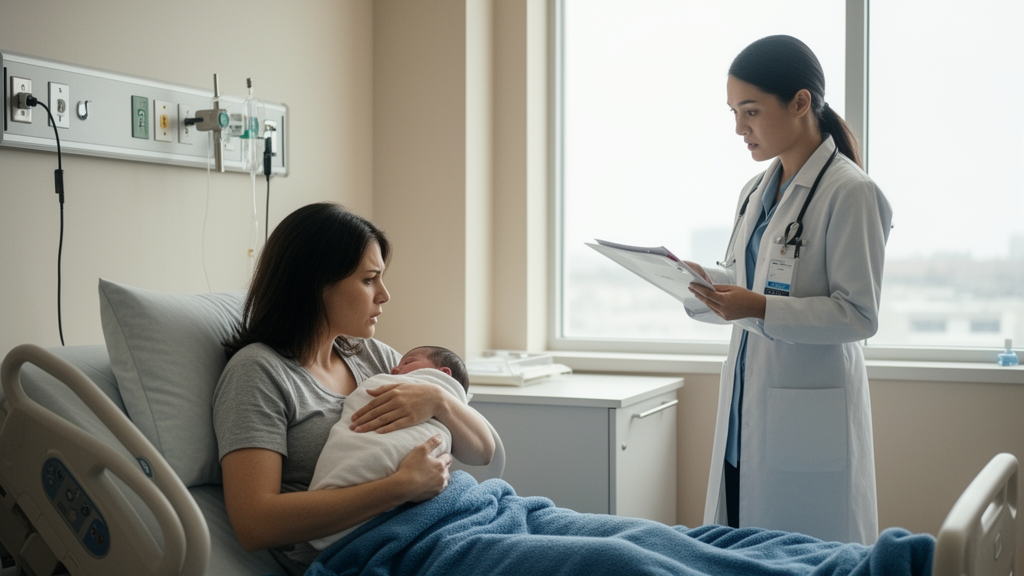
Women interviewed in a qualitative study published in the Journal of Advanced Nursing described repeated attempts to obtain medical help and support for postpartum psychosis, while encountering delayed recognition, inadequate assessment and, at times, dismissal or minimization of their concerns. The study included 15 Australian women diagnosed with postpartum psychosis over the previous 10 years. Its findings focus on how these participants described their help-seeking experiences rather than measuring the frequency of delayed or inadequate care across the healthcare system.

Postpartum psychosis typically arises within the first two weeks after childbirth and can produce acute mania, depression, delusions, hallucinations, sleep disturbances, abnormal thought content, irritability, mood swings, paranoia, restlessness and catatonia. Participants said that symptoms were sometimes attributed to more common experiences after childbirth, including anxiety, sleep deprivation or the “baby blues.” The accounts show that some women continued trying to obtain help while their symptoms were being interpreted in this way, according to the study’s publisher, Wiley. Corresponding author Donna McMahon, a PhD candidate at Flinders University, said the findings highlight the need for greater professional awareness of postpartum psychosis, timely and thorough assessment, and healthcare responses that recognize and validate women’s lived realities.

She also emphasized the importance of professionals listening to women’s accounts, responding appropriately and viewing women as experts in their own experiences. These statements represent the authors’ interpretation of the interview findings, rather than evidence that a specific assessment or referral strategy has been shown to improve outcomes. The research has important scope limitations.

Its interview-based design and sample of 15 women in Australia were suited to examining detailed accounts of care-seeking experiences, but they do not establish the prevalence of delayed recognition or dismissal among all patients with postpartum psychosis. The evidence therefore supports the women’s reported experiences of repeated help-seeking, delayed recognition, inadequate assessment and minimization, but it does not establish how widespread these experiences are or whether they occurred throughout the Australian healthcare system.

Subject of Research: Help-seeking experiences of Australian women diagnosed with postpartum psychosis

Article Title: Do women with postpartum psychosis receive adequate medical care?

Article References: Do women with postpartum psychosis receive adequate medical care?. Original publication (Bibliographic details unavailable.)

Image Credits: AI Generated

DOI: Not provided

Keywords: postpartum psychosis, maternal mental health, delayed recognition, healthcare access, qualitative interviews, psychiatric assessment, women’s health, Australia, women, postpartum, psychosis, receive

News Source: Glenn Wilkins. (October 25, 2026). Australian women report delayed and dismissive care for postpartum psychosis. Scienmag.


Tags: Australiadelayed recognitionhealthcare accessMaternal Mental Healthpostpartumpostpartum psychosispsychiatric assessmentpsychosisqualitative interviewsreceivewomenwomen's health
Share12Tweet7Share2ShareShareShare1

Related Posts

From village clinic to global research hub in post-conflict Sri Lanka

From village clinic to global research hub in post-conflict Sri Lanka

October 25, 2026
Participatory study maps 27 levers for durable community research

Participatory study maps 27 levers for durable community research

October 25, 2026

MRI Diffusion Model Identifies High-Proliferation Rectal Carcinoma in 84 Patients

October 25, 2026

Preclinical ginsenoside evidence points to multiple liver-cancer mechanisms

October 25, 2026

POPULAR NEWS

  • Wearable system detects and transmits scents over distance

    Wearable system detects and transmits scents over distance

    29 shares
    Share 12 Tweet 7
  • Research report: MicroRNA profiling of filtering and non-filtering regions of human trabecular meshwork: changes with ageing and in glaucoma

    29 shares
    Share 12 Tweet 7
  • Magnesium Source Choice Governs Durability of Enzyme-Solidified Mine Tailings

    29 shares
    Share 12 Tweet 7
  • From village clinic to global research hub in post-conflict Sri Lanka

    29 shares
    Share 12 Tweet 7

About

We bring you the latest biotechnology news from best research centers and universities around the world. Check our website.

Follow us

Recent News

Wearable system detects and transmits scents over distance

Research report: MicroRNA profiling of filtering and non-filtering regions of human trabecular meshwork: changes with ageing and in glaucoma

Magnesium Source Choice Governs Durability of Enzyme-Solidified Mine Tailings

Subscribe to Blog via Email

Enter your email address to subscribe to this blog and receive notifications of new posts by email.

Join 85 other subscribers
  • Contact Us

Bioengineer.org © Copyright 2023 All Rights Reserved.

Welcome Back!

Login to your account below

Forgotten Password?

Retrieve your password

Please enter your username or email address to reset your password.

Log In
No Result
View All Result
  • Homepages
    • Home Page 1
    • Home Page 2
  • News
  • National
  • Business
  • Health
  • Lifestyle
  • Science

Bioengineer.org © Copyright 2023 All Rights Reserved.