• HOME
  • NEWS
  • EXPLORE
    • CAREER
      • Companies
      • Jobs
    • EVENTS
    • iGEM
      • News
      • Team
    • PHOTOS
    • VIDEO
    • WIKI
  • BLOG
  • COMMUNITY
    • FACEBOOK
    • INSTAGRAM
    • TWITTER
Sunday, May 10, 2026
BIOENGINEER.ORG
No Result
View All Result
  • Login
  • HOME
  • NEWS
  • EXPLORE
    • CAREER
      • Companies
      • Jobs
        • Lecturer
        • PhD Studentship
        • Postdoc
        • Research Assistant
    • EVENTS
    • iGEM
      • News
      • Team
    • PHOTOS
    • VIDEO
    • WIKI
  • BLOG
  • COMMUNITY
    • FACEBOOK
    • INSTAGRAM
    • TWITTER
  • HOME
  • NEWS
  • EXPLORE
    • CAREER
      • Companies
      • Jobs
        • Lecturer
        • PhD Studentship
        • Postdoc
        • Research Assistant
    • EVENTS
    • iGEM
      • News
      • Team
    • PHOTOS
    • VIDEO
    • WIKI
  • BLOG
  • COMMUNITY
    • FACEBOOK
    • INSTAGRAM
    • TWITTER
No Result
View All Result
Bioengineer.org
No Result
View All Result
Home NEWS Science News Chemistry

Astronomers pinpoint the best place on Earth for a telescope: High on a frigid Antarctic plateau

Bioengineer by Bioengineer
July 29, 2020
in Chemistry
Reading Time: 2 mins read
0
IMAGE
Share on FacebookShare on TwitterShare on LinkedinShare on RedditShare on Telegram

IMAGE

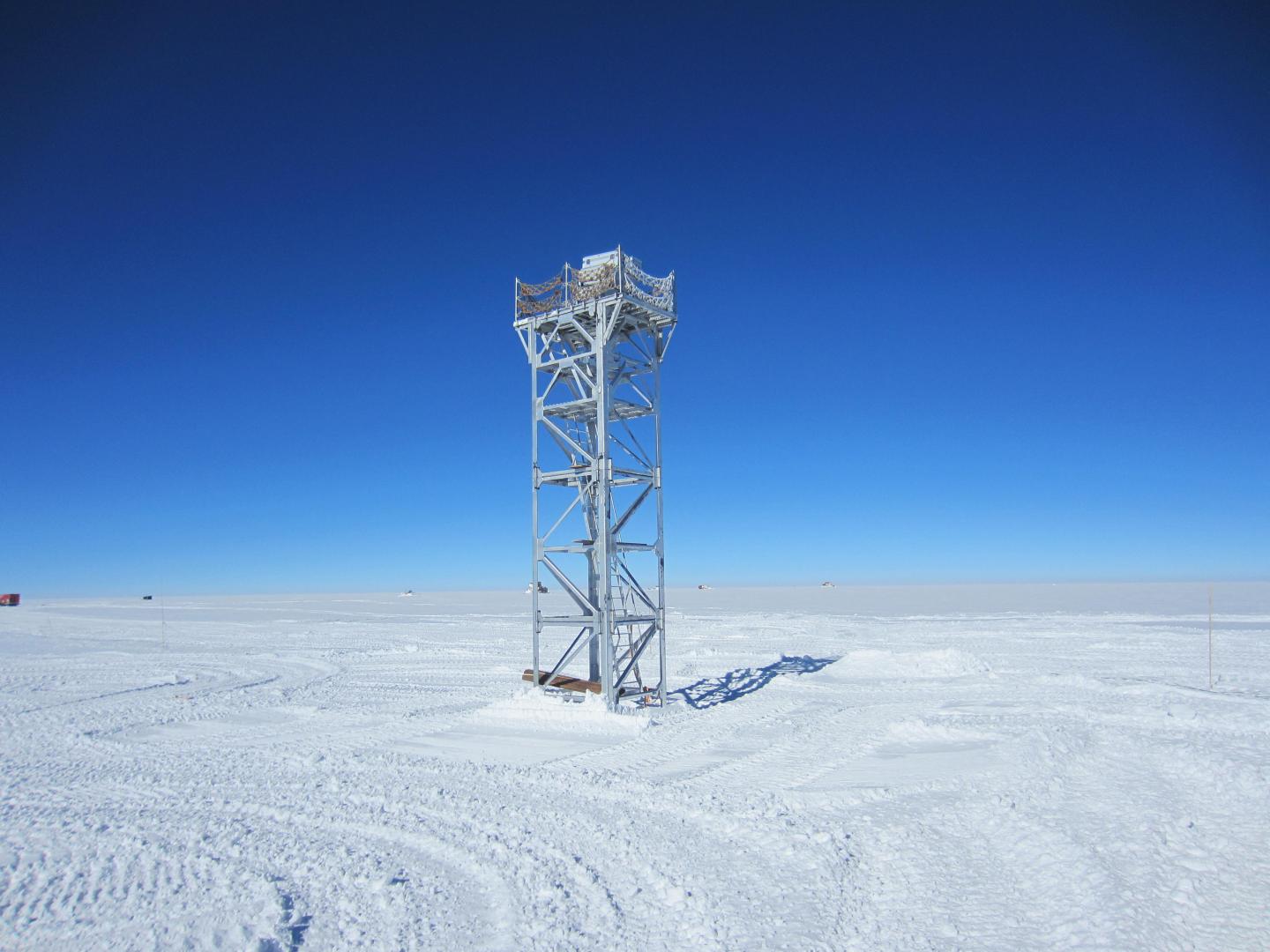
Credit: Zhaohui Shang

au, could offer the clearest view on Earth of the stars at night, according to new research by an international team from China, Australia and the University of British Columbia (UBC). The challenge? The location is one of the coldest and most remote places on Earth.

The findings were published today in Nature.

“A telescope located at Dome A could out-perform a similar telescope located at any other astronomical site on the planet,” said UBC astronomer Paul Hickson, a co-author of the study. “The combination of high altitude, low temperature, long periods of continuous darkness, and an exceptionally stable atmosphere, makes Dome A a very attractive location for optical and infrared astronomy. A telescope located there would have sharper images and could detect fainter objects.”

One of the biggest challenges in Earth-based astronomy is overcoming the effect of atmospheric turbulence on telescope image quality. This turbulence makes stars twinkle, and measurement of its impact is referred to as ‘seeing’. The less turbulence (the lower the seeing number) the better.

“The thinner boundary layer at Dome A makes it less challenging to locate a telescope above it, thereby giving greater access to the free atmosphere,” said UBC astronomer Bin Ma, lead author on the paper.

Currently, the highest performing observatories are located in high-altitude locations along the equator (Chile and Hawai?i) and offer seeing in the range of 0.6 to 0.8 arcseconds. In general, the Antarctic has the potential for better seeing, owing to weaker turbulence in the free atmosphere, with an estimated range of 0.23 to 0.36 arcseconds at a location called Dome C.

Ma, Hickson and colleagues in China and Australia evaluated a different location, Dome A–also referred to as Dome Argus. Dome A is located near the centre of East Antartica, 1,200 kilometres inland.

The researchers estimated the location has a thinner boundary layer (the lowest part of the atmosphere, which is influenced by friction from the Earth’s surface) than Dome C. Previous measurements from Dome A have been taken in the daytime, but the authors report a median night-time seeing of 0.31 arcseconds, reaching as low as 0.13 arcseconds.

The measurements from Dome A, taken at a height of eight metres, were much better than those from the same height at Dome C and comparable to those at a height of 20 metres at Dome C.

Not surprisingly, the viewing capabilities of the researchers’ equipment were also hampered by frost–overcoming this issue could improve seeing by 10 to 12 per cent. But the site has promise, according to Ma.

“Our telescope observed the sky fully automatically at an unmanned station in Antarctica for seven months, with air temperature dropping to -75C at times. In and of itself, that’s a technological breakthrough.”

###

Media Contact
Chris Balma
[email protected]

Original Source

https://science.ubc.ca/node/17755

Related Journal Article

http://dx.doi.org/10.1038/s41586-020-2489-0

Tags: AstronomyAstrophysicsAtmospheric ScienceComets/AsteroidsEarth ScienceMeteorologyPlanets/MoonsSpace/Planetary ScienceStars/The Sun
Share12Tweet8Share2ShareShareShare2

Related Posts

Miniature Sensor Uses Light to Detect Touch — Chemistry

Miniature Sensor Uses Light to Detect Touch

May 8, 2026
Iron Minerals Determine Whether Dissolved Organic Matter Fuels Microbes or Becomes Long-Term Carbon Storage — Chemistry

Iron Minerals Determine Whether Dissolved Organic Matter Fuels Microbes or Becomes Long-Term Carbon Storage

May 8, 2026

Kate Evans Appointed Associate Lab Director for Biological and Environmental Systems Science at ORNL

May 8, 2026

Advancing Multiscale Modeling and Overcoming Operational Challenges in Autothermal COâ‚‚-to-Methanol Reactors

May 8, 2026
Please login to join discussion

POPULAR NEWS

  • Research Indicates Potential Connection Between Prenatal Medication Exposure and Elevated Autism Risk

    840 shares
    Share 336 Tweet 210
  • New Study Reveals Plants Can Detect the Sound of Rain

    727 shares
    Share 290 Tweet 181
  • Scientists Investigate Possible Connection Between COVID-19 and Increased Lung Cancer Risk

    68 shares
    Share 27 Tweet 17
  • Salmonella Haem Blocks Macrophages, Boosts Infection

    61 shares
    Share 24 Tweet 15

About

We bring you the latest biotechnology news from best research centers and universities around the world. Check our website.

Follow us

Recent News

Evaluating Digoxin Use in Patients with Symptomatic Rheumatic Heart Disease

Evaluating the Effectiveness and Safety of Digitalis Glycosides in Treating Heart Failure

Urdu Fall Risk Questionnaire Adapted for Elderly

Subscribe to Blog via Email

Enter your email address to subscribe to this blog and receive notifications of new posts by email.

Join 82 other subscribers
  • Contact Us

Bioengineer.org © Copyright 2023 All Rights Reserved.

Welcome Back!

Login to your account below

Forgotten Password?

Retrieve your password

Please enter your username or email address to reset your password.

Log In
No Result
View All Result
  • Homepages
    • Home Page 1
    • Home Page 2
  • News
  • National
  • Business
  • Health
  • Lifestyle
  • Science

Bioengineer.org © Copyright 2023 All Rights Reserved.