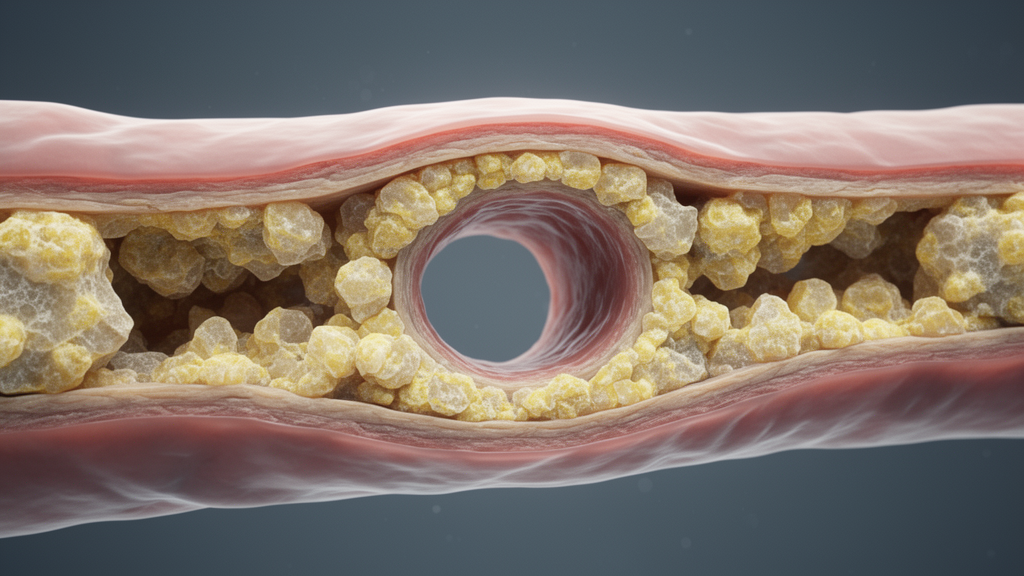
Severe arterial calcification in the lower limbs directly hinders endovascular therapy by causing mechanical resistance, acute arterial recoil, and stent underexpansion, frequently preventing immediate angiographic gains from translating into durable long-term limb preservation. In a comprehensive narrative review published in Frontiers in Cardiovascular Medicine, vascular surgeons Jun Liu, Zhan Chen, Hong Sun, Zhimiao Cui, and Ruimin Lin from the Department of Vascular Surgery at Beijing Haidian Hospital in Beijing, China, synthesized a decade of clinical trials, observational registries, and vascular imaging data to delineate how distinct calcification phenotypes determine the failure modes of catheter-based interventions. The authors evaluated clinical evidence spanning January 2015 through November 2025, alongside early 2026 findings, focusing specifically on infrainguinal peripheral artery disease, which encompasses femoropopliteal and infrapopliteal vascular territories, in patients presenting with chronic limb-threatening ischemia.
Chronic limb-threatening ischemia represents the most advanced clinical manifestation of lower extremity peripheral artery disease, characterized clinically by persistent ischemic rest pain or active tissue loss requiring urgent evaluation to prevent major limb amputation. Large registry analyses and administrative datasets document high complication rates and heavy healthcare resource utilization in real-world populations, primarily driven by repeat revascularizations, wound care demands, recurrent hospital admissions, and major limb loss. Although endovascular procedures have become a frontline strategy over the past decade because they minimize systemic physiological stress in frail populations, persistent patency remains inconsistent. Clinical trials such as the randomized BASIL-2 study illustrate that while an endovascular-first strategy can be favorable at a broader population level, significant patient-level and lesion-level heterogeneity generates divergent clinical trajectories, particularly when interventions encounter heavily calcified arterial lesions.
The review delineates the biomechanical consequences of severe calcification by categorizing lesions into intimal calcification and medial arterial calcification, noting that mixed phenotypes frequently coexist within identical limbs and vascular segments. Intimal calcification is plaque-associated, focal, and lesion-centric, presenting alongside atherosclerotic stenosis or chronic total occlusions where it impairs guidewire traversal, restricts luminal gain, promotes unfavorable dissection trajectories, interferes with drug transfer during drug-coated balloon angioplasty, and precipitates stent underexpansion or malapposition. Conversely, medial arterial calcification produces diffuse vascular stiffening and substantial loss of compliance, which manifests procedurally as balloon noncompliance, immediate elastic recoil, and diminished distal perfusion reserve even when an acceptable angiographic lumen is acutely achieved. Histology-referenced studies indicate that while standard radiography and computed tomography reliably identify the presence and anatomical extent of calcification, their capacity to distinguish between intimal and medial architecture is only moderate, requiring a probabilistic interpretation during clinical risk stratification.
To provide reproducible clinical evaluation, the researchers evaluated established imaging modalities, including conventional plain radiography, fluoroscopic scoring systems, computed tomography angiography, and cross-sectional intravascular imaging modalities. Plain radiographs of the foot provide a low-cost tool for identifying medial arterial calcification, where elevated pedal scores correlate with major limb amputation and unfavorable limb outcomes regardless of focal upstream lesion severity. In contrast, fluoroscopic grading scales like the Peripheral Artery Calcification Scoring System capture radiopacity and longitudinal lesion length during catheterization but frequently underestimate circumferential or deep calcium burden. Cross-sectional computed tomography angiography and popliteal calcification scoring enable detailed visualization of circumferential involvement, longitudinal extent, and segmental distribution, which correlate with amputation risk and short-term intervention outcomes. Intravascular ultrasound and optical coherence tomography offer detailed cross-sectional measurements of calcium arc and thickness, enabling operators to identify concentric resistance and anticipate underexpansion prior to balloon inflation or scaffold deployment.
The authors classified endovascular failure into three distinct chronological and mechanistic phenotypes to structure clinical decision-making: technical failure, early failure within 30 days, and late failure extending beyond 30 days. Technical failure denotes the immediate inability to cross or re-enter an occlusion, inadequate lesion preparation, or failure to deliver and optimize a planned scaffold or balloon, resulting in unacceptable residual stenosis. Dense or circumferential chronic total occlusions consistently increase puncture failure and promote subintimal wire tracking away from the true arterial lumen. Randomized trials demonstrate that technical failure often forces unplanned strategy escalation, prolongs procedures, and compromises subsequent vascular pathways by reducing the anatomical viability of future endovascular or open surgical revascularization attempts.
Early failure occurs within 30 days of an apparently completed endovascular intervention and encompasses acute thrombotic occlusion, stent thrombosis, flow-limiting recoil, progressive dissection, and an absence of hemodynamic or wound trajectory improvement. Severe calcification predisposes vessels to early closure through incomplete plaque fracture, focal recoil, stent malapposition, and flow disturbances that trigger platelet activation, particularly in vessels with compromised distal runoff or suboptimal antithrombotic therapy. Observational data from real-world femoropopliteal drug-eluting stent registries demonstrate that acute stent thrombosis occurs with notable frequency and correlates with major adverse limb events and limb loss. In chronic limb-threatening ischemia, early failure also includes physiological non-response, where treated segments remain angiographically patent but fail to yield ankle-brachial index or toe pressure gains due to rigid infrapopliteal outflow beds and microcirculatory impairment.
Late failure manifests beyond 30 days as gradual restenosis, re-occlusion, clinically driven target lesion revascularization, and major adverse limb events. In heavily calcified anatomy, late failure stems from suboptimal acute luminal expansion, persistent biomechanical stress, stent edge injury, and amplified biological neointimal hyperplasia stimulated by aggressive vessel preparation. In the Evolusion Study examining femoropopliteal disease with moderate-to-severe calcification, cumulative 24-month clinically driven target lesion revascularization reached 9.27% and major adverse limb events reached 11.41%, with severe calcification independently predicting adverse limb events with a hazard ratio of 1.58. Similarly, multicenter registries evaluating infrapopliteal endovascular reinterventions indicate that repeat catheter procedures in patients with tibial calcification yield only moderate to poor mid-term outcomes with high recurrence rates, warning against iterative, low-yield tibial balloon angioplasties.
A critical clinical consideration examined in the review is the secondary bypass penalty, in which prior unsuccessful endovascular attempts impair the performance of subsequent surgical bypasses. Analyses from the BEST-CLI randomized trial cohort revealed that patients with an available single-segment great saphenous vein who underwent surgical bypass after failed endovascular therapy experienced a higher incidence of above-ankle amputation compared to those treated with primary bypass. Proposed mechanisms for this secondary penalty include anatomical disease progression during repetitive interventions, intimal injury or loss of distal target landing zones, and accumulated ischemic tissue damage. Consequently, delaying definitive surgical revascularization through repeated, low-yield catheter-based procedures can compromise limb salvage, particularly when suitable autologous vein conduits are initially present.
To guide procedural planning, the authors synthesized specific anatomic, patient, and procedural modifiers that define high risk for endovascular treatment failure. Anatomically, femoropopliteal lesion lengths exceeding 15 centimeters, calcified chronic total occlusions, multilevel tibial disease involving two or more vessels, and poor distal runoff scores predict high failure rates. Patient comorbidities including insulin-dependent diabetes, advanced chronic kidney disease, and dialysis dependence exacerbate vascular stiffening and blunt microvascular recovery. Inadequately prepared calcified lesions exhibiting persistent balloon waisting or immediate elastic recoil signal high risks of underexpansion and early restenosis, highlighting that procedural escalation to high inflation pressures cannot overcome extensive calcific rigidity without specialized modification techniques.
Addressing intraoperative management, the review evaluated contemporary calcium modification modalities including intravascular lithotripsy, orbital and directional atherectomy, and high-pressure noncompliant balloons. In randomized evaluations from Disrupt PAD III, intravascular lithotripsy demonstrated superior acute procedural performance over standard percutaneous transluminal angioplasty in calcified femoropopliteal lesions, while Disrupt PAD BTK II documented high procedural success and safety in calcified below-the-knee vessels. Meta-analyses of atherectomy combined with drug-coated balloons have demonstrated improved surrogate patency endpoints in selected femoropopliteal lesions, though introducing potential risks of distal embolization and vessel perforation. Furthermore, randomized findings from BASIL-3 indicated no clear amputation-free survival advantage for drug-coated balloons or drug-eluting stents over plain balloon angioplasty in femoropopliteal chronic limb-threatening ischemia, reinforcing that pharmacologic device coatings cannot fully overcome severe calcification that physically restricts luminal gain and drug absorption.
The authors integrated these findings into a calcification-aware decision framework designed to operationalize preprocedural strategy selection and establish explicit intraoperative stop rules. Pending prospective validation, high predicted endovascular failure is defined conceptually by a circumferential calcium arc of 180 degrees or greater on cross-sectional imaging, diffuse longitudinal calcification exceeding 15 centimeters in the femoropopliteal segment, multilevel involvement of two or more tibial vessels, or high pedal medial arterial calcification scores on plain radiographs. Primary surgical bypass or hybrid inflow reconstruction is favored when limb threat is elevated, high endovascular failure is predicted, and a suitable single-segment great saphenous vein conduit exists. During endovascular interventions, predefined stop rules—triggered by persistent crossing failure, unresolved balloon waisting, extensive dissection, or distal outflow embolization—mandate immediate reassessment and timely conversion to bypass rather than repetitive, traumatic catheter maneuvers.
For no-option limbs where extreme infrapopliteal and pedal calcification prevents durable endovascular recanalization and no autologous conduit or distal arterial target permits surgical bypass, the authors highlighted percutaneous deep venous arterialization. In the PROMISE II clinical trial, transcatheter deep venous arterialization established an arteriovenous circuit to perfuse the distal foot through the venous bed, achieving 6-month amputation-free survival of 66% and 12-month limb salvage of 69% in otherwise untreatable populations. The review concludes that optimizing outcomes in calcified infrainguinal peripheral artery disease requires early risk recognition, standardized imaging quantification, and structured vascular surgery coordination to balance catheter technologies with durable bypass reconstruction.
Subject of Research: Predictors and mechanisms of endovascular treatment failure in heavily calcified lower extremity arterial disease
Article Title: Predictors of endovascular treatment failure in heavily calcified lower extremity arterial disease: a vascular surgery perspective
Article References: Liu, J., Chen, Z., Sun, H., Cui, Z., & Lin, R. (2026). Predictors of endovascular treatment failure in heavily calcified lower extremity arterial disease: a vascular surgery perspective. Frontiers in Cardiovascular Medicine, 13, Article 1857180. https://doi.org/10.3389/fcvm.2026.1857180
Image Credits: AI Generated
DOI: 10.3389/fcvm.2026.1857180
Keywords: arterial calcification, peripheral artery disease, chronic limb-threatening ischemia, endovascular therapy, vascular surgery, surgical bypass, femoropopliteal disease, infrapopliteal interventions, intravascular lithotripsy, medial arterial calcification, intimal calcification, stent underexpansion, restenosis, amputation-free survival, deep venous arterialization, intravascular ultrasound, BEST-CLI, BASIL-2
News Source: Ophelia Keating. (November 19, 2026). Arterial Calcification Patterns Predict Endovascular Failure in Chronic Limb Ischemia. Scienmag.