• HOME
  • NEWS
  • EXPLORE
    • CAREER
      • Companies
      • Jobs
    • EVENTS
    • iGEM
      • News
      • Team
    • PHOTOS
    • VIDEO
    • WIKI
  • BLOG
  • COMMUNITY
    • FACEBOOK
    • INSTAGRAM
    • TWITTER
Thursday, June 25, 2026
BIOENGINEER.ORG
No Result
View All Result
  • Login
  • HOME
  • NEWS
  • EXPLORE
    • CAREER
      • Companies
      • Jobs
        • Lecturer
        • PhD Studentship
        • Postdoc
        • Research Assistant
    • EVENTS
    • iGEM
      • News
      • Team
    • PHOTOS
    • VIDEO
    • WIKI
  • BLOG
  • COMMUNITY
    • FACEBOOK
    • INSTAGRAM
    • TWITTER
  • HOME
  • NEWS
  • EXPLORE
    • CAREER
      • Companies
      • Jobs
        • Lecturer
        • PhD Studentship
        • Postdoc
        • Research Assistant
    • EVENTS
    • iGEM
      • News
      • Team
    • PHOTOS
    • VIDEO
    • WIKI
  • BLOG
  • COMMUNITY
    • FACEBOOK
    • INSTAGRAM
    • TWITTER
No Result
View All Result
Bioengineer.org
No Result
View All Result
Home NEWS Science News Chemistry

Antarctic glacier named after GFZ satellite mission ‘GRACE’

Bioengineer by Bioengineer
June 7, 2019
in Chemistry
Reading Time: 2 mins read
0
IMAGE
Share on FacebookShare on TwitterShare on LinkedinShare on RedditShare on Telegram

Special recognition of the contribution to the study of Earth’s ice mass dynamics
IMAGE

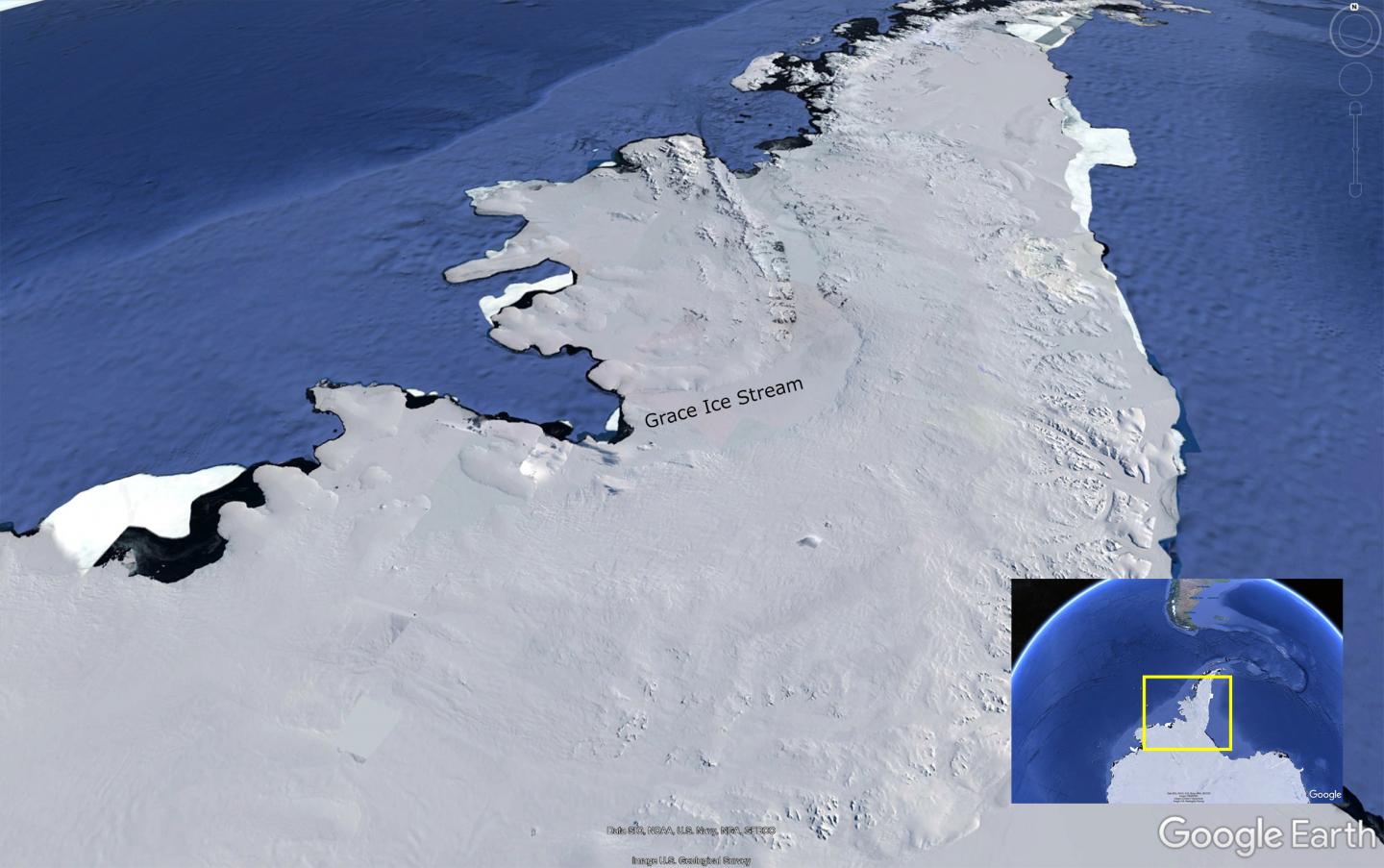
Credit: GoogleEarth; Data: SIO, NOAA, U.S. Navy, NGA, GEBCO, Image: NASA, U.S. Geological Survey; Edited: GFZ

A glacier in the West Antarctic has been named after the German-American satellite mission GRACE. GRACE stands for “Gravity Recovery and Climate Experiment”. Between 2002 and 2017, the scientific mission measured the Earth’s gravity field, from which conclusions can be drawn about the growth and melting of glaciers. The British Antarctic Survey has now published a map in which seven glaciers were named after satellite missions whose data made a decisive contribution to the exploraiton of ice mass changes. In addition to GRACE, for example, Landsat, Envisat and Cryosat were also eponymous. The scientific evaluation of the GRACE mission was led by GFZ German Research Centre for Geosciences and the US Space Agency NASA.

Frank Flechtner, scientific director of the GRACE mission at GFZ: “I am very pleased that a glacier has been namend after the GRACE which is a very special honor of the pioneering successes of the mission.”

Reinhard Hüttl, GFZ Scientific Executive Director: “This is a great appreciation of the work of our scientists, which is now even manifested in official maps”.

The newly named glaciers are located in Western Palmer Land, next to the George VI Ice Shelf. The name is based on a work by the British scientist Anna E. Hogg from 2017. The polar researcher had demonstrated the acceleration of ice movements in the British part of Antarctica using numerous satellite data. Until now, the glaciers she studied were only called by numbers, not names.

The UK Antarctic Place-Names Committee of the British Antarctic Survey decided on the naming in November 2018, which has now been confirmed by the British Foreign Office and will be officially announced this Friday by the Polar Space Task Group of the European Space Agency ESA. After the names have already been included in the British Antarctic Territory Gazetteer, an inclusion in the Scientific Committee on Antarctic Research (SCAR) Composite Gazetteer of Antarctica is in process. The names will be used in all official maps, graphics, and publications in the future.

The GRACE data not only resulted in an improved representation of the Earth’s gravity field known as the “Potsdam Gravity Potato”, but also in numerous new insights into temporal changes in the Earth system, including the ice mass loss of the large ice sheets over Greenland and Antarctica. After the GRACE mission ended in 2017 after 15 years of service, the follow-up mission GRACE-FO (for “Gravity Recovery and Climate Experiment Follow-On”) was launched in May 2018 and has been successfully continuing the measurements ever since.

###

Media Contact
Josef Zens
[email protected]

Original Source

https://www.gfz-potsdam.de/en/media-and-communication/news/details/article/antarctic-glacier-named-after-gfz-satellite-grace-mission/

Tags: Climate ChangeEarth ScienceGeophysics/GravityHydrology/Water ResourcesOceanographySatellite Missions/Shuttles
Share12Tweet8Share2ShareShareShare2

Related Posts

International Team Including Dresden Scientists Develops Novel Designer Proteins for Advanced Study of Living Tissue

June 25, 2026

New Study Uncovers Key Factors Driving Water Chemistry in Nanoscale Environments

June 25, 2026

Plasma Technology Extends Catalyst Lifespan in Hydrogen Production

June 24, 2026

Electric Field and Oxygen Spillover Collaborate to Control Electrode Migration in SOECs

June 24, 2026
Please login to join discussion

POPULAR NEWS

  • Saying Goodbye to PGY-6: Pediatric Fellowship Realities

    103 shares
    Share 41 Tweet 26
  • Multi-Hospital Study Reveals Long Covid Burden Is Twice as High as Current Estimates

    92 shares
    Share 36 Tweet 23
  • Detection of EDCs in Breast Milk and Infant Urine Up to Six Months Highlights Early Exposure Risks

    77 shares
    Share 31 Tweet 19
  • New Drug Candidate Developed at McMaster Shows Potential for Treating Brain Cancer

    58 shares
    Share 23 Tweet 15

About

We bring you the latest biotechnology news from best research centers and universities around the world. Check our website.

Follow us

Recent News

Discover Millions of Government Documents Effortlessly with GovScape

International Team Including Dresden Scientists Develops Novel Designer Proteins for Advanced Study of Living Tissue

How Socioeconomic Factors Shape Lung Cancer Screening Experiences

Subscribe to Blog via Email

Enter your email address to subscribe to this blog and receive notifications of new posts by email.

Join 82 other subscribers
  • Contact Us

Bioengineer.org © Copyright 2023 All Rights Reserved.

Welcome Back!

Login to your account below

Forgotten Password?

Retrieve your password

Please enter your username or email address to reset your password.

Log In
No Result
View All Result
  • Homepages
    • Home Page 1
    • Home Page 2
  • News
  • National
  • Business
  • Health
  • Lifestyle
  • Science

Bioengineer.org © Copyright 2023 All Rights Reserved.