• HOME
  • NEWS
  • EXPLORE
    • CAREER
      • Companies
      • Jobs
    • EVENTS
    • iGEM
      • News
      • Team
    • PHOTOS
    • VIDEO
    • WIKI
  • BLOG
  • COMMUNITY
    • FACEBOOK
    • INSTAGRAM
    • TWITTER
Monday, May 18, 2026
BIOENGINEER.ORG
No Result
View All Result
  • Login
  • HOME
  • NEWS
  • EXPLORE
    • CAREER
      • Companies
      • Jobs
        • Lecturer
        • PhD Studentship
        • Postdoc
        • Research Assistant
    • EVENTS
    • iGEM
      • News
      • Team
    • PHOTOS
    • VIDEO
    • WIKI
  • BLOG
  • COMMUNITY
    • FACEBOOK
    • INSTAGRAM
    • TWITTER
  • HOME
  • NEWS
  • EXPLORE
    • CAREER
      • Companies
      • Jobs
        • Lecturer
        • PhD Studentship
        • Postdoc
        • Research Assistant
    • EVENTS
    • iGEM
      • News
      • Team
    • PHOTOS
    • VIDEO
    • WIKI
  • BLOG
  • COMMUNITY
    • FACEBOOK
    • INSTAGRAM
    • TWITTER
No Result
View All Result
Bioengineer.org
No Result
View All Result
Home NEWS Science News Biology

Animals could help humans monitor oceans

Bioengineer by Bioengineer
November 28, 2019
in Biology
Reading Time: 2 mins read
0
IMAGE
Share on FacebookShare on TwitterShare on LinkedinShare on RedditShare on Telegram

IMAGE

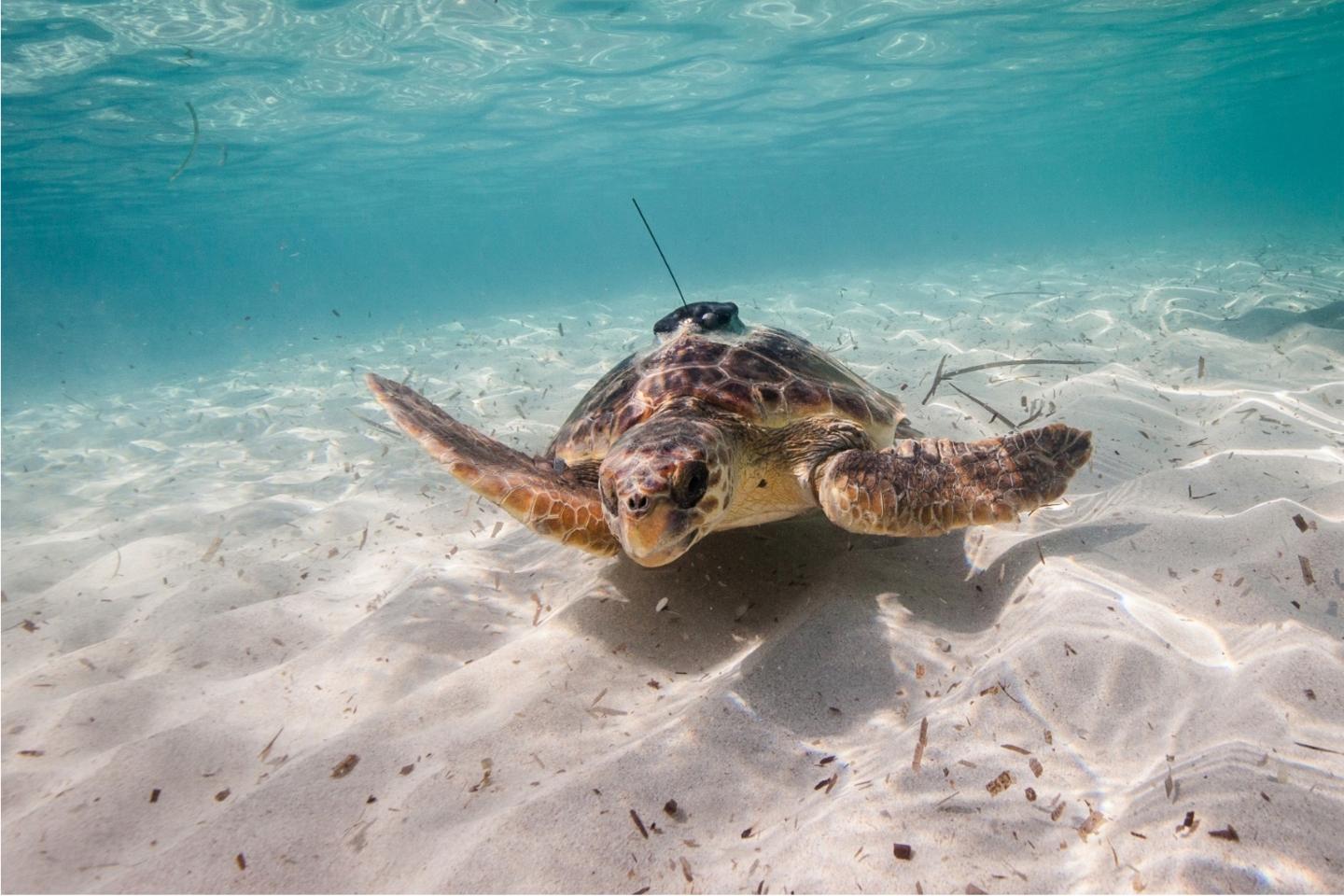
Credit: Miquel Gomila/SOCIB


Sharks, penguins, turtles and other seagoing species could help humans monitor the oceans by transmitting oceanographic information from electronic tags.

Thousands of marine animals are tagged for a variety of research and conservation purposes, but at present the information gathered isn’t widely used to track climate change and other shifts in the oceans.

Instead, monitoring is mostly done by research vessels, underwater drones and thousands of floating sensors that drift with the currents. However, large areas of the ocean still remain under-sampled – leaving gaps in our knowledge.

A team led by the University of Exeter says animals carrying sensors can fill many of these gaps through natural behaviour such as diving under ice, swimming in shallow water or moving against currents.

“We want to highlight the massive potential of animal-borne sensors to teach us about the oceans,” said lead author Dr David March, of Centre for Ecology and Conservation on Exeter’s Penryn Campus in Cornwall.

“This is already happening on a limited scale, but there’s scope for much more.

“We looked at 183 species – including tuna, sharks, rays, whales and flying seabirds – and the areas they are known to inhabit.

“We have processed more than 1.5 million measurements from floating sensors to identify poorly sampled areas (18.6% of the global ocean surface).”

“By comparing this with gaps in current observations by drifting profiling sensors (known as Argo floats) we identified poorly sampled areas where data from animal sensors would help fill gaps,” said Professor Brendan Godley, who leads Exeter Marine.

“These include seas near the poles (above 60ยบ latitude) and shallow and coastal areas where Argo profilers are at risk of hitting the land.

“The Caribbean and seas around Indonesia, as well as other semi-enclosed seas, are good examples of places where Argo profilers struggle because of these problems.”

Tagged seals in the poles have already complemented ocean observing systems because they can reach areas under ice that are inaccessible to other instruments.

The study suggests data collected by turtles or sharks could also enhance ocean monitoring in other remote and critical areas such as tropical regions, with large influence on global climate variability and weather.

The researchers say their work is a call for further collaboration between ecologists and oceanographers.

Professor Godley added: “It is important to note that animal welfare is paramount and we are only suggesting that animals that are already being tracked for ethically defensible and conservation-relevant ecological research be recruited as oceanographers. We do not advocate for animals being tracked solely for oceanography.”

###

The research team included the Balearic Islands Coastal Observing and Forecasting System (SOCIB), the University of St Andrews, the Mediterranean Institute of Advanced Studies and the Spanish Institute of Oceanography.

The paper, published in the journal Global Change Biology, is entitled: “Towards the integration of animal-borne instruments into global ocean observing systems.”

Media Contact
Alex Morrison
[email protected]
44-013-927-24828

Related Journal Article

http://dx.doi.org/10.1111/gcb.14902

Tags: BiologyClimate ChangeEarth ScienceEcology/EnvironmentMarine/Freshwater BiologyOceanography
Share12Tweet8Share2ShareShareShare2

Related Posts

Uncovering C. elegans Immunity via Genetic Screens โ€” Biology

Uncovering C. elegans Immunity via Genetic Screens

May 16, 2026
Single mother must adapt swiftly โ€” the survival of her colony depends on it โ€” Biology

Single mother must adapt swiftly โ€” the survival of her colony depends on it

May 15, 2026

Why Are Nearly Everyone Right-Handed? It Might Be Linked to How We Learned to Walk

May 15, 2026

Excessive Neuronal Activity Initiates Severe Autoimmune Brain Disorder

May 15, 2026
Please login to join discussion

POPULAR NEWS

  • Research Indicates Potential Connection Between Prenatal Medication Exposure and Elevated Autism Risk

    844 shares
    Share 338 Tweet 211
  • New Study Reveals Plants Can Detect the Sound of Rain

    731 shares
    Share 292 Tweet 182
  • Salmonella Haem Blocks Macrophages, Boosts Infection

    62 shares
    Share 25 Tweet 16
  • Breastmilk Balances E. coli and Beneficial Bacteria in Infant Gut Microbiomes

    58 shares
    Share 23 Tweet 15

About

We bring you the latest biotechnology news from best research centers and universities around the world. Check our website.

Follow us

Recent News

New Survey Finds Just One-Third of Teens Have Private Healthcare Consultations, According to Parents

Micronutrients Linked to Mood and Psychotic Disorders

AI Tool in Radiotherapy Advances Global Fight to Eradicate Cervical Cancer

Subscribe to Blog via Email

Enter your email address to subscribe to this blog and receive notifications of new posts by email.

Join 82 other subscribers
  • Contact Us

Bioengineer.org ยฉ Copyright 2023 All Rights Reserved.

Welcome Back!

Login to your account below

Forgotten Password?

Retrieve your password

Please enter your username or email address to reset your password.

Log In
No Result
View All Result
  • Homepages
    • Home Page 1
    • Home Page 2
  • News
  • National
  • Business
  • Health
  • Lifestyle
  • Science

Bioengineer.org ยฉ Copyright 2023 All Rights Reserved.