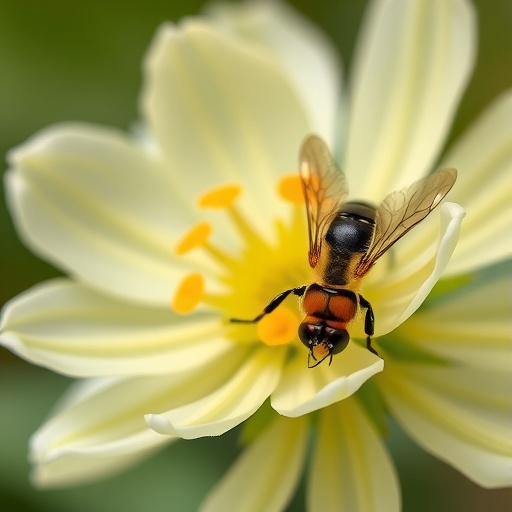
The world of chemical communication in insects often remains shrouded in mystery, particularly when it comes to the interactions between scent molecules and their corresponding binding proteins. Recent research by Gouda and Subramanian sheds light on this enigmatic realm, particularly focusing on the odorant-binding proteins (OBPs) found in the Asiatic genetic groups of Bemisia tabaci, a species of whitefly known for its agricultural impact. This study stands as a key contribution, unveiling methodologies that could revolutionize our understanding of insect olfaction.
Insects are uniquely equipped to detect and decode a rich palette of volatile organic compounds. These compounds serve as vital signals for mating, foraging, and even avoiding predators. At the heart of this sensory prowess lie odorant-binding proteins. OBPs play a vital role in transporting odorant molecules from the environment to the sensory neurons, effectively facilitating the perception of smell. The recent findings regarding Bemisia tabaci highlight the complexity and variability of these proteins across different genetic groups, pointing toward the potential for further studies on the evolutionary adaptations that have led to these variations.
The study by Gouda and Subramanian employed a multifaceted approach to analyze OBPs, integrating both biochemical techniques and genetic sequencing. By isolating these proteins from various genetic groups of Bemisia tabaci, they were able to compare their structural and functional characteristics. This comparative analysis opened new avenues for understanding how specific OBPs may be tailored to the unique environmental conditions and ecological niches inhabited by different populations of these whiteflies.
Interestingly, the research also raised questions about the implications of OBP diversity on the pest’s behavior and adaptability. Understanding these variations could lead to targeted pest management strategies, potentially revolutionizing how agricultural practices address the challenges posed by these resilient pests. By identifying which OBPs are most crucial for the detection of specific plant volatiles, it may be possible to devise strategies that disrupt the whitefly’s ability to locate host plants, thus mitigating their damaging impact on crops.
Furthermore, the study’s innovative methodologies could serve as a framework for future research in the field of insect sensory biology. The integration of advanced molecular techniques allows researchers to delve deeper into the genetic and evolutionary aspects of odorant perception in insects. This is especially crucial as the agricultural sector faces mounting pressures from pest populations that are rapidly evolving in response to conventional control measures.
The implications of this research extend beyond mere academic curiosity. As global agricultural systems increasingly grapple with the effects of climate change and pest resistance, understanding the underlying mechanisms of insect communication could pave the way for more sustainable practices. The developments in understanding OBPs could facilitate the creation of eco-friendly pest deterrents that are specific to Bemisia tabaci, potentially reducing reliance on chemical pesticides, which often have broader ecological repercussions.
Moreover, as we deepen our understanding of insect olfactory systems through studies like these, we can draw parallels with other species, including humans. The insights gained about how insects utilize chemical signals may provide a broader context for researching sensory processing across the animal kingdom. This cross-species perspective could highlight evolutionary adaptations that have occurred in olfactory systems over time, enriching our comprehension of sensory biology as a whole.
In conclusion, Gouda and Subramanian’s work marks a significant advancement in the scientific understanding of insect olfaction, particularly for those studying agricultural pests and their interactions with plants. By elucidating the structural dynamics of OBPs in Bemisia tabaci, this research not only augments existing knowledge but also charts new pathways for practical applications in pest management. The necessity for innovative, environmentally friendly solutions in agriculture has never been clearer, and studies like this provide the foundational understanding required to make informed decisions moving forward in pest control strategies.
As scientists continue to unravel the complexities of insect behavior through such pioneering research, the agricultural community stands to benefit substantially from these insights. Efforts to bridge the gap between basic and applied research will undoubtedly yield improvements in pest control methodologies that can meet the challenges of modern agriculture head-on.
The future of agricultural research lies in our ability to understand the tiniest components of life, such as odorant-binding proteins, to inform broader ecological and agricultural frameworks. This study serves as a vital reminder of the interconnectedness of species and the delicate balance that sustains our ecosystems.
Through ongoing research and collaboration, scientists like Gouda and Subramanian will undoubtedly continue to unveil the beautiful complexities of life hidden within the smallest creatures, underscoring the importance of every data point collected in the quest for a sustainable agricultural future.
Subject of Research: Analysis of Odorant-Binding Proteins in Bemisia tabaci
Article Title: Methodology for the Analysis of Odorant-Binding Proteins in Asiatic Genetic Groups of Bemisia tabaci
Article References: Gouda, M.R., Subramanian, S. Methodology for the Analysis of Odorant-Binding Proteins in Asiatic Genetic Groups of Bemisia tabaci. Biochem Genet (2025). https://doi.org/10.1007/s10528-025-11294-x
Image Credits: AI Generated
DOI: https://doi.org/10.1007/s10528-025-11294-x
Keywords: odorant-binding proteins, Bemisia tabaci, insect olfaction, agricultural pests, sustainability, chemical communication, biochemistry, pest management strategies.
Tags: agricultural implications of Bemisia tabaci researchBemisia tabaci olfactory receptorsbiochemical analysis of OBPschemical communication in whitefliesevolutionary adaptations of odorant-binding proteinsgenetic sequencing in insect studiesgenetic variations in insect OBPsimpact of volatile organic compounds on insectsinsect sensory perception mechanismsmethodologies for studying insect olfactionodorant-binding proteins in insectsresearch advancements in olfactory proteins